editorial" "
Venice hosted the "consultation" of the European Churches” “on the environment: metaphor of man’s ability to turn the gifts of creation to good account” “

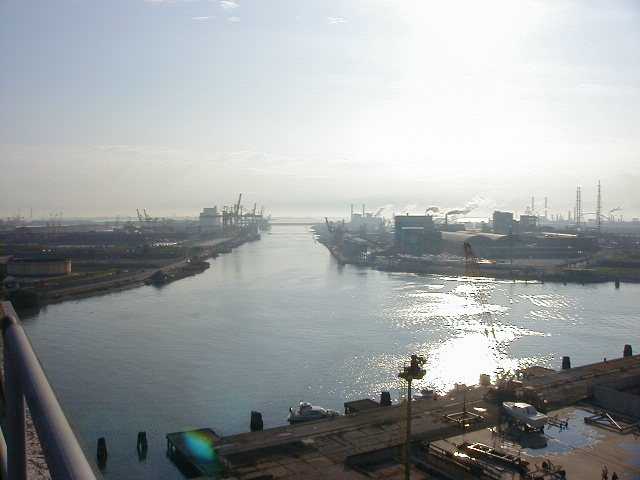
Venice, a city always characterized by a quite unique relation between man and the environment, between nature and culture; Venice, rich in contradictions and potential for a kind of work compatible with a sustainable environment; Venice, with its wide European and Mediterranean horizon and its characteristic ecumenical attention. It is not by chance that just the lagoon city was called to host the 4th Consultation of the Episcopal Conferences of Europe on “Work and responsibility for the creation”. The environmental emergency of our time was confronted with a civil and ecclesial tradition that for centuries has been able to create and maintain a delicate balance with the lagoon. This was also given expression in the ecumenical celebration promoted by the local Council of Churches: it was focused on water as gift of God and at the same time vital condition for life. The exchange of research findings, reflections and experiences between the over sixty participants at the Consultation representatives of 23 Episcopal Conferences and of church bodies from all over the world was profoundly challenged by the Venetian experience itself. Three moments, in particular, deserve to be mentioned: the first was the intervention of the acting mayor Bettin on the case of Porto Marghera, icon of a form of industry that does not serve life but involves workers, local population and environment alike in the same lethal dynamic. The second was the awe of the participants when confronted by the splendour of the mosaics in San Marco, as by the paintings in the Scuola di San Rocco, examples of a human presence that can justly claim to be works of culture, beauty and faith. The third was the celebration in the Basilica, which concluded the conference, with a strong emphasis placed by the Patriarch of Venice Scola on the importance of the consultation, and of the prospects it opens for a witness of the faith in Europe. It is no surprise that some of the more incisive recommendations of the final document concern the need to remeditate the very meaning of work. We need to overcome an interpretation exclusively focused on the production of material goods, and recover the relational, social and cultural dimension instead. What we need, therefore, is a mixed economy capable of fostering the productive dimension of work, but also of leaving scope for different modes of expression of human creativity. What is at issue here is not only a different understanding of what is the good life for human beings, but also a different way of relating to the environment, a more limited consumption of nature, and of a more delicate impact on the environment. Nor should it be imagined that this means nostalgia for a pre-technological past: the report given by Ignazio Musu stressed that eco-efficiency means, on the contrary, a wise use of the most advanced technologies, with an impact on employment that according to the studies of the European Union seems largely positive. But a different economy also demands a different view of time, capable of the necessary differentiation that may overcome the unchecked colonization by the economy. The biblical concept of the shabbat the day of rest offers important guidance in this sense; it ought to be given renewed application, or rediscovered, in the Christian practice of Sunday. In a pluralistic and multicultural society it is essential to maintain social spaces free from work and consumption: only thus will it be possible to maintain the cohesion of the social fabric, and foster dialogue and community. An opportunity to realize these proposals may be represented by the Conference on sustainable development that the United Nations is due to hold in Johannesburg at the end of August. It is important declares the final text of the Consultation that the countries participating in the UN summit assume clear responsibilities in terms of the fight against poverty and the sustainable use of resources. The control of the climate, in particular, is a priority that must be urgently tackled, before the emergency assumes an irreversible character. The consultation of the European Churches clearly showed the close attention that the Churches are taking in Johannesburg and proposed that in the course of the Conference preferably on 1st September, according to the suggestion of the patriarchate of Constantinople Christians celebrate together a day of the creation. In this way we would return to the point of departure: the proposals of social and economic intervention call for a cultural and political consensus that also has a need for an incisive and precise commitment by the Churches.
