Editorial" "
"Don’t refuse to meet each other", an imperative for the Christian confessions” “

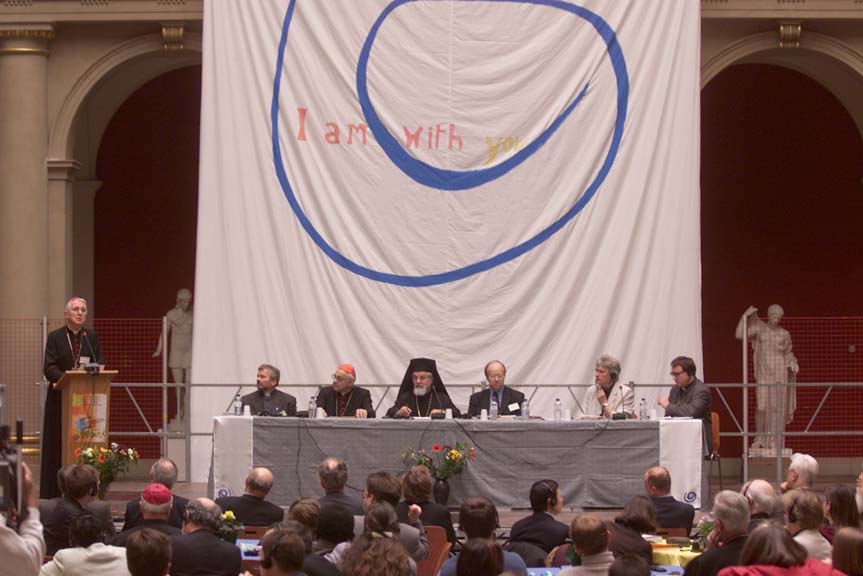
A document that is becoming a proposed agenda for the Churches and a tool at the service of common ecumenical endeavour has been circulating in Europe since 22 April 2001. Like all texts, the “ Charta oecumenica guidelines for the growth of collaboration between the Churches in Europe” is also subject to the criticism of time and to the diversity of its readers and the contexts in which it is read. For each country and each Church encounters problems with one point or other of the Charter: Armenia, with its tragic history, Greece with its difficulties and hopes in Catholic-Orthodox dialogue, Italy or Poland, countries with Catholic majorities, or Denmark with its Lutheran tradition and its doubts on the process of European unification… Those who wished to embark on this process the Council of the Episcopal Conferences of Europe (CCEE) and the Conference of the Churches of Europe (KEK) know very well that the content of the Charter may be criticized, improved, modified. But the Charter, translated into 29 languages, is not merely a text, but also a spirit, an idea, a “dream”. The ecumenical consultation that the CCEE and the KEK convened at Ottmaring, in Germany (7-10 September 2002), tried to review this process in the 26 European countries represented at the meeting, and to emphasize that there now exists in Europe a document of common reference on important themes for the life of and between the Churches. The Charter shows once again that while divisions do originate from objective differences at the theological and ecclesiological level, they derive far more from reasons of an historical, cultural and psychological character. “Continue the dialogue, and don’t refuse to meet each other” is the imperative expressed in the letter that the delegates wrote to their respective Churches from Ottmaring. And indeed the Charter has already been, in the year and half since its signature, the “excuse” for hundreds of meetings and debates, of moments of prayer and dialogue and the development of relations both personal and official between the Churches. The Charter has been the focal point of meetings of the Councils of the Churches of various countries (Austria for example), of the young (in Romania and in Holland), of the theological faculties (in Poland), of prayer groups, of episcopal conferences (in Croatia, for example), of individual dioceses (in Italy), associations, ecumenical groups and movements… The “spirit of Graz”, which had seen ecumenism become a need and a responsibility shared by all the members of the people of God, has thus continued to live. The Charter, which contains twelve pledges, is trying to involve this people and encourage them to adapt and experience the text according to the particularities of the various situations in Europe because, alongside reflection and dialogue, communion between the Churches also grows through life. That’s why the Churches in Holland signed the Charter, and Hungary and Germany are preparing to do so, thus expressing their endorsement of it in a more explicit manner and renewing their commitment to reconciliation between Christians, to peace and justice. Building love is difficult. That’s so with every deep human relationship, that’s so with the journey of the Churches, and so too it is with these pages of the “Charter” that almost miraculously live through exertion and joy and that ask each of us for the patience to wait for the fruits to ripen.
