editorial" "
"To truly serve the construction of the ‘common European ” “home’, the new ” “institutional order will have to recognize ” “and safeguard those values centred on the inviolable dignity of the human person – that ” “constitute the most ” “precious legacy ” “of European ” “humanism"” “

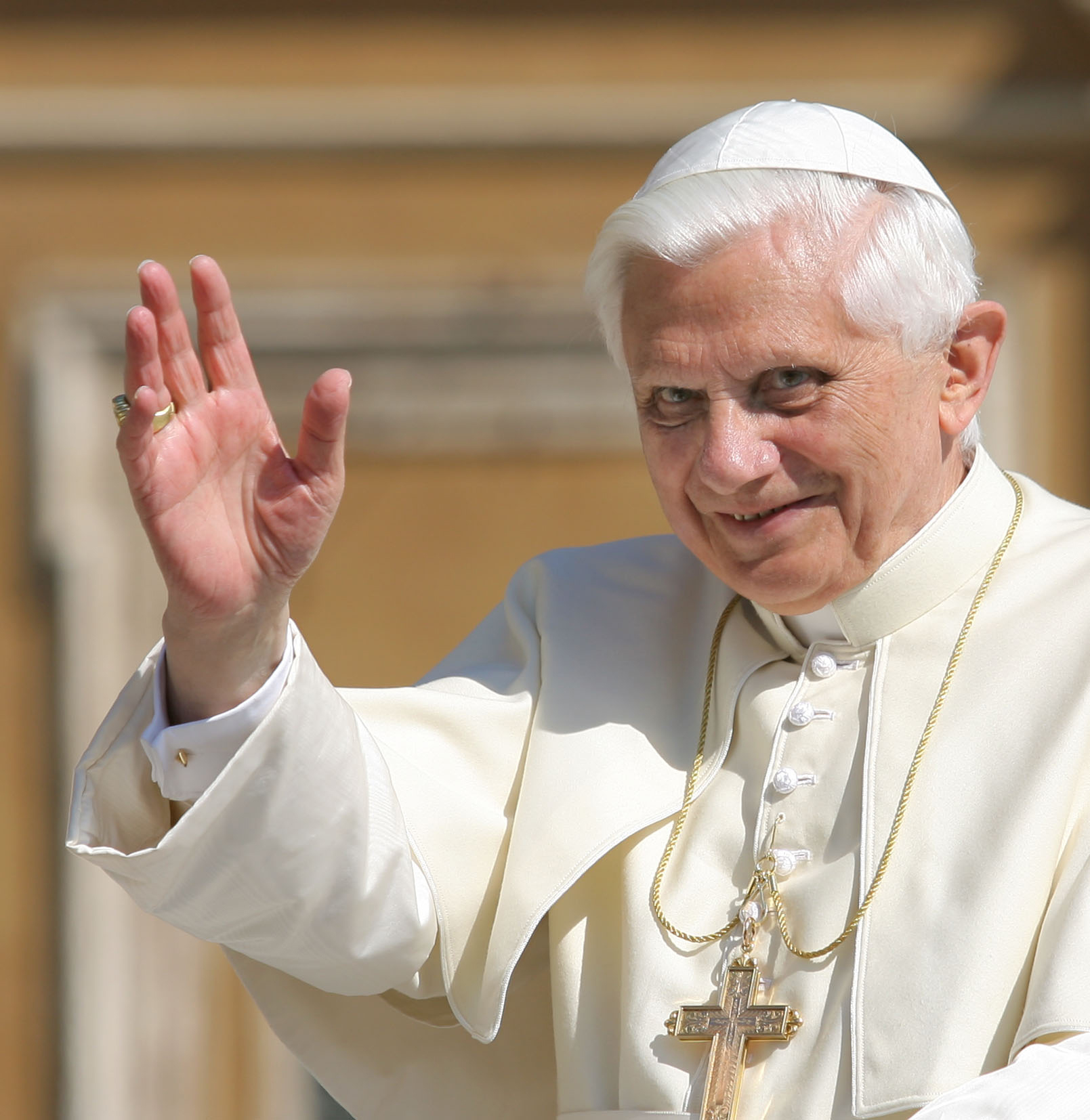
“ John Paul II: the profound unity of a really universal Pontificate” is the title of the lecture that Cardinal Camillo Ruini, president of the Italian Episcopal Conference, gave in Lublin, Poland, to mark the award to him of an honorary doctorate in theology by the Catholic University of Lublin, on 16 October 2002. As our editorial this week, we are glad to quote the passage from his address in which he talks of the construction of a common European house. “In the context of the universal concern for all peoples and continents, a truly special attention for Europe runs through all the 24 years of John Paul II’s pontificate and clearly has roots in his own historical experiences here in Poland. Indeed, his reflection on Europe had already found expression in an essay published in Italian even before his election as the Successor of Peter. A fundamental characteristic of this reflection is that of the unity of the European continent: a cultural and spiritual unity that takes precedence over a geographical, and still more so over an economic and political unity. To have believed in this unity and to have tirelessly promoted it, even when it seemed to be beyond the bounds of any historical feasibility, is a salient aspect of the truly prophetic Magisterium of this Pope. The affirmation of unity goes hand in hand with the clear consciousness of the plurality of the contributions that lie at the basis of European civilization and with the sincere wish harmoniously to turn each of them to account. Fundamental, in this regard, is the Pope’s underlining of the two great currents of Christian tradition, that of the East and that of the West, to which two different but profoundly complementary forms of culture are connected: these are the two “lungs” with which Europe must breath, even today. In this perspective, the economic and political unity that began to be realized among the various nations of Western Europe soon after the end of the second world war was always seen by John Paul II with great favour, but only on condition that it would not become inward-looking and imply a permanent division of the European continent. In the new situation created with the events of 1989, the enlargement of the European Union to the nations excluded from it due to the events of the Cold War has become a priority that can no longer be deferred, and one on which the Pope continues to insist. The new institutional order of the European Union, on which the Convention established by the Laeken summit is now working, requires, however, that the objectives of European construction, and the values on which it is to be based, be better defined, with the frank denunciation of the “injustice” and “error in perspective” represented, as John Paul II said in his address to the Diplomatic Corps on 10 January 2002, by “the marginalization of religions”, unfortunately manifested on various occasions, with regard to the recognition both of the Christian roots of European culture and society and of the peculiar character and original rights of the various religious communities: a recognition that does not in the least conflict with the requirements of the secular nature correctly understood of the European institutions. In fact, to truly serve the construction of the “European common home”, the new institutional order will have to recognize and safeguard those values centred on the inviolable dignity of the human person that constitute the most precious legacy of European humanism: this is the only way of achieving a Europe of peoples, and not just a Europe of markets or institutions, on the basis of the principle of subsidiarity that alone can ensure that the genius of the individual nations be not suppressed in an unnatural process of standardization and enable them to make their own original contribution for the good of everyone. But we cannot limit ourselves to awaiting all this to be realized by the institutional and political authorities: what is needed is the impulse that can only come from the peoples themselves, and from the Churches in their midst”.
