editorial" "

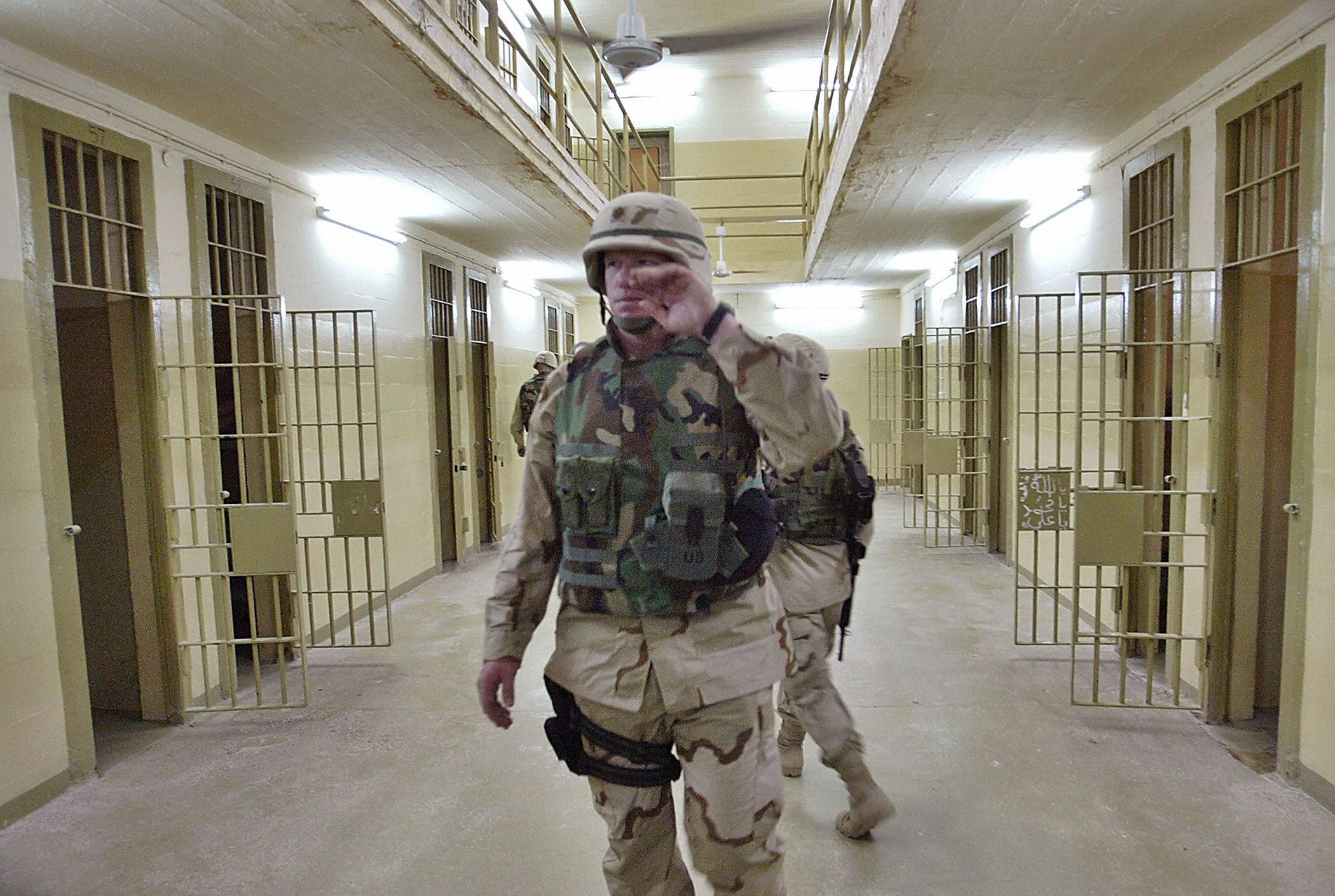
The new century, born only three years ago, has begun badly, under the sign of the extreme violence of the terrorist attacks of 11 September 2001, and the threat of war. Our world seems to have entered a terribly dangerous phase, dominated by a culture of conflict, a culture of the crusade that seeks to justify itself by exploiting religion. What we are faced by today is, in effect, an objective alliance between forms of fundamentalism: the Islamic extremism of the jihâd as a holy war against all non-Muslims is matched by the biblical justification of political events by American Protestant fundamentalism and by a Zionist interpretation of the Torah. The political is no longer separated from the religious, and the extremes reciprocally justify their own excesses. In Europe, too, governments have launched diplomatic offensives, and huge crowds have demonstrated, not in the name of a pacifism ready to concede everything, as at Munich in 1938, but in the name of an idea of international relations and the rule of law that wants to make the UNO the supreme arbiter. One voice in particular is heard loudly and clearly: that of John Paul II who, like his predecessors faced by wars and international tensions, never tires of repeating his rejection of the absurd mechanism, the tragic destiny of war, of the clash of civilizations. A year ago, at Assisi, he welcomed the representatives of the great religions of the world. Now, at a time when the UNO is under such enormous pressure, how can we fail to recall Paul VI’s exclamation in his address to the UN General Assembly on 4 October 1965 : “Never again war! Never, never again”. War may be a necessary evil. We know that the war against Nazism was unavoidable, and that trying to appease Hitler at the price of so many broken promises was an error he exploited. But we also need to remember that Hitler rose to power from the humiliation inflicted on Germany in 1919 and the victors’ refusal to dialogue with the vanquished, to build together a real peace of reconciliation. In the case of Iraq too, the path of humiliation, of the reduction of its whole people to poverty, was chosen after 1991, and this at a time when the greatest understanding was being shown towards other no less cruel dictators than Saddam Hussein. Why Iraq and not North Korea? History teaches us that only dialogue pays. The dictatorships in Europe have crumbled thanks to dialogue, openness, trade, the circulation of goods that opens the way to the circulation of people and ideas. That’s true of the Franco regime in Spain. It’s true of the Soviet Union: twenty years after the Helsinki Accords of 1975, perestroïka arrived in Moscow and shook the very foundations of the Communist system; twenty-five years later came the fall of the Communist regime: a regime that had for decades terrorized the peoples subjected to it and even the nations that did not form part of it, collapsed, without a shot being fired. Only dialogue can build the foundations of the future; humiliation and violence only perpetuate fear, fuel revenge, open not to the future but to a blind alley, to the destabilization of nations and of the world, to the spiral of hatred. It’s vital to rediscover the road of wisdom and courage, in other words, of the peace that is built day after day, an organic peace, founded on justice and on respect for the global common good. The Iraqi crisis must not make us forget the dramatic and intolerable disparity between the ever more powerful developed countries, masters of wealth and technology, and the rest of the world. An abyss now separates North and South. The world system does not work today: the often dramatic character of emigration testifies to despair and feelings of impotence that will one day explode. It’s time to return to a human policy based on the fundamental notion of the common good that the Catholic Church has long been proclaiming. Europe awaits it.
