EUROPA
A Vilnius (Lituania) due incontri delle Conferenze episcopali europee

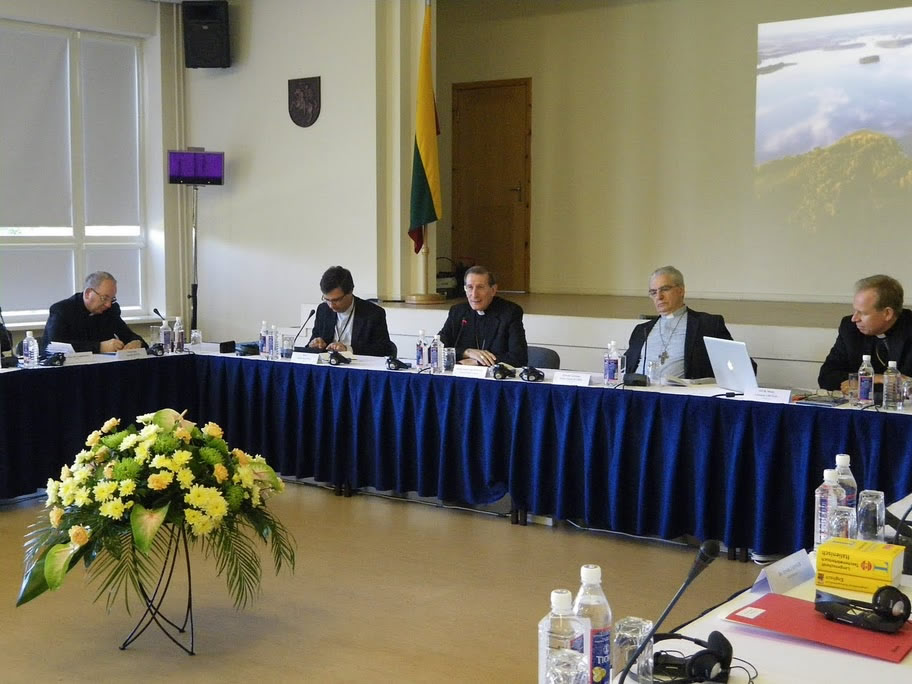
(Dall’inviato SIR Europa a Vilnius) – Una trentina di segretari generali delle Conferenze episcopali d’Europa a Vilnius per parlare e confrontarsi sulla "nuova evangelizzazione" e sulla comunicazione nella e della Chiesa in Europa. L’incontro si è aperto nella capitale della Lituania e a fare gli onori di casa è stato il card. Audrys Juozas Bačkis, arcivescovo di Vilnius e presidente Conferenza episcopale lituana. L’incontro dei segretari generali si concluderà il 19 giugno. Sabato 18, si uniranno ai presuli anche gli addetti stampa e i portavoce delle Conferenze episcopali per un momento di incontro e di verifica sugli impegni della Chiesa in Europa nel campo della comunicazione.
Una nuova evangelizzazione. "Sono convinto ha detto mons. Duarte da Cunha, segretario generale del Ccee che l’evangelizzazione, così come tutto quello che comporta la comunicazione nella Chiesa e della Chiesa, non sia tanto una questione di avere una buona strategia di marketing, che cerca di rispondere a ciò di cui la gente, seguendo la mentalità dominante, pensa di avere bisogno, ma deve essere espressione della vita in Dio che corrisponde alle reali esigenze del cuore umano, anche se queste, purtroppo, nella nostra attuale Europa sono spesso addormentate. Credo quindi che la nostra missione inizi esattamente con la cura della propria comunione personale con Dio e con gli altri fratelli". "Credo ha aggiunto – che possiamo dire che lo scopo principale di questi incontri ci sia proposto da Dio, ed è quello di stare insieme per parlare, per condividere le gioie e i dolori, e per guardare alla vita e alla missione con gli occhi della fede e quindi con la speranza che solo Dio può dare". "Credo, comunque, che a tutti i livelli e in tutte le attività della Chiesa si abbia lo stesso desiderio. Sarebbe brutto se pensassimo che il successo del nostro lavoro dovesse essere valutato come se la Chiesa fosse una qualsiasi azienda che cerca la sua quota di mercato! Ora, poiché siamo la Chiesa di Dio, sappiamo che lo Spirito Santo è il vero protagonista della costruzione della comunione e della missione e quindi anche della comunicazione, e solo guardando alla realtà di quanto Lui ci offre, ci insegna e ci chiama a fare possiamo valutare il nostro lavoro".
Un Paese, una storia. L’incontro del Ccee a Vilnius offre l’occasione anche di conoscere meglio la Lituania, il suo popolo e la sua storia. Una storia fortemente segnata dalla tragedia della repressione sovietica. "Una catastrofe dal punto di vista antropologico ha affermato il card. Audrys Juozas Bačkis, presidente della Conferenza episcopale lituana -, la gente è stata costretta, anche con la violenza fisica, a far finta di niente. L’oppressione ha intaccato le coscienze, la gente non sa più cosa è bene e cosa è male, solo ora iniziamo a uscire pubblicamente sulle rovine di un regime. Quello lituano è un popolo traumatizzato, il trauma è stato non solo per chi ha subito ma anche per chi ha fatto subire e a questo si aggiunge un senso di rimorso per coloro che sono rimasti passivi". Di fronte a queste tragedie, ha aggiunto il card. Bačkis, "non ci sono né vincitori né vinti e occorre oggi far prevalere la scelta del perdono e della riconciliazione mentre chi ha oppresso un popolo dovrebbe almeno chiedere pubblicamente scusa". Anche il nunzio apostolico in Lituania, mons. Luigi Bonazzi, nel saluto ai segretari generali ha tra l’altro sottolineato che questo Paese "anche oggi ha bisogno di continuare nell’esperienza del perdono". E mons. Gintaras Grusas, segretario generale della Conferenza episcopale lituana, ha incalzato: "Il marxismo, come il fascismo e il nazismo hanno imposto un’ideologia orientata alla formazione di un ‘uomo nuovo’ che ha portato alla distruzione dell’uomo stesso, allo svuotamento totale della sua coscienza. La nuova evangelizzazione vuole essere al contrario la proposta di un ‘uomo nuovo’ che vive e pensa nella pienezza della verità e quindi della libertà e della responsabilità”.
Il compito dei portavoce. Dare "un segno di speranza per il mondo intero". A questo sono chiamati oggi i "comunicatori della Chiesa" e in particolare i portavoce delle Conferenze episcopali europee ai quali è affidato il compito di "far percepire alla gente" cosa c’è dietro "incontri, decisioni e prese di posizione della Chiesa". A parlare è Thierry Bonaventura, portavoce del Consiglio delle Conferenze episcopali d’Europa. presentando l’incontro degli addetti stampa. Ai portavoce, sarà presentata una prima versione di EuroCathInfo – il Portale dell’informazione istituzionale delle conferenze episcopale in Europa – la cui messa online è prevista nel corso del 2011. Riguardo ai new media, Bonaventura ha detto: "La nuova evangelizzazione chiede ai cristiani l’audacia di abitare anche il mondo digitale, trovando gli strumenti ed i percorsi per rendere udibile anche in questi luoghi ultramoderni il patrimonio educativo e di sapienza della tradizione cristiana".
ENGLISH VERSION
EUROPE
With the eyes of faith
At Vilnius (Lithuania) two meetings of the European Catholic Bishops’ Conferences
(from our SIR Europe envoy in Vilnius) – About thirty secretaries general of the European Bishops’ Conferences have met in Vilnius to discuss on the topics of the “new evangelization” and communication in and by the Church in Europe. The meeting was opened in the capital city of Lithuania and the honours were done by Card. Audrys Juozas Backis, Archbishop of Vilnius and President of the Lithuanian Bishops’ Conference. The meeting of the secretaries general will be over on the 19th. On Saturday 18th the bishops will be joined by the media officers and spokespersons of the Bishops’ Conferences for a joint session to verify the commitments of the Church in Europe in the field of communication.
A new evangelization. “I am convinced said Mgr. Duarte da Cunha, Secretary General of CCEE that evangelization, as well as anything involving communication in and by the Church, is not about having a good marketing strategy, which is aimed at responding to what people think they need, because they follow the prevailing mentality, but it should be the expression of the life in God which corresponds to the real needs of the human heart, although these needs, in our Europe of today, are often sleeping. I think, then, that our mission begins precisely with taking care of our personal communion with God and with our brothers”. And he added: “I believe we can say that the main purpose of these meetings is proposed to us by God, that is being together to talk, to share joy and suffering, to look at life and the mission with the eyes of faith and, as a consequence, with the hope that only God can give. (…) I think, anyway, that at all levels and in all the activities of the Church the same desire is present. It would not be good if we thought that the success of our work should be evaluated as if the Church were some company searching for a market share! Now, as we are the Church of God, we know that the Holy Spirit is the true protagonist in the construction of communion and mission, hence also of communication, and only by looking at the reality of what He offers us, teaches us and calls us to do, we can evaluate our own work”.
A country, a history. The CCEE meeting at Vilnius also gives us an opportunity to get to know something more about Lithuania, its people and its history. A history which has been strongly marked by the tragedy of Soviet oppression. “A catastrophe, under an anthropological point of view said Card. Audrys Juozas Backis, President of the Lithuanian Bishops’ Conference , as people were obliged, even by means of physical violence, to just go ahead as if nothing was the matter. Oppression has impaired consciences, so that people do not know any longer what is good and what is bad, and only now we begin to emerge publicly upon the ruins of the dictatorship. The Lithuanian people is traumatized, but the trauma affected not only the victims but also the perpetrators, and we should add to this the prick of remorse of those who had taken a passive attitude”. In front of these tragedies, Card. Backis continued, “there are no winners and no losers. Today we must give priority to the choice of forgiveness and reconciliation, and those who have oppressed a whole people should at least make public apologies”. Also the apostolic nuncio in Lithuania, Mgr. Luigi Bonazzi, in his address to the secretaries general, has emphasised that this country, “even today, needs to go ahead with the experience of forgiveness”. Mgr. Gintaras Grusas, Secretary General of the Lithuanian Bishops’ Conference, insisted on the same point: “Marxism, similarly to Fascism and Nazism, had imposed an ideology whose aim was the shaping of a ‘new man’ which eventually lead to the destruction of humans, to a total emptying out of their conscience. On the contrary, the new evangelization is a proposal of a ‘new man’ who lives and thinks in the fullness of truth, hence of freedom and responsibility”.
The task of the spokesperson. Giving a “sign of hope to the whole world”. This is what today the “communicators of the Church” are called to, especially the spokespersons of the European Bishops’ Conferences, who have been entrusted the task of “making people perceive” what there is behind “meetings, decisions and position statements of the Church”. This is what we heard from Thierry Bonaventura, spokesperson of the Council of European Catholic Bishops’ Conferences, when introducing the meeting to the media officers. A new version of EuroCathInfo the Portal of institutional information of the European Bishops’ Conferences will be presented to the spokespersons; it is scheduled to become operational on-line by the end of 2011. As far as the new media are concerned, Bonaventura said: “The new evangelization requires that Christians have the boldness to inhabit also the digital world, and find the instruments and the ways to make audible the educational heritage – founded on wisdom of our Christian tradition also to this ultramodern reality”.
