FAMILY IN EUROPE
The Federation of European Catholic Families toward Family 2012

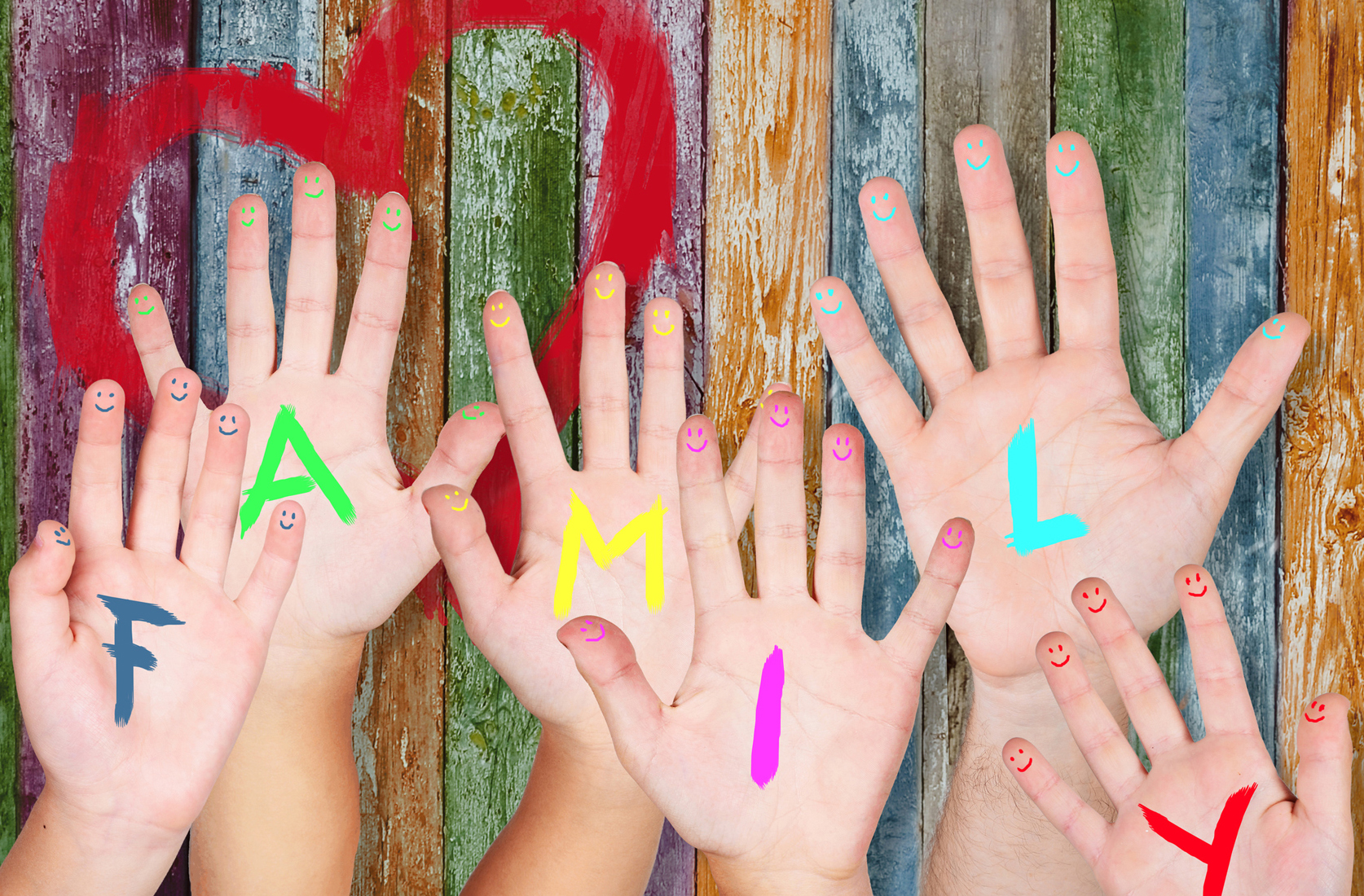
The World Meeting of Families (Milan, May 30-June 3) is meant to shed light upon "the beautiful and holy mission" the family "plays in society and in the Church". This is the conviction of Antoine Renard, President of the Catholic Families Associations (www.afc-france.org) and of the federation of catholic families in europe (www.fafce.org), gathering ten national and regional associations of the continent. Giovanna Pasqualin Traversa interviewed him for Sir Europe.
What is the condition of the family in Europe?
"The situation is extremely varied in the different countries, for cultural and historical reasons, but also for the effect of family policies, that in some States – such as Italy and most parts of Southern and Eastern Europe – are virtually nonexistent. Scandinavian countries, by contrast, are characterized by consistent and effective family policies, although very individual-oriented; for example, by supporting mothers who choose to remain single by choice. However, there are two challenges/problems which are common to all the families of the continent: the inability to have the number of children they would like, and the feeling of being unprepared and unable to perform their educational role".
Do you believe the family is adequately recognized and supported as the fundamental unit of society?
"In Europe, today, the vision of the family is largely focused on the parent-child relationship. But it is the couple that creates the family. This nuptial dimension should be valued more, because if the couple does not work, the whole family does not work either. It is therefore necessary to rediscover man-woman complementarity, lasting love, and marriage, which is not achieving a goal but an initial stage that needs support. First we must reaffirm the clear-cut distinction between the marriage of a man and a woman and other forms of union (that is, homosexuals, extended families and reconstituted families). Society should favour marriage and recognize – by means of effective policies – the role of the family based on marriage and open to life".
What could France say to Europe?
"This is a paradoxical situation. French family policies are viewed with interest by our European neighbours, especially those who are to face the demographic winter. However, on the other hand, many measures are called into question for financial reasons. Yet it is widely acknowledged that the instability of the family is a major cause of high social, economic, and psychological costs, both on those directly involved and on society. Therefore, in view of our presidential elections (April 22, first round, and May 6, second round: editor’s note), we insisted that candidates should query on how to recognize the role of the family, promote marriage and a real possibility of choice, by stressing the benefits of the so-called ‘sustainable family’, i.e. a family which is founded on marriage between a man and a woman and is open to life and society. This request hardly finds an answer, because the family, in France as in most of Europe, is considered a ‘private issue’, based only on sentiments".
What would be particularly needed?
"Families do not need to be managed, but supported and encouraged, also in financial terms. Furthermore, we should recognize the role of parents in school and respect their freedom in this area, as well as develop initiatives for preparation to marriage and for following the couples in their route. In the educational area, parents appear resigned and defeatist. In France, AFC has been offering the Chantiers-Education (educational workshops) for more than 20 years; it might be an idea for export. Finally, the economic aspect: it is through work that every family should earn its own livelihood, but it is not right that a mother should be penalized if she decides to quit working in order to take care of her child. Courageous decisions are needed on the subjects of working hours and parental leave. In the same line, it is not right that the decision to have children makes parents poorer: we need to think of appropriate fiscal measures".
The theme of the Milan Meeting is very topical. Is it possible to reconcile work and family in this time of crisis?
"The practice of workless Sunday is a clear and visible demonstration that people and societies are not subservient only to business or economy. A day of rest common to everyone is a blessing for society as a whole and for each of its members, especially for the families. This day off to be spent together is one of the pillars of the stability of family life and therefore, of the family’s ability to fulfil its duties, including that of being the main player in a healthy and fruitful economy. Work can be either a source of balance or stress for the couple and the family. The challenge is to find a proper balance".
Why is it important to participate and what do people expect of those Days?
"It is an extraordinary opportunity to witness that the family is a real chance to promote the ‘good news’ of the family in society, and to show concretely the relationships between the families, their joy, and their hope. Together, the families make love more inventive".
(20 April 2012)
