CHURCH AND EUROPE
Msgr. Mariano Crociata (CEI) after the CCEE meeting in Edinburgh

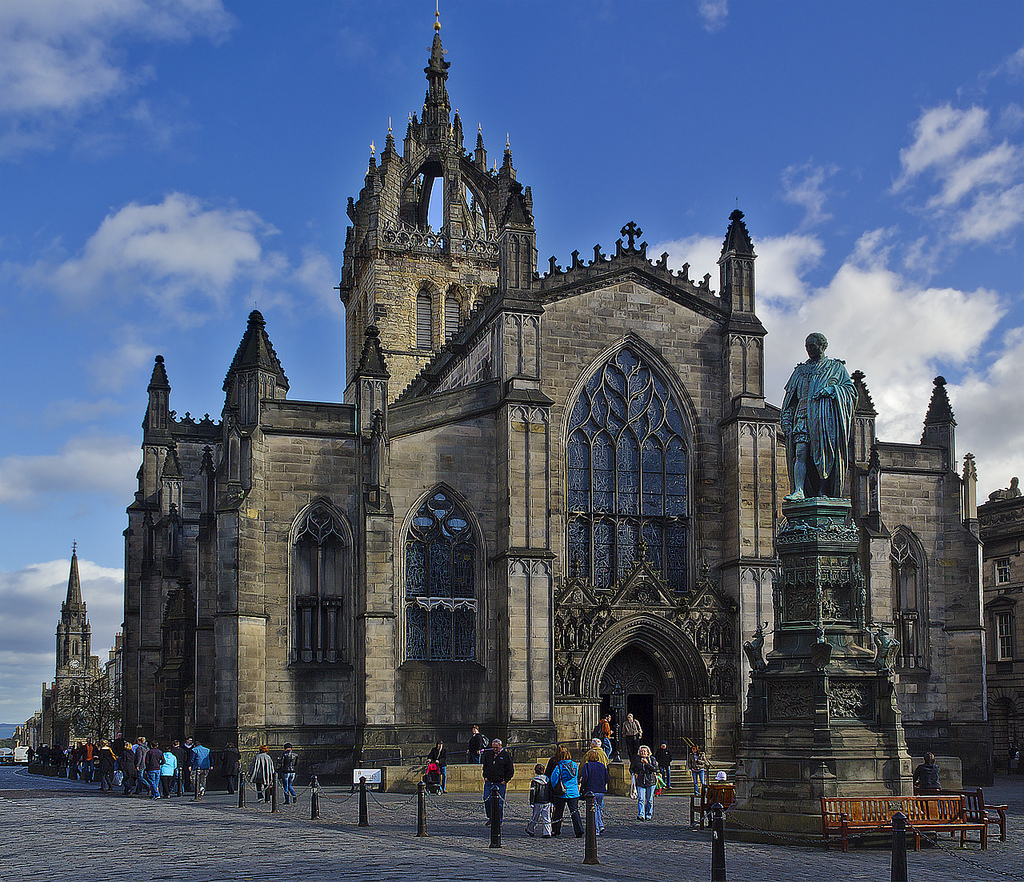
At the end of June – beginning of July, the 40th meeting of General Secretaries of the European Bishops’ Conferences was held in Edinburgh (Scotland), (click here). Msgr. Mariano Crociata, General Secretary of the Italian Bishops’ Conference (CEI), was interviewed by SIR Europe on the event.The European meeting involving questions related to life, the family, religious freedom, freedom of education, highlighted the importance of a common thought of the Churches in Europe: what is your view to this regard? "It should be pointed out that such meetings cannot be compared to the implemented activity of a body or an institution. Rather, they highlight the participants’ interest, motivated by the need to share the intense and significant experience of the bishops’ conferences, with the positive aspects and the current problems experienced today. The Church, among other things, has always been marked by the experience of sharing, taking the burden of mutual problems and being mutually enriched by its positive experiences in return. There is an increasing awareness of the momentous direction Europe is called to undertake. Today it is widely acknowledged that the Church cannot be lived by remaining confined within our own national boundaries. In this globalized world, the circulation of the life of the different Churches in Europe – a homogeneous continent despite its differences – is vital to prevent its impoverishment. In this sense languages are the measure and the effort that must be made to overcome the current barriers to communication, along with the need to learn to communicate and open up to others".A concrete theme addressed by all those present relates to the family: what is the reason for this common concern? "There is a dangerous trend that is growing increasingly stronger, namely, the wish to disarticulate the family, to change it and subvert it. I asked some of my confreres if this is the objective of pressure groups, of definite and circumscribed cultural areas, or if it is a trend that is becoming increasingly widespread. The answers were not univocal. My idea is that there are lobbies that are actively involved in promoting initiatives aimed at changing the asset of the family, of man-woman relations, of the human person in his/her integral dignity, of the value of life. However, I am equally convinced that there is a sound layer of humanity even in those Countries affected by laicism. There is a profound, deep-rooted sentiment, that testifies to the fact that a sense of humaneness exists and that it can be recovered. Before the challenge of pressure groups, we should gain increasing awareness of the fact that the very identity of the human person is at stake, namely, the safeguard of the integrity of the human person".In the meeting participants spoke about the attempts to remove faith from the public realm, which some people view as a form of persecution…"I want to clarify, referring to the theme of the family and not only to that, that some commentators and part of the media have transformed those ideas and proposals that threaten the very integrity and existence of the human person into a ‘politically correct thought’. As regards to Christians in particular, rather than calling it ‘persecution’ I would speak of a ‘disagreement’, a feeling of being a minority whose thought is different from mainstream political correctness, or as someone describes it, from the ‘single thought’. For us Christians I would rather describe these as difficulties in the transmission of a thought that is not aligned with mainstream positions, i.e., what is represented as ‘mainstream’ by the media. This doesn’t give us the true proportion of the majority of opinions and minorities, however it explains the influence of ‘political correctness’ on public debate".In the meeting you also spoke of the trouble experienced by Europe in the political, economic and social framework. Could you tell us the main points of the meeting? "There are two levels. The first refers to institutional and political dynamics, involving the question of a global change. The second is a deeper, slower and more effective level that is a result of the first. If the institutional process is thwarted or interrupted it will become harder to implement. This involves transmitting confidence whilst valuing the continuation of the unification process. But much more can be done on the cultural and religious planes, in order to step up and accompany the long processes and the basic movements along the path of unification. Our primary task is to be and to act as a Church. The more we are efficient in our commitment for the Church’s proclamation and mission, the more that very fabric of values, of unity across Europe will come to the fore. Such unity isn’t only a unity of faith. It is a vision of the world marked by coexistence, by historical vision and cultures, shared around a set of crucial poles for collective awareness".
