LEFEBVRIANS
Interview with theologian Piero Coda on the colloquiums of the Holy See with the Fraternity of Saint Pius X

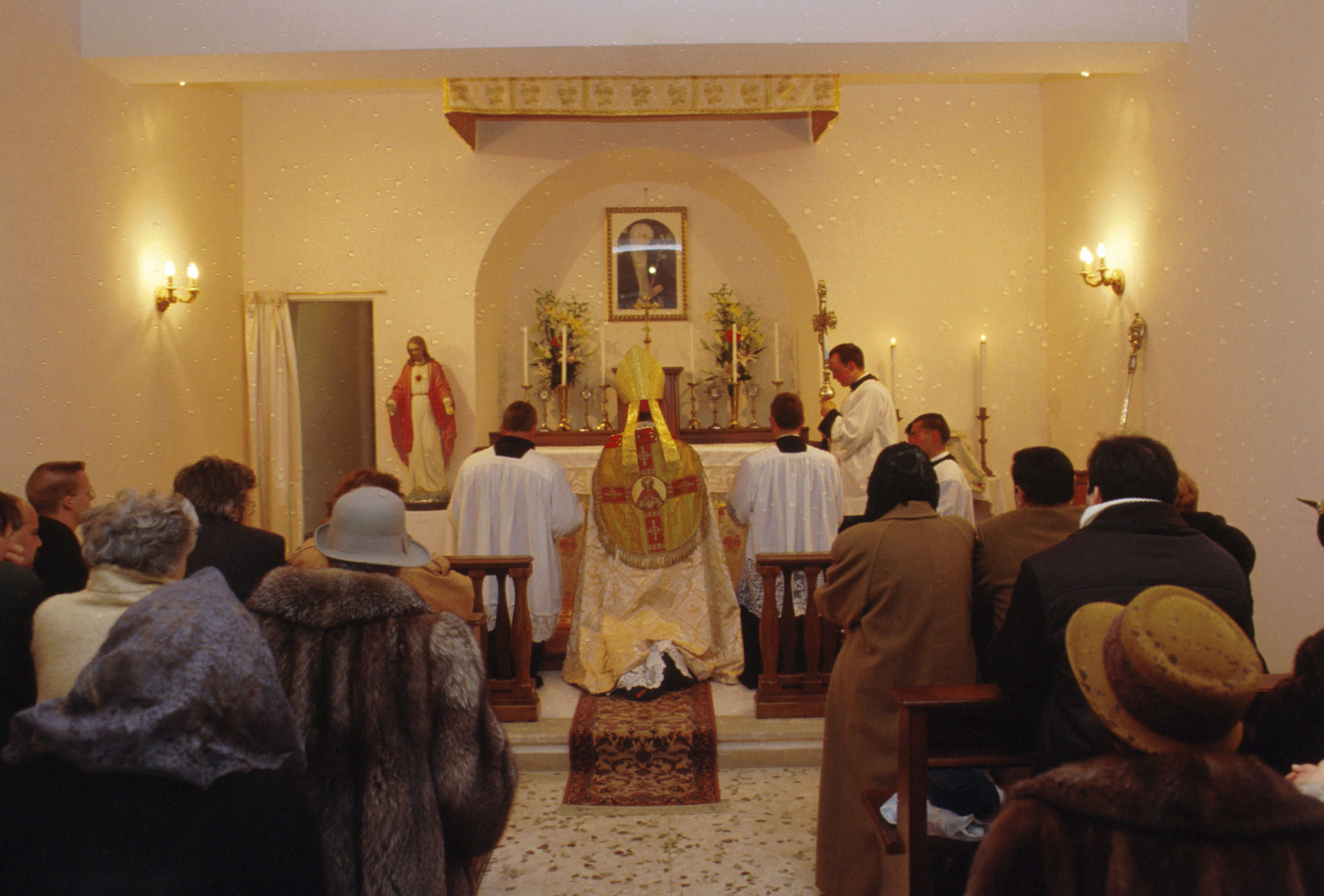
"This is what diversity is: a specific tone in the whole symphony, a gift for everyone to share when it blossoms from fruitful grounds marked by the unity of the hearts and minds in Jesus and when it is expressed and exercised in a relationship with all the other members of the single Body that is the Church". These "key-aspects" were highlighted by Italian theologian Msgr. Piero Coda, dean of the University Institute in Sophia, in his reflections regarding the colloquium between the Holy See and the Priestly Fraternity of Saint Pius X, in the following interview with Maria Chiara Biagioni for SIR Europe.Msgr. Coda, Levebvrian bishop Fellay assures that it’s not the intention of the Fraternity to create a "parallel Church". In cases such as this, to what extent does the perspective of a further division within the Church represent a "psychological" burden? "The assurance of not wanting to create a "parallel Church" is positive, as it reaffirms the will to be faithful to Jesus Christ till the end, as the living parts of His Church, His own Body, as taught by apostle Paul. The question is: who is – or rather – where is this true Church, the Church of Jesus Christ? In other terms, which are the criteria to discern His true face, and who is it that should express these criteria? If it were presumed that these criteria were possessed and reaffirmed in an exclusive manner, outside the communion with the universal sense of faith of the People of God and with the authoritativeness of its legitimate pastors, it would be identified ipso facto with the real Church, thus self-excluding herself".The Fraternity has a mission: to preserve the "vital presence" in the Church of the "treasure of her Tradition". It thus speaks of a "modernistic and liberal influence exerted in the Church starting with the Second Vatican Council and with the reforms that ensued". It seems an irreconcilable position with the Catholic Church. What’s your opinion? Are we facing a standstill? "Also in this case, the exercise of a specific mission, in communion with the entire Church, is not the problem. On the contrary! Every true charisma in the Church has this task. The challenge of enabling the ‘treasure of the Tradition’ to thrive inside the Church is more problematic. Is this not the mission of all the People of God? Is this not what the Magisterium is called to oversee? And then, what is meant by ‘Tradition’? Is it merely the communication and transmission of the ‘depository of faith’ as it has been received and expressed in a given historical moment, or is it not its relentless investment in the present time, in faithfulness to the event of Jesus Christ, listening to the breath of the Holy Spirit which – as Jesus promised – "will guide you to the whole truth?" As regards the accusation of a supposed "modernistic and liberal" influence within the Catholic Church, starting with the Second Vatican Council – an accusation, which, among other things, is generic and undifferentiated – once again it signals the true bone of contention, i.e., the ecumenical council Vatican II is – as taught by Benedict XVI – a full Council, or not? Thus it is a Council – as the Pope said – which lies ‘in continuity’ with Church Tradition, but which precisely for this reason, also is a ‘reform’ council, namely, as understood by John XXIII, a Council meant to reaffirm the ‘topical relevance’ of the message of truth and grace which Jesus transmitted to the Church, a message which is the same ‘yesterday, today and always’, which must be conveyed with new languages in order to be received with joy by the people of our times".Notwithstanding the Lefebvrian phenomenon, it seems that people find strongly-identitarian movements appealing, to the detriment of more dialogic lines of thought and spirituality. What can be said about this phenomenon? "Ours – and the next one even more – is the era of globalization. Put in cultural terms, it’s the time when we discover and we are called to experience (with all the related fatigue) that we are truly and concretely a single family. This requires the capacity to live our identity for what it truly is: a gift to ourselves and a gift to others. This challenging innovation requires a cultural transformation, namely, a maturity at the level of conscience and expressiveness. A change such as this can’t be improvised. And it’s more than natural that given the novelty of the challenge one may be tempted to give in to the relentless defense of one’s identity. It’s a physiological and even positive fact if and when the identity reaffirmation is aimed to improve the level of our relations with others for greater fruitfulness. This phrase becomes regressive and pathological when it is exasperated and it is lived as a narrow-minded and preconceived closure". In your opinion don’t we risk that the "Lefebrvrian debate" may give a distorted image of the Church? And how can we defend ourselves from this risk?"The danger exists when the yearning for dialogue shown by the Catholic Church vis a vis the Fraternity of Saint Pius X is viewed as a weakness or a compromise that could end up shelving Vatican II and the teaching of Paul VI and John Paul II. We have to show that this is not the case. It was clearly stated by Benedict XVI: following the approach of communion and dialogue of Vatican II we have to seek all ways to bring together into the heart of the only great Church of Christ those who seriously risk distancing themselves from it".
