EUROPEAN UNION
Minister Ornaghi, the crisis of the Community project and Catholics’ commitment

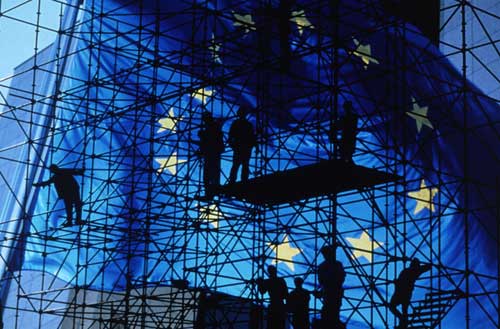
"It’s a moment for major reflections in Europe" and "perhaps a new constituent phase for community integration could be launched" also "in the light of the ongoing situation". In this framework, "culture" deserves "a special place". The Minister of Culture of the Monti government Lorenzo Ornaghi analysed the standstill of the European Union. Is the crisis of the European project as profound as it appears? "Yes, we’re facing a systemic crisis, which involves the very pillars of Europe. It concerns the economy but it equally seriously involves the realms of culture, politics, and public opinions. The resurgence of nationalisms are also linked to the crisis, while a strong anti-political current may grow even worse".What are its underlying causes?"There are a series of interconnected reasons. It should be noted that there is a growing divide separating politics from citizens and an equally serious one separating national and European governance tools. Global dynamics require new democratic instruments: those adopted at national level are no longer sufficient and those pertaining to the Community are not yet appropriately developed nor have they been implemented. It can be said that the European project crisis is marked by two main dimensions, namely, its governance, that can be addressed with a deep innovation of the political and institutional system, and through representativity In this second plane we observe a gap separating European citizens and institutions, struggling political parties and self-referential policymakers. On the European scenario I would like to mention the knot of political culture".What do you mean?"It could be said that national political cultures are unable to promote European political culture. In fact, the debate on the roots of Europe, also on the Christian roots, has been a missed opportunity since if it had been further delved into it would have led to a more open and articulated vision not only on the past but also on the present and on the future of Europe. Europe isn’t an idea that belongs to the past and it cannot be reduced to its merely economic dimension. Europe could bring about determined action for the common good. Given the momentous decisions awaiting the EU and its Member States in the coming fall, I hope this debate will finally take shape".When you speak – as you did recently – of a cultural contribution to strengthen the path leading to the "common home", what are you precisely referring to? "In my opinion the reflections on themes related to the European building carried out in academic environments, in literature and on the media haven’t sufficiently enriched public debate. Ideas and projects for the European common good, for the promotion of visions, values, approaches and solutions capable of addressing contemporary questions should be part of political debate". There is a recovery of "market social economy" principles, a theme recently highlighted also by an extensive document by the Commission of the Bishops’ Conferences of the European Community. What do you think about it? "Social market economy isn’t only a tool, it isn’t a set of technical decisions. It is – so as to say – a lifestyle, as it is inspired by values such as subsidiarity, solidarity and responsibility. Its topical relevance can be fully understood in the light of the commitments the Union is called to face at this state and of the social problems connected to the crisis". Are nationalisms a real threat to Europe? "Nationalisms and populisms tend to be fuelled and disseminated in times of deep, longlasting crisis. They can also be read as forms of self-protection, and in this perspective its reasons are understandable. They should be addressed with policies that will efficiently respond to the true needs of individuals, families and society".In this framework can Christians give their specific and original contribution to the "common home"? "Christians are an added value. Already today, on various different occasions they seek to identify a feasible future for Europe. It will suffice to mention the European Social Week, and the cultural project of the Italian Church. However, they should devote themselves to ensuring that these ideas become a living part of European culture, and undertake a coherent commitment within political bodies".
