EUROPEAN UNION
Positive signs for Europe from Karlsruhe, Amsterdam and Strasburg

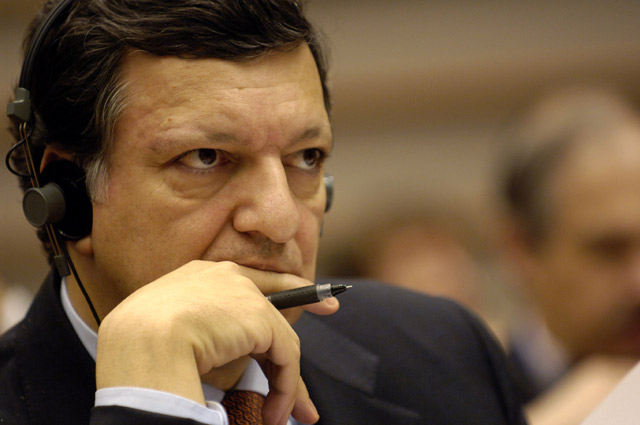
A breath of fresh air is always welcome, and a sign of relief helps to go on. On the wake of a risky "super-Wednesday" (12 September), whose agenda was marked by important items for the future of integration, Europe emerges stronger and invigorated.In Karlsruhe the German Constitutional Court ruled that the European Stability Mechanism (ESM) doesn’t contradict the internal legal system, thus giving the "conditional" green light to this tool that is crucial to combat speculation and financial market attacks on national budgets. The judges decided that Germany’s financial commitment must not exceed 190 billion, on condition of the approval of the Bundestag. Chancellor Angela Merkel remarked: "a strong sign for Europe has been launched from Germany". Eurogroup president Jean-Claude Juncker, announced that the ESM opening meeting will take place October 8 in Luxembourg. From Amsterdam were released the results of the early parliamentary voting where the two major pro-European parties prevailed – the Liberal-Conservatives led by outgoing premier Mark Rutte and the Labour party led by Diederik Samson- thus bringing remarkably increasing consensus, while the extremist right and left wing movements lost grounds. Finally, in Strasbourg the EU Commission president presented the "State of the Union" before the European Parliament. The annual meeting serves to draw a balance of the integration process, highlighting stumbling blocks, successes, new directions and objectives. In the same Alsatian city Barroso and the Commissioner to the common market Michel Barnier illustrated the contents of the proposal for a "banking union" that describes the Central Bank of Frankfurt as the pillar of the Single Supervisory Mechanism. For the time being this will regard the banks of the euro zone (the Executive refers to all banks, but the interpretation that comes from Germany refers only to the main banks), considered by the Commission "an essential step towards economic and monetary union".These are the facts, which different in terms of content and "importance" but both contributing to boost the progression of the European Union. The technical tools that are currently being perfected in Brussels could work. Euroscepticism is at a standstill and the appeals for an adequate response to the crisis along with the revival of European unity are starting to deliver positive results. To this regard the most convincing statement was delivered by José Manuel Barroso. In his address at the European Parliament the head of the Executive underlined: "We still haven’t overcome the ongoing crisis, which continues having serious repercussions" on national budgets, on real economy, on employment and on the wellbeing of citizens. Until today, the EU and its member States have made progress to respond, but still today "EU27 political leaders take a decision and the following day they fail to fulfil their commitments". The Portuguese politician pointed out that "in order to assure our social development model based on job and wealth creation" banking union must be urgently created, along with fiscal and budgetary union, with economic and political union encompassing them all. Barroso thus called to act at a different pace: "We must evolve in the direction of a federation of National States. Not a European super-state but a democratic federation with a shared sovereignty", a union "with the States" and not against the States". Thus the federalist perspective (which consists in a lukewarm version of the true federalism that gives priority to the unity of peoples and citizens over chancelleries and States) enjoys authoritative, official support within Community bodies. The Commission president thus pointed out: "Someone said that a supranational democracy cannot exist. Those who say this are wrong. Markets are trans-national, global challenges are trans-national. We have launched a democracy whereby State sovereignty is enhanced at European scale and enables member States to preserve the same fast pace of major global players". Probably this is currently the most advanced and feasible Europeanist vision, a concrete way to answer citizens’ expectations, while at the same time demolishing the nonetheless understandable eurosceptic objections. The path, which is still long, now seems to be clearer.
