UKRAINE
His Beatitude Sviatoslav Shevchuk, head of the Greek-Catholic Church

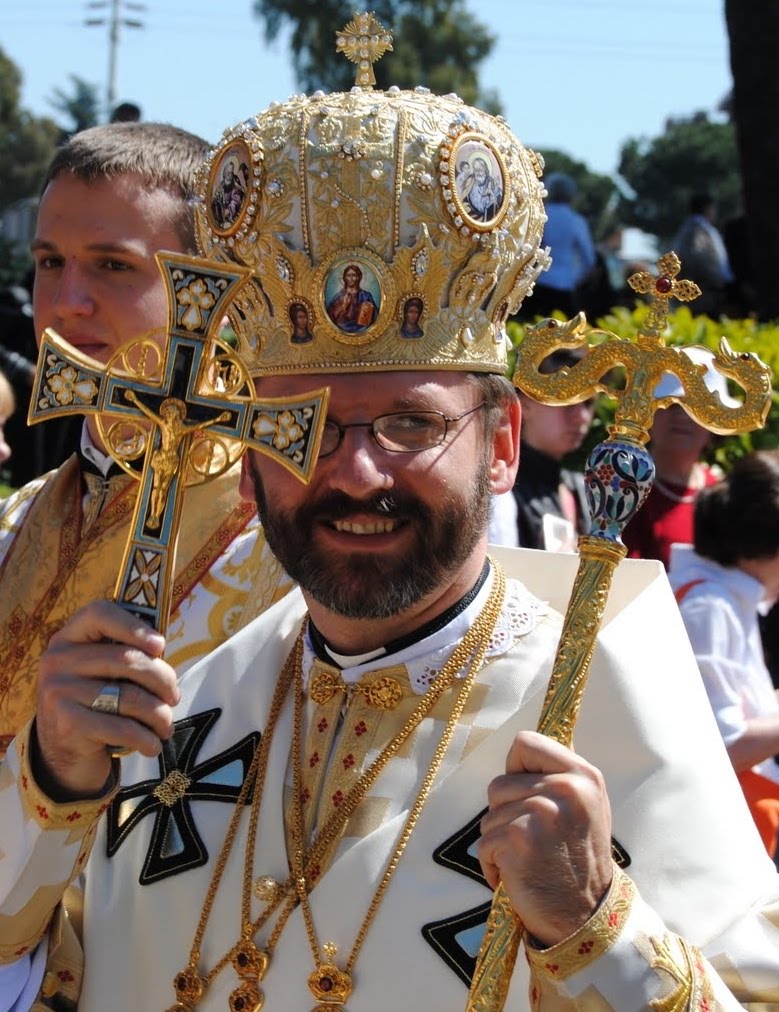
Follows the interview with the Major Archbishop of Kyiv-Halych, head of the Ukrainian Greek-Catholic Church (UGCC), His Beatitude Sviatoslav Shevchuk, on the spiritual aspects of the challenges faced by Ukrainian society. The next issue of SIR Europe will feature an interview with Msgr. Mieczyslaw Mokrzycki, president of the Ukrainian Roman-Catholic Bishops’ Conference. Both interviews are by Danka Jaceckova (SIR Europe-Bratislava).Your Beatitude, September was marked with an important event for the UGCC – Synod of Bishops held on 9-15 September in Winnipeg, Canada. Could you offer some reflection on its conclusions?"As a main topic of the Synod we had a discussion on vocation and mission of the laity in the Church. It was held at the conclusion of the Holy year dedicated to laity and also in the light of preparations for the Year of Faith, due to be declared by pope Benedict XVI, which we have decided to join. It will be marked with one very special event – next year’s celebration of the 1025th anniversary of Christianity in Ukraine. So, we’ll commemorate the baptism of Kyivan Rus by the pilgrimage to our Cathedral of Resurrection in Kyiv, to which we invite the faithful from all corners of the world".You mentioned the role of laity in the Church, what is the current situation like in this regard within the UGCC?"As a final message to our laity we prepared a special post-synodal letter. First of all, we thanked our faithful for the witness especially during the times of persecution during communism, because it’s only because of our faithful, that the UGCC managed to survive. We underline that the Church is a community of baptized persons. It’s not only clergy and hierarchs who are responsible for it, but each member of the Church in each part of the world. Every lay person must take his or her own responsibility for the Church".The plenary session in St. Gallen was held also in the light of the 50th anniversary of opening of the II Vatican Council. What fruits has this event brought for the UGCC?"The constitution ‘Lumen gentium’ describes the Church as a ‘nation of God’. So this is a new vision. Especially within this new ecclesiology of the II Vatican Council we talk about the role of the laity – members of that God’s nation. It is so important to encourage our laity to not be afraid to manifest and confess their Christian faith in today’s society. Another significant fruit is a possibility for us, eastern Christians, to rediscover our own identity. To be able to live our eastern tradition within the community of the Catholic Church. All Catholic eastern Churches really experience a period of true renovation. And I would say that today also our activities as a Synod are the fruit of the II Vatican Council".How many faithful of the UGCC live in the world?"We have almost 7 million Ukrainian Greek Catholics. Out of this number, about 5 million live in Ukraine and almost 1 million in Canada, which makes it the third country with the largest Ukrainian community after Ukraine and Russia".How would you describe relations of the UGCC with Orthodox Churches present in the country?"Well, I would say that with Orthodox Churches in Ukraine we have a good dialogue. We are united in action. As an example I can mention that on 1 December last year, when Ukraine was celebrating the 20th anniversary of the famous referendum that brought independence to our country, leaders of three most important Churches: Ukrainian Orthodox Church – Moscow Patriarchate, Kyivan Patriarchate and myself, we have made a joint appeal to the Ukrainian society in regard to spiritual dimension of today’s economic crisis. It’s almost the same topic as we discussed at the plenary in St. Gallen. Because we appealed together, we got an excellent response. A group of intellectuals, I would say those who are real moral authorities in Ukraine (including my predecessor cardinal Huszar), has been formed, called the ‘Group of 1 December’. Not a political group but a group which is trying to be sort of ‘conscience’ of the civil society, which I find very important especially in this period of its development".Fervent discussions have been recently going on in Ukraine about the question of the language law which elevates the languages spoken by minorities of at least 10% to the status of official regional languages. What is the attitude of the UGCC in this regard?"All intellectuals and even the members of the Council of Churches and religious organizations in Ukraine have spoken out against it. We consider this law to be a provocation, a threat against the unity and social peace. Even now when that initiative became a law, it produces many confusions in the society because nobody actually knows how to apply it. This initiative has come up because of the forthcoming parliamentary elections in Ukraine, it’s simply a fruit of certain political strategy".
