THE LAICITY OF THE STATE
France: the thought of Cardinal Jean-Pierre Ricard, archbishop of Bordeaux

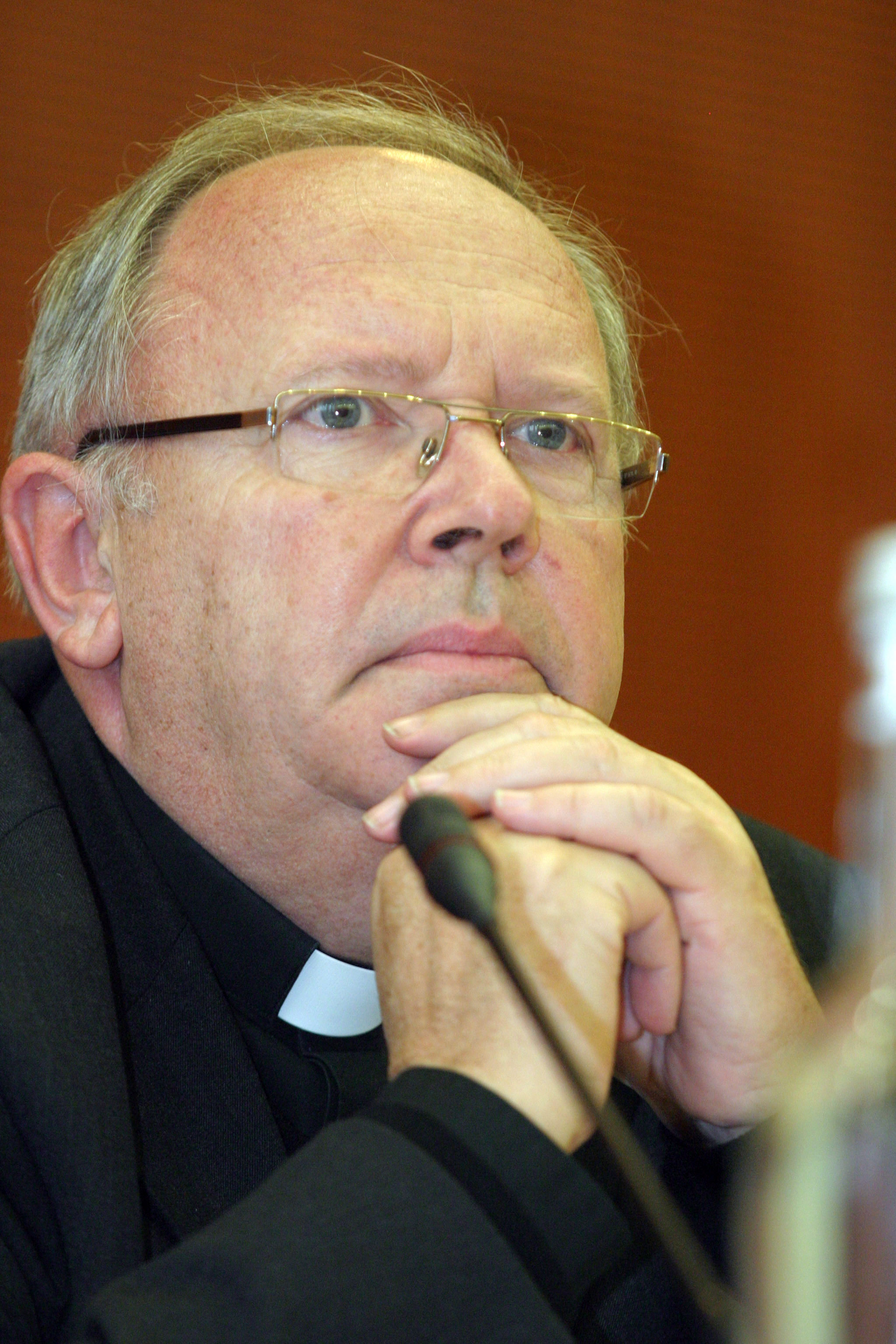
"Religions should be asked to refrain from imposing the norms of their communities upon the rest of the population" and "to learn to distinguish the sphere of religious rights from civil rights. However, we should oppose the tendency to extend State laicity to society as a whole". It is an excerpt of the Conference by Cardinal Jean-Pierre Ricard, Archbishop of Bordeaux, held on September 27 at the Institut Français Centre Saint-Louis in Rome titled "Laïcité de l’Etat, laïcité de la societé?", the first of a series of three events promoted by the Institute on the occasion of the ad limina visits of the French bishops and the Year of the Faith.Lay State, plural society. "The term laicity is now used in France in a very flexible way", said Ricard. In fact, "it is often used to justify various controversies or refusals". "Remarkably, over the past ten years – he added – certain areas of public opinion have gradually shifted from State laicity to societal laicity". This is an "undue" shift, according to the prelate, since "laicity is a feature pertaining to the State, not to society, which in fact is marked by pluralism". His Eminence retraced the historical roots of the so-called laïcité, underlining that the term is not to be found in the renowned "Loi de Séparation des Eglises et de l’Etat" of 1905. The archbishop of Bordeaux explained that in France laicity "identifies the neutrality of the State and its independence from religious traditions and faiths". It’s a laicity "which is respectful of religions" and which "does not prevent cordials relations, notably, good relations between the State and religions". The right of expression in the public realm. According to Cardinal Ricard there are three "currents" which today "threaten" the "concept of the State laicity". Firtstly, the "olden militant laicity, whereby religions are a form of obscurantism that minds should be freed of". To this is added a non-ideological laicity, which is expressed "in policies aimed at speeding up the process for the elimination of the religious aspects". The most insidious fringe is the "militant current that wishes to extend the reference to laicity not only to the State but to society as a whole, thus reducing public and social expression of religions" so as to confine the latter to "the private realm, preventing all forms of expression in the public realm". The cardinal referred in particular to the draft bill on gay marriage and adoption. Like every organization, he said, "the Church has the right to exercise her freedom of expression, and although political strategy does not fall within its province, all reflections on the human person in society involve the Church directly, and they are part of her mission". Card. Ricard also pointed out that "free expression in the public realm" risks being "selective" when a gay pride is welcomed and when there are attempts to impede initiatives such as the March for Life promoted by Catholic faithful.The role of Islam. With reference to current events, the archbishop of Bordeaux conveyed his reservations on the proposals to modify the calendar of festive days, i.e., to make the days of Pentecost, Ascension and August 15 working days. Moreover, he said, "introducing Islam in French society" as the second religion after Catholicism has resulted in a "strong emphasis on laicity by the public opinion and political leaders". Internal questions and reflections on acts of terrorism linked to Islamic terrorism at international level, represent a mixture to which is added, according to Card Ricard, the attempt to promote "more offensive currents, that question our laicity" and intend to "impose their particular realities", "straining the capacity of resistance of the Republic to their claims". This, according to the prelate, "has not been without consequences in the relations of political leaders with the religious representatives of the various religions".Democracy and pluralism. "The public and social expression of individual faith – continued Cardinal Ricard – are rights that belong to every believer in every society, since a democratic society is a pluralistic society where the public expressions of religions should freely be expressed". His Eminence thus recalled the words of John Paul II and Benedict XVI for whom the right to religious freedom "is the foundation of all other rights". "The State is secular – the prelate concluded -. Our society is not. It has another ambition: to be a society where other religions aren’t censored" but which have been prevented from "enriching societal life". Next appointments (same seat, at 18.00 hrs), on November 12 with cardinal André Vingt-Trois, Archbishop of Paris (La famille), and on November 26 with card. Philippe Barbarin, Archbishop of Lyon, (Pluralisme religieux et sécularisme).
