
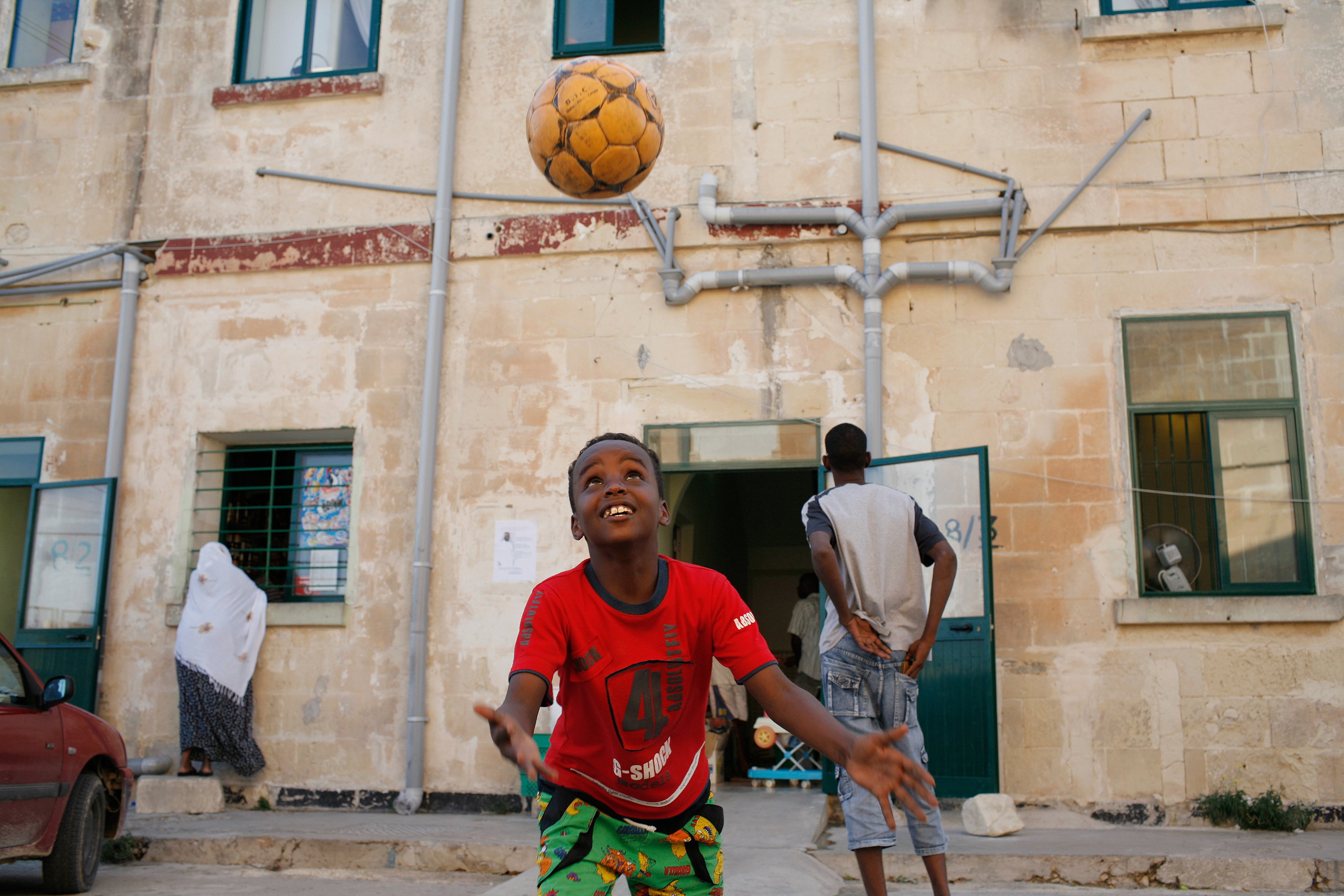
EU action plan for unaccompanied minors"The minors arriving alone to our borders are among the most exposed and vulnerable in our societies. Although it is encouraging that EU policies have helped to improve the conditions and protection of the children, more challenges lie ahead" said Cecilia Malmström, Commissioner for Home Affairs, commenting on a proposal adopted by the Executive on the implementation of the action plan for unaccompanied children. In 2011, there were 12,225 asylum applications by unaccompanied minors across the EU27 – underlined the Swedish Commissioner – a number comparable to previous years and unlikely to change in the coming ones. A much greater overall number of unaccompanied children are entering Europe via irregular migration channels, as estimates provided by some member States suggest. Italy provided data, which indicated that there were 5 959 unaccompanied minors on Italian territory on 31 December 2011; France provided an estimate of 6 000 UAMs in its territory; in Spain, the aggregated figure of UAM for the period 2008-2011 was over 5 500; Belgium estimates the number of UAM at 4 000. "We need to improve our procedures to ensure that these children receive a dignified welcome at Europe’s borders".Open Days: "Europe in my region" The tenth edition of the ‘Open Days’, ongoing until October 11, "is aimed at securing EU regional policy as Europe’s growth fund". The event recurs at a crucial time of regional and urban policy, given talks on the multiannual EU budget, which are entering their final, crucial phase and major reforms of how the structural funds operate are on the table. More than 6,000 regional representatives from around Europe will join the call for a strong Regional Policy with a budget to match. Alongside with the seminars in Brussels, over 350 events branded "Europe in my region/city" are planned in EU27 and in 11 more countries (www.opendays.europa.eu). The session was opened on October 8 by Herman Van Rompuy, president of the European Council, José Manuel Barroso, president of the Commission, and Martin Schulz, president of the European Parliament. The themes addressed include "the decisive contribution of EU cohesion policy to economic recovery". Europe 2020, steps forward for energy and inclusion Eurostat analysed European countries’ trends on the basis of five key targets of the Europe 2020 strategy for development, competitiveness and social inclusion. The overall evaluations of the statistical office of the EU Commission are generally positive positive. The first area regards employment: the target to be reached by 2020 is an employment rate of 75% among those aged 20 to 64 in the EU27. This rate rose from 66.6% in 2000 to 70.3% in 2008 and then, following the economic crisis, fell to 68.6% in 2011. "The second key objective is to increase investment in research and development (R&D) by a 3% share of GDP. This share has grown from 1.86% in 2000 to 2.00% in 2010", states the report. The third key objective refers to climate change and energy by a reducing of greenhouse gas emissions; increasing share of renewable energy sources in final energy consumption (from 8.1% in 2004 to 12.5% in 2010). The fourth key objective relates to education. The share of early school leavers has decreased continuously 17.6% in 2000 to 13.5% in 2011, while -according to Eurostat – higher education has increased by 22,4% in 2000 to 34.6% in 2011". Finally, poverty reduction is marked by modest progress. Trans-Adriatic pipeline: gas from AzerbaigianGreece, Italy and Albania have signed an agreement in New York allowing the development of a pipeline project to get natural gas from the Shah fields in Azerbaijan to Italy through Greece and Albania (TAP – Trans-Adriatic Pipeline). The political document was signed by Foreign Ministers in the framework of a recent UN general assembly. The agreement provides for the development of natural gas networks ensuring supply, availability and diversified routes and sources. EU Energy Commissioner Oettinger welcomed the project as "another important step towards our aim to get gas directly from the Caspian Region". The partners of TAP, connecting Azerbaijan with the existing infrastructures along the Adriatic are Statoil (Norway), Egl (Switzerland) and E.On Ruhrgas (Germany). TAP Manager Kjetil Tungland said: "The Trans-Adriatic Pipeline is gaining increasing support, after the agreement for the exploitation of the Azerbaijan fields and the interest conveyed by giant energy companies British Petroleum, Socar and Total".
