
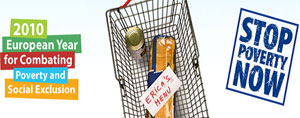
500 million to the most deprived by 2013EU funds for the Most Deprived Programme, amounting to 500 ml euro will be available as of 2013. The EU Commission expects that more than 18 million people in 19 EU Member States will benefit from it. It was definitively established by the EU, which simultaneously announced a complete revision of the system of aid to the poor with the Multiannual Financial Framework 2014-2020. "We can be proud of what this scheme has achieved over the years, but now is the time to think of how best to continue responding to the needs of the most deprived in future", EU Agriculture Commissioner Dacian Cioloș stated. New "proposals for a broader, more flexible scheme, more closely linked to social cohesion policy", are due to be presented in late October under the responsibility of EU Social Affairs Commissioner Laszlo Andor. The funds, allocated for the first time in 1987, have led to a much more market-oriented Common Agricultural Policy, with much lower levels of intervention stocks. From now on such measures are included in the chapter of social cohesion. In its proposal for the Multiannual Financial Framework for the period 2014-2020, the Commission has proposed to provide a budget of 2.5 billion for the 7 year period, thus less then the present 500 ml per year. Single market, towards new legislative measures"A strong, deep and integrated Single Market creates growth, generates jobs and offers opportunities for European citizens which were not there 20 years ago". While the EU marks the 20th anniversary of the Single Market for 27 countries and 500 million citizens (October 15-18, European Single Market Week), the Commission proposes another set of legislative measures, after those launched a year ago, addressed to four specific sectors: integrated networks in the areas of transport and energy, "cross-border mobility of citizens and enterprises", digital economy, "actions to step up cohesion and benefits for consumers". Single Market Act II puts forward twelve key actions "for rapid adoption by the EU institutions", i.e. Parliament and Council, for adoption by January 1 2014. Single market achievements to date include free circulation of workers and goods, larger market without internal barriers for enterprises, opportunities for student training abroad. The Act II "is our chance to use our golden asset, the single market, to see our social market economy be competitive and thrive again", said the European Commissioner for the Single Market Michel Barnier". Commission: industry-boosting proposals"The European industry can make it": it is the message launched a few days ago by the Commission commenting on the difficulties experiencing by the manufacturing sector, also considering that it represents a consistent percentage, (15,6%) of the EU GDP, and that it provides employment to tens of millions of EU citizens. "Europe must reverse the declining industry trend to bring about sustainable growth, create new jobs and solve ongoing social problems". The EU Executive thus launched a set of proposals aimed at solving delays in various areas, which include exports, innovation, sustainability, enterprise infrastructure, financing and investiments. The proposals, due to undergo evaluation by EU Council and Parliament "for sustainable industry, for the necessary development of new technology and to recover an atmosphere of faith and entrepreneurship" focus on "human capital", especially as relates formation and the enhancement of skills. Youth, "Charlemagne" integration prize"The European Charlemagne Youth Prize is your opportunity to present your idea of Europe – to make your contribution to European integration…Play your part in shaping Europe the way you want!" European Parliament President Martin Schulz launched the "2013 edition" of the Charle Magne youth prize. The under 30 initiative is promoted by the EU Assembly and by the Foundation, with headquarters in Aachen, (Aix-la-Chappelle in French) that awards personalities that most contributed to European integration. The prize is awarded to young people who have been involved in projects to promote understanding between people from different European countries. Projects (by individuals, groups, associations, and even school students) must be sumitted by January 28. For information log on: www.europarl.europa.eu.
