EDITORIAL
How should Angela Merkel’s request for a European banking supervisory tool be interpreted?

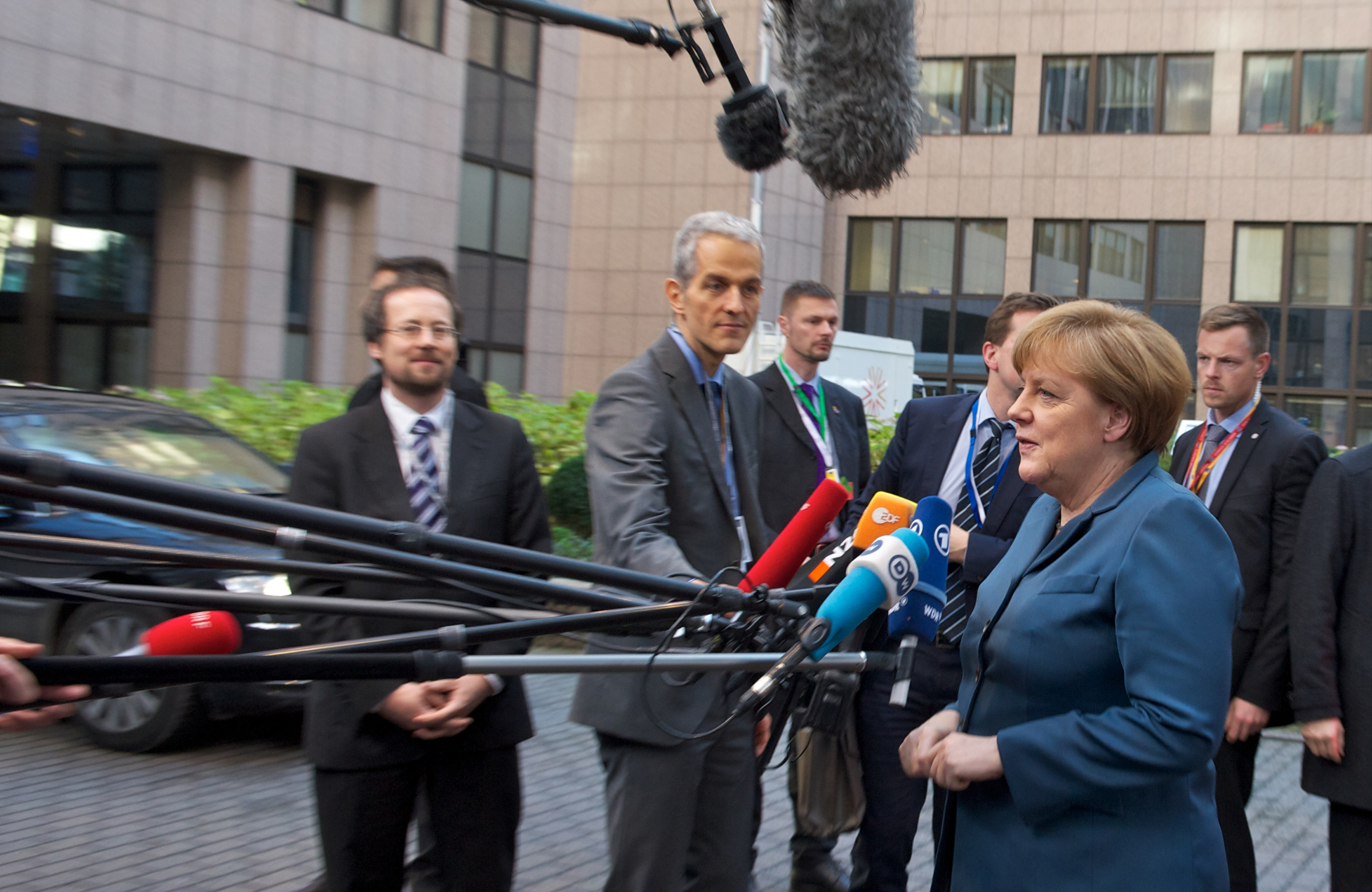
When the German Chancellor takes a position that differs from that of France, Italy or other countries, as regards the debate to resolve the crisis in Europe, it is said with disdain that Mrs. Merkel bent to the will of her voters, that she wants to be re-elected, and thus sacrifices European unity to this goal. The situation was repeated before the last summit of 18-19 October in Brussels, when the establishment of a European Banking Supervisory authority was discussed.It is not uncommon in democratic states that rulers take into account the expectations of the electorate. All heads of government do, and therefore all the criticism in this regard remains unheard. However, these allegations do not contribute to an understanding of the reasons behind the acceptance or rejection of a particular stand by a government.In the case of the Chancellor, in order to correctly understand her attitude towards European policy issues, it is always necessary to refer to the Federal Constitutional Court, whose stand entails major obstacles in the case of important decisions on the developments of the European Union, as has happened in the case of the Maastricht and Lisbon Treaties, and as has happened recently in the case of the Treaty on the European Stability Pact.As guardian of the German Constitution, and in particular of the constraint to democracy enshrined in the German Fundamental Law, the Federal Constitutional Court grounds its decisions on the assumption that in the process of European unification the fundamental tasks of the State should remain the prerogative of the Federal Republic, and consequently of the national parliament. It equally believes that a constitutional act underlies the foundation of a European state for the European people. In other words, according to the principle of the Federal Constitutional Court, the European Union, in the implementation of the European integration process can not cross the boundaries of the federal state or statehood, unless a new Constitution, adopted by EU citizens, represent the foundations of said European federal state, encompassing the same values and principles of the German Constitution.Where is the border separating the Federal Government or the statehood of the European Union? Indeed, the same Federal Constitutional Court that, in doing so, follows considerations that are not easily comprehensible, owing to their high level of abstraction, determines it. These considerations are also oriented – as in the case of the judgment on the Lisbon Treaty – to the traditional categories of nation-states which given twenty-first century circumstances, have been replaced by transnational integration and globalization processes.Until a European Federal State fails to be created with a – revolutionary – act, Germany’s European policy will continue facing these same difficulties and tensions, regardless of whether the guidelines are drawn by Mrs. Merkel or her successor.In fact, from a theoretical point of view, the best – and objectively most sensible – thing to do would be for Member States to be willing to approve a federal and democratic Constitution in order to re-establish the European Union as a new supranational federal state. Especially the European Federalist Movement has made the requests to this effect for decades. But there never was a political situation that enabled such a step. The hopes in a watershed with the works for the European Convention in the years 2002-2003, were lost, on two occasions. Initially, government leaders largely toned down the results of this work. At a later stage, it was rejected with the referendums in France and in the Netherlands. Given these circumstances European unification policy can progress only as it did in the past: step by step in the direction of "an ever closer union of peoples", while currently the single steps are mainly dictated by the need to overcome the crisis.
