EUROPEAN UNION
Divisions on budgetary issues conceal consequential political questions

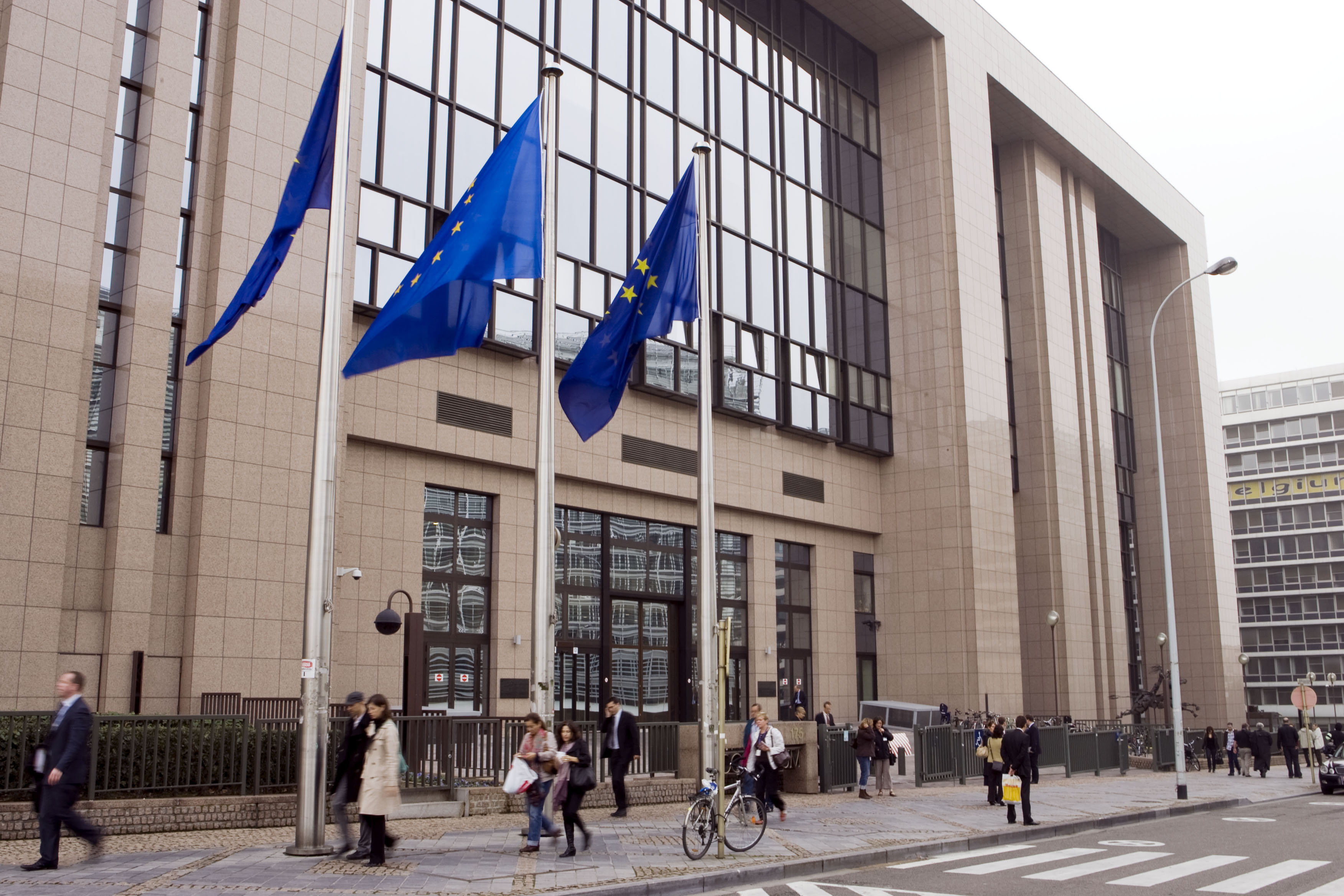
The opposing stances of EU Parliament and Council (the latter representing Member States’ governments) on EU budgets have become evident. Three main problems have entered the picture, these are: the lack of funds to "pay the bills" relating to the 2012 budget, the entire 2013 budget and the Multiannual Financial Framework – MFF – for the period 2014-2020. But there also other major knots. The first regards the States’ will to support the integration process in the ongoing economic and financial difficulties, in particular as relates to the eurozone. The second is related to the relationship between Community institutions, which is thus linked to the very idea of political integration. Overlapping problems. The topics differ in terms of urgency (the current budget and accounts of the coming years) and extent (the MFF amounts to around one thousand billion). On November 13, the parties concerned – i.e. Parliament and Council, the EU’s two budgetary authorities, in the presence of the Commission, which proposed a draft budget, and finally manages the current accounts – came together to attempt the last mediation of 2012. Discussions focused on the need to find some 9 billion euro for fees already spent at national level, on the basis of budget appropriations, which Brussels cannot repay because the same states have decided to interrupt transfers to EU funds. The issue came to the fore mainly due to lack of funding for the Erasmus program (90 million), followed by the opposition of some countries to disburse 670 million from the Solidarity Fund for the earthquake victims in Emilia, an Italian region hit by the earthquake last spring. These weren’t the only items of expenditure in danger: the same concerns revolved around the European Social Fund, research projects, and in the field of rural development. The position of London. An agreement on 2012 accounts is not sufficient. Indeed, a green light to the 2013 budget seems equally hard to obtain. This is the last financial year for the period 2007-2013 and, as always, more substantial costs have been accumulated to close a long series of projects and works in progress. But a group of countries does not intend to rise the budget. The ‘revolt’ is headed by the United Kindgom. Premier David Cameron threatens to veto the budjet. Over the past weeks he went so far as to ask for two different budgets: one for the eurozone and one for EU27. For different reasons, London is followed by Germany (Chancellor Merkel opposes increasing the common budget) and other countries presenting a so-called ‘virtuous’ financial situation regarding national budgets such as Sweden, Austria and the Netherlands. Ongoing negotiations. Misunderstandings on this year’s accounts and the open clash on those of next year, conceal a deeper malaise, which originated in the crisis and in the instability of some of the eurozone countries (the Eurogroup is in fact proceeding to give the green light to bailout funds to Greece in the form of cash borrowings and extensions in accordance with the rules on deficits and debt for financial stability). Such malaise also appears to cast doubts on the negotiations currently under way on the multiannual financial framework. In order to enter into force on 1 January 2014, the latter must be closed as soon as possible. In fact, a special European Council on this issue has been scheduled for November 22-23. But in Brussels it is rumored that without a preliminary agreement on the main points of the MFF the summit could be cancelled. Moreover, the European Parliament is reiterating its request for a budgetary reform, starting with the "revenues". MEPs favour the so-called "own resources", a formula to separate EU budget from national transfers in order to make the European Union independent in terms of resources to invest in common policies. Crucial meetings. On 13 November was held, inter alia, another meeting of the presidents of the Council (Herman Van Rompuy), Parliament (Schulz) and Commission (Barroso), with the intention of reaching an agreement in principle of the multiannual budget. Without the agreement not "just" the EU budget is at risk but also the very cohesion of the EU (a "separation" is urged by many in the UK) as well as the integration process as a whole. In fact, it is feared that divisions on the budget may have a domino effect on the negotiations for the implementation of banking and economic and monetary union, due to be debated in a dedicated summit on 13-14 December. Tensions are evident and "common home" will hardly find a point of balance without recovering the principle of solidarity, which is the premise of the European Union.
