EUROPEAN UNION
Middle East, Multiannual Budjet and Greece divide EU27

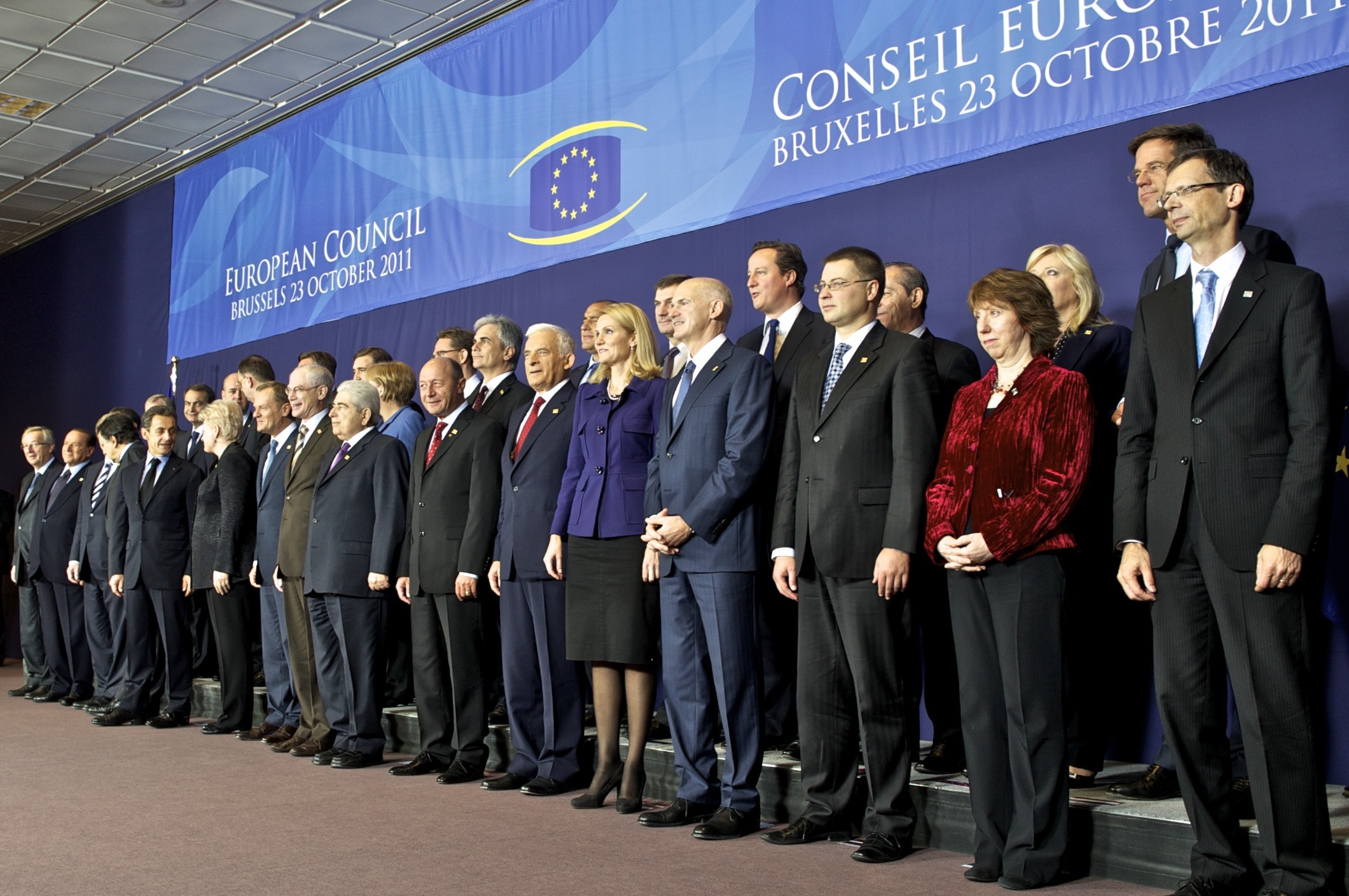
There are at least three urgent issues on the EU agenda: the situation in the Middle East, the definition of the Multiannual Financial Framework, and aid for Greece, to restore some stability to the Greek accounts and propose a possible economic recovery. Two States in peace. On the tragic conflicts that oppose Israel and the Palestinians, the European Union position is to wait-and-see. An awkward silence, beyond any formal declaration, due to the fact that the EU’s foreign policy is far from univocal. Moreover, even by other international actors, starting with the U.S., no feasible option leading to a cease-fire is envisaged. The Council of Foreign Ministers of the 27 countries, which met earlier this week, called for the immediate halt of hostilities. "All attacks must cease immediately as they are a source of unjustified suffering for innocent civilians". The EU supports the mission of the UN Secretary General Ban Ki-Moon and the commitment to mediate between the parties. Obviously Israel is recognized "the right to protect the population from attacks", but it must act "proportionately". The EU will continue to work for the solution of "two states living in peace side by side". Distant stands. To define a shared policy on the 2014-2020 Multiannual Financial Framework (MFF) an extraordinary summit of Heads of State and Government has been convened. The 27 leaders will meet in Brussels on 22 and 23 November but, as noted, the states hold distant positions. The crisis afflicting Europe – that is leaving its mark not only in the real economy, but also in the public accounts and therefore on the single currency adopted by 17 countries – divides governments. In a context of rigour and a reduction in expenditure, several countries would like to reduce transfers to the EU budget. Leader of this position is the United Kingdom, supported by other countries that show internal more "virtuous" budgets (Sweden, the Netherlands, Austria …). There are also intermediate positions (Germany, France, Italy, Spain). A group of fifteen States call for a greater commitment by the EU for growth-boosting measures, refraining from a reduction in EU budget. Bilateral negotiations are under way, in order to reach a shared stand, leading to an agreement by EU27 leaders before the summit. Proposals and cuts. In addition to the EU Council, comprising representatives of Member States, the other budgetary authority of the European Union is the EU Parliament which, from Strasbourg, calls for the respect of the commitments made by the States in June for growth (with the promise of an investment package of 120 billion). The message that comes from MEPs is clear: "Drastic budget cuts could paralyze the EU for years", and "would affect those most in need of help in this time of crisis". The initial proposal for the Multiannual Framework, formulated by the Barroso Commission, provided a figure of about one million for seven years (corresponding to 1% of the GDP of the European community). The President of the European Council, Herman Van Rompuy, has proposed a reduction of about 80 billion, while London is suggesting cuts for $ 100 billion. The figures of the MFF. The picture, however, is not to be equated to the 2014-2020 multi-annual budget, as it is an instrument for long-term planning, setting expenditure ceilings for each budget chapter, to which must in turn follow the annual reports. In the proposal by the Commission, the largest item of the MFF (including various items of expenditure and operational programs) revolves around economic growth and social cohesion, at territorial and regional level: the proposed sum is 490 billion. The other items include: Agriculture and Rural Development (382 billion), with frozen funds compared to present ones; safety (borders, the fight against crime, immigration, civil protection, contrast of climate change …), the presence of the EU on the world stage (foreign policy), administrative costs (also frozen at current values, just under 6% of the budget). The case of Greece. The situation in Greece was addressed by a new Eurogroup meeting, on which the troika (EU, ECB, IMF), which follows the evolution of the accounts of Athens, presented an updated report. The country needs financial support to cope with the repayment of public debt and to meet its current liabilities. Meanwhile, the government and Parliament have assumed positions of rigor to obtain credit from the European Union. The Eurozone seeks solutions that are acceptable by eurozone partners which at the same time do not impose a further burden on the Greek population, which is already seriously marked by austerity.
