FRANCE
"Men and Women": the 87th Social Weeks

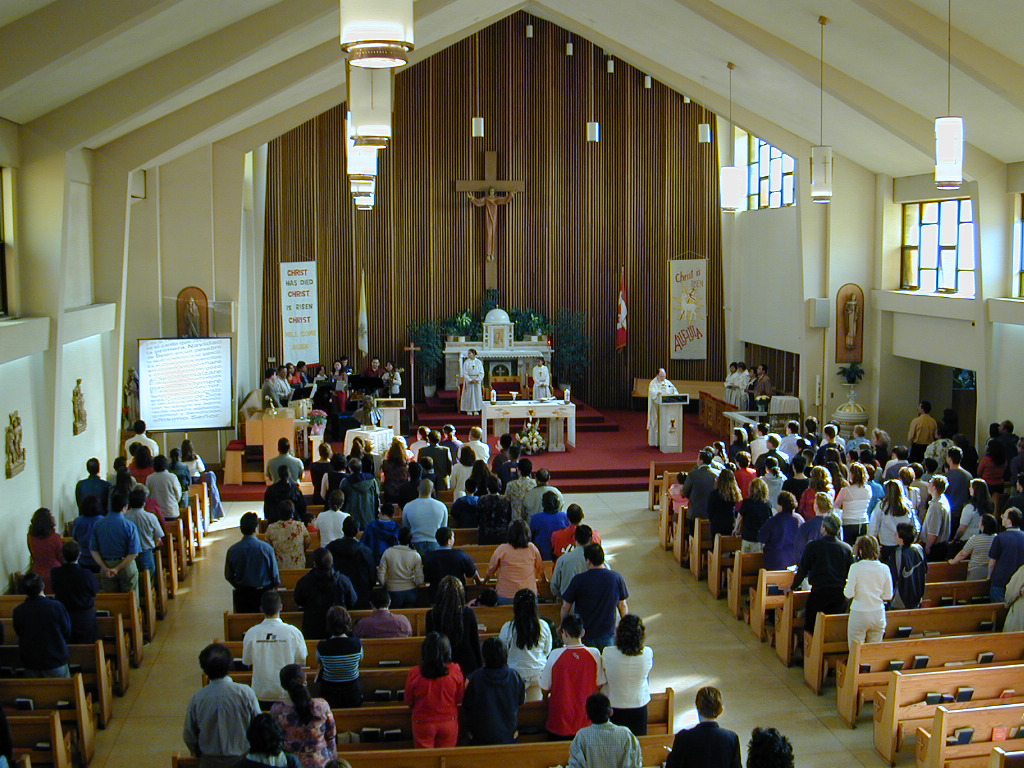
One of the sessions of the Social Weeks of France (Paris, November 23-25) titled "Men and women. The new matter at stake", focused on the "Men and Women in the Church". The debate started off from the question: "In an institution where the hierarchy is all male, what recognition can be given to the increasing contribution given by women? What are the concrete measures to grant them their own space? Relations and the Scriptures. "This post-modern era is marked by great progress in human kind, because it is the period of relations" said the philosopher Jean-Pierre Rosa. "Our attention will be centered on quality relations rather than control. But for us Christians, who believe in a God relation, this change in our world position and towards others is good news". And relating to the first verses of the book of the Genesis he summarized. "By creating the human being God did not finish the creation, but left the male and female task of becoming man and woman, not only at God’s image, but potentially similar to Him. This is why man and woman are pure otherness one for the other, model and framework of all otherness. Happy if lived according to open dialogue, recognition of its condition of creature, unhappy if closed towards the encounter and ignoring the Creator". A right relation for evangelization. "Women’s equal dignity in vocation and the Church’s mission in society are enforced through baptism. In the pastoral field women are already an important cooperation group in parishes, chantries, and diocesan services", states Aphonse Borras, Vicar general of the Liège dioceses, in Belgium. "I am convinced that the rise of women will continue to influence other actors, clergies and other believers, but also on the awareness women provide in their Church actions. As far as relations, it is important to join mutual respect and desire to work together". This implies, Borras explained, "they take the word in life in the works of communities and dioceses, in the concerted instances as well as in the decision bodies". For this to happen, "an ecclesiastical imagination task centered on "the woman" must be put in place. This challenge is fundamental for evangelization. Gospel reliability passes through credit the Church assigns to women". A concrete experience of authority and service. "There have been several phases from the first diocesan approval, which dates back to 1947, and the final Pontifical approval of the Statutes of the Focolare Movement, in 1990", said Maria Voce head of the Movement. "During all these years the Church has put to the test, especially with regards to the presence of a woman Chiara Lubich, as founder and president. There were attempts to annex it or put it under the guardianship of the hierarchy of the Church. This is to emphasize that the recognition of women in the Church requires a king of "struggle", which is fidelity to oneself, to one’s conscience and, ultimately to God’s plan". She also told how the founder, Chiara Lubich led this struggle and its meaning. "This female presidency, as established in the Statutes, is very significant: it indicates a distinction between the power of the government and the importance of the charism. It clarifies that in order to govern a Movement, it’s essential to have charism, and not just qualities of authority or organization. " On the life experience for the Church, Voce said: "This is a sign given to the Church to emphasize the priority of love, a priority which is not the monopoly of women. Therefore, such a position offers the universal Church some innovative directions: more than knowing how to organize, what matters is to love, and this is something that a woman can do just as well as a man. " And she added, "it’s a fact that women, given their capacity to motherhood, have a great ability to love. It’s an intimate and physical ability that makes them under stand within them what the others are experiencing and feel what others feels, as only a mother can".
