GERMANY
Stefan Vesper general secretary of the Central Committee of German Catholics

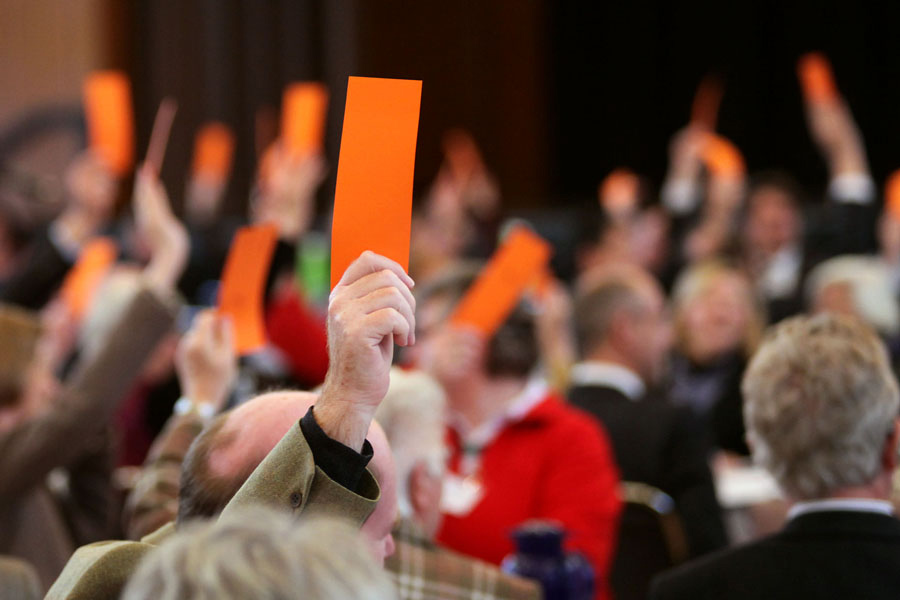
"The future will be influenced not by those who are shy or lazy, but by courageous realists", said the president of the Central Committee of German Catholics (ZDK) Alois Gluck, in his opening remarks to participants in the assembly held in Bonn a few days ago. Among the items on the agenda figure: the safeguard of creation, interreligious dialogue, the role of separate remarried Catholics inside the Church. Sarah Numico interviewed for SIR Europe Stefan Vesper, ZDK general secretary (www.zdk.de) at the end of the meeting.Which decisions and suggestions have emerged in the debates held in the plenary assembly?"The basic idea of the Central Committee of German Catholics, that already existed since the civil revolution of 1848, is that all the movements, associations, spiritual communities and organizations of lay Catholics – represented by their leaders, presidents or spokesperson – meet twice to year, to discuss the current issues of our Church and of society in particular. We take decisions and express our views; we hold meetings and share them publically. This is an encouraging process in itself. We get to know one another, we listen to each other and learn what the other is doing. This shows that as lay Catholics we are present and that we’re taken seriously by the public opinion"."The deep suffering for separated and remarried Catholics and the Church today": why have you decided to address this issue in particular? "We wished to tackle a problem that exists also in many other countries. First of all, I wish to underline that marriage is a precious, indissoluble bond. But in all large families it may happen that marriages that have started well eventually break up. If after many years a new companion – man or woman – arrives, the problem of being officially excluded from the Eucharist will come to the fore. We believe this circumstance should be addressed with a pastoral response, especially when the spouse is not responsible for the failure of his/her marriage. Reconciliation paths should be provided, as in the case of marriages that have lasted for several years or when there are children in the second marriage. We believe that belief in the indissolubility of marriage would grow among both the faithful and society as a whole, if through her action – that is unconditionally open to life – the Church enabled those involved to experience the unwavering love of God in a tragic or even blameworthy separation. It would seem appropriate that not only the priest said ‘you can access communion’, but that the bishop said, ‘in such cases things should be dealt with in this way in my diocese’".At a time of serious financial crisis, you released a document titled: Sustainable economies and purchases". In which way could this provide a solution to the crisis?"The Churches, and the public institutions across the country, are major customers. It’s important for both Churches and public bodies to rationalize their purchases, materials, travels, buildings, in the most sustainable way. As Christians we consider the protection of the Creation and social justice central values. We must be more determined as we experience this in our daily lives. Our behaviour should be ethically and socially responsible. The preaching of the ‘day of thanksgiving’, or of the Feast of Saint Francis, for example, should be consistent with our behaviour during the rest of the year". Another theme is interreligious dialogue and the adoption of a document, "Christians and Muslims, partners in a plural society", which underlines the need for interreligious dialogue. What concrete perspectives are envisaged in the document? "Islam-Christian dialogue has made incredible progress in Germany. Starting the advocacy on the part of the Church for Muslims living in Germany, to a partnership that we wish to continue to promote. In plural societies Christians and Muslims are considered partners. It is a ‘dialogue of action’. Christians and Muslims jointly address concrete questions, and act together socially. This entails a joint research project. But we are persuaded that collaborative initiatives by Christians have a positive impact for the good of all human persons. Our statement mentions a set of key areas for action, where we are already working: in the realm of education, for example, notably for the young generations; in assuring religious Christian or Islamic teaching in schools, and similarly, religious pedagogy and theology in high school and university curricula. It should be intensely carried out in pastoral care and in accompaniment in case of accidents, in hospitals and in detention centres, as well as in addressing ethical questions. A specificity of the document lies in the fact that it has been jointly drawn up by Christians and Muslims".
