CHRISTIAN UNITY
”My Ministry”: a film on the Orthodox Patriarch of Bulgaria

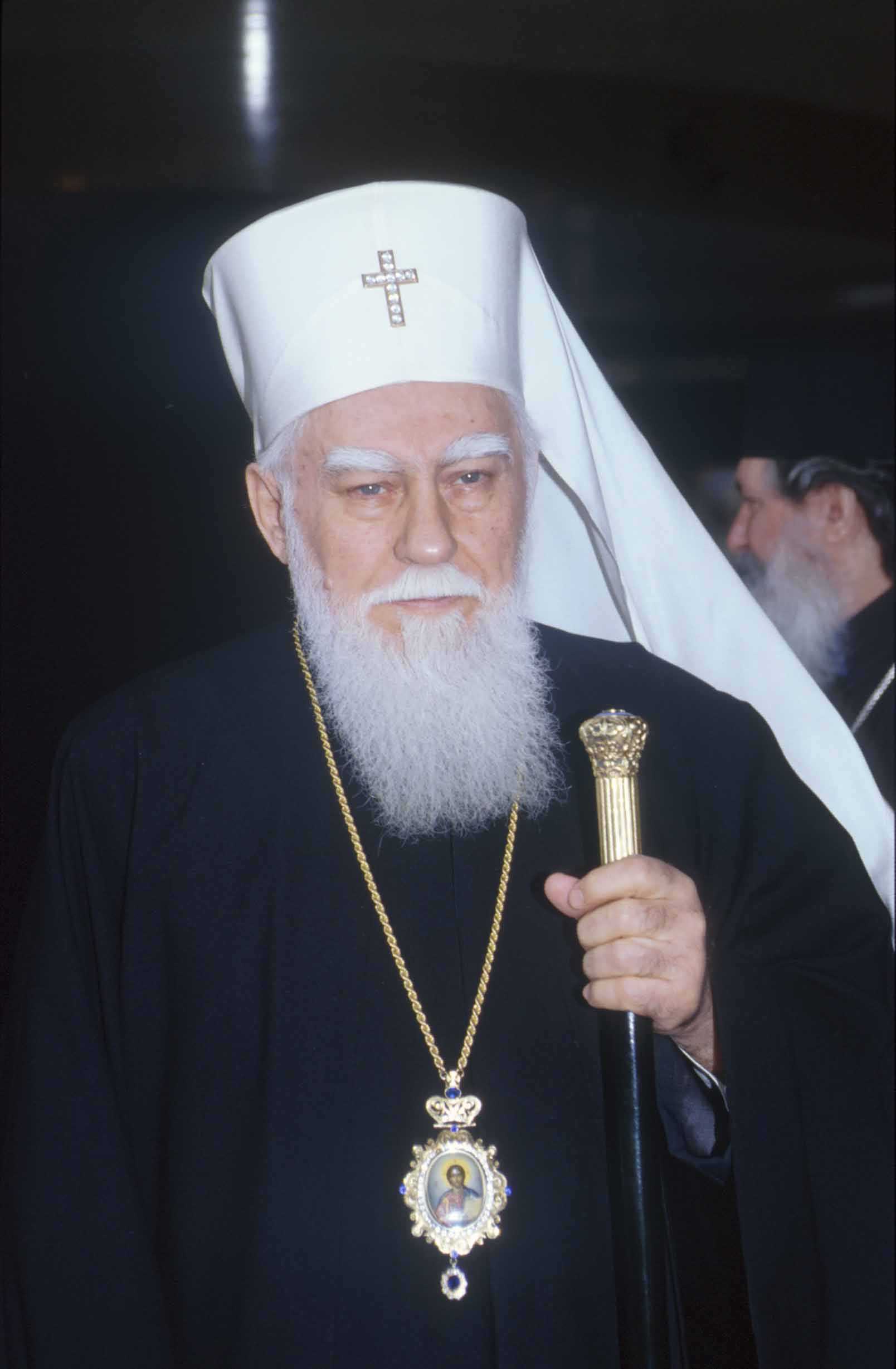
On January 22 the Bulgarian Embassy to the Holy See promoted the screening of "My Ministry", the autobiographic film on Bulgarian Orthodox Patriarch Maxim, in the seat of the Vatican Radio. The event falls within the framework of activities for the Week of Prayer for Christian Unity. Patriarch Maxim passed away in 2012 at 98 years of age. He guided the Bulgarian Orthodox Church for 41 years, under the Communist regime, during the schism that divided the Bulgarian Church in two synods and at the dawn of the third Millennium. To learn more on the figure of Patriarch Maxim and on the expectations of Bulgarian faithful regarding the next head of the Church, Iva Mihailova interviewed for SIR Europe Bulgaria’s national TV journalist Goran Blagoev, author of over 30 films, including My Ministry. Blagoev has interviewed, inter alia, Russian Patriarch Alexis II, the Patriarch of Constantinople Bartholomew I and Serbian Patriarch Pavle."My ministry" is a portrayal of patriarch Maxim released in 2004 on the occasion of his 90th birthday. Could you tell us about the idea that led to this film? "For this film I drew inspiration from Vittorio Messori’s film "Crossing the threshold of hope’, and his extensive interview with Pope John Paul II. I started to dream that one day I would interview Bulgarian Patriarch Maxim. Thus it happened that my interview with the patriarch was the sole major interview granted to a journalist. The film was shot at the premises in Sofia, in the summer residence on the outskirts of the capital, near the monastery of Dragalevzi and in the monastery of Trojan, where he took his first vows as a monk. The patriarch displayed remarkable stoicism during the interview, especially the first time, when he stood in front of the videocamera for six hours running. The film reveals unknown historical events, such as the patriarch’s meeting with the secretary of the Communist party Todor Zivkov, who intended to appoint the bishops to the lead of the Homeland Front (left-winged political movement, run by Communist majority). The patriarch also shared his yearning to become a monk of Mount Athos, cherished when he was a young seminarian". What has struck you the most in the Patriarch’s personality? "His behaviour was that of an exemplary monk. He lived modestly, loved the prayer and liturgy. Even in old age, before entering the hospital for the last time, he would celebrate the paschal liturgy for three or four hours running. He loved nature. He had the right attitude for every situation. During filming we discovered a man with a sense of humor, gentle and quiet but at the same time he was authoritarian and severe if necessary. Last year I discovered the documents in which is mentioned the possibility – yet to be verified – that Patriarch Maxim had collaborated with the Communist Party until he was appointed bishop. He was a man of prayer but also of silence. Surely the time of Communism has shaped his detachment, that made him a person that doesn’t let anyone draw near him". You have interviewed four patriarchs. How does Patriarch Maxim compare to them? "He was the leader of a medium-sized Orthodox Church and he wasn’t a major political player as Patriarch Alexis II or as the Patriarch of Constantinople Bartholomew. Patriarch Maxim wasn’t a diplomat with a cassock. He had a reserved character and did not judge. I liken him to Serbian Patriarch Pavle, they both came from the Balkans, from modest families". The successor of Patriarch Maxim will be elected on February 24. Which guidance does the Orthodox Bulgarian Church currently need? "For the past 24 years the Bulgarian people have been in need of a charismatic leader, a true spiritual father that will rekindle spirituality and lead the youth to return to faith". The theme of the Week of Prayer for Christian Unity this year is "What the Lord requires of us". In the light of ecumenical dialogue how do you interpret this passage from the Sacred Scriptures? "I interpret it from a dual angle: individual and communitarian. On a personal level, the Lord wants us to be his own, living in the way that He has shown us even if the world does not live like this. God does not want churches with rich ornaments or precious garments. He wants love and charity. Unfortunately, relationships between the various confessions are marked by too much politics that divides us. I remember how hard it was to hold the meeting between Patriarch Maxim and Pope John Paul II. Sometimes it seems to me that the Bulgarian Orthodox Church has drawn distant from the dialogue. The late abbot of the monastery of Rila, Bishop Joan, who was an Observer at the Second Vatican Council, said: "The walls of division do not reach the sky". God wants the unity of the Church and if we are true Christians, no matter of which confession, we must pray for this unity".
