EDITORIAL
Why does the euro more than solidarity go beyond EU borders?

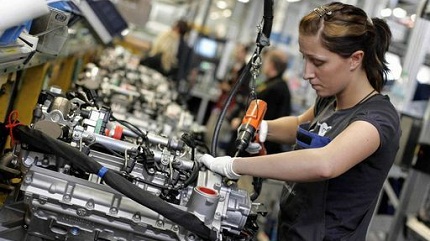
On January 31st, feast day of St. John Bosco, the report on the European Union (EU) illicit drug market was presented in Europe. On the following day, the EU Statistics Agency, Eurostat, published the latest unemployment figures for the Euro zone and the EU. We cannot remain unmoved after analyzing these figures and reading this report. Of course, we cannot assume any causal relationship, scientifically speaking, but undoubtedly both circumstances – drug use and unemployment – affect younger generations more than others.The joint report on drugs in the European Union, by the European Observatory for Drugs and Drug Addictions (OEDT) and Europol, shows evidence of worrisome trends. Organized crime is diversifying its products, routes and transport means. Closer European cooperation is indispensable to curb supply ; however, demand is still high and is actually growing for all drugs, except heroin. At this point, we must recognize that most drug users are young people. Depending on the kind of drug, between half and two thirds of all drug users belong to the age group between 15 and 34 years. Within this age group, for example, 7.5 million people (5.7%) have already taken Ecstasy and 1.5 million (1,3%) have done so during this last month. 32,5% have smoked Cannabis and 6,6% during this last month.When it comes down to work, in December 2012 the unemployment rate among people under 25 was 23.4% in the 27 EU countries and 24% in the Euro zone. For working-age population overall, unemployment was at 10.7% and 11.7%. In 2011, it was at 22.2% and 21.7% respectively. The lowest rates were recorded in Germany (8.0%), Austria (8.5%) and the Netherlands (10.0%) while the highest were in Greece (57.6%) and Spain (55.6%). Last December, the European Commission put forward the so-called "Youth Gurantee", an initiative that is supposed to help EU countries to "ensure that every young person in Europe is offered a job, further education or work-focused training at the latest four months after leaving education or after becoming unemployed". So far, this intiative has been based on consensus but, in order to be implemented, it must be included in the next pluriannual financial budget that is currently being discussed by the European Council. Slashing funds for cohesion policies and the European Social Fund would not be a good sign.The introduction of European and national measures to improve young people’s employment prospects is necessary and urgent but not sufficient nonetheless. The entire civil society must spring into action. Therefore, Catholics nowadays are called upon to undertake and support initiatives that are inspired by the legacy of Don Bosco, of Blessed Father Adolph Kolping – a German priest whose birth 200 years ago is being celebrated this year – or Blessed Father Antoine Chevrier, who founded the Prado in Lyon during the 19th century. On their part, recently the Bishops of COMECE have started thinking about ways to enhance solidarity amongst Catholics in Europe, and more sepcifically within the Euro zone. At the end of the day, we cannot share the same currency without sharing an obligation to help each other. Our European youth will not understand why social issues stop at national borders, whereas monetary issues know no bounds.
