EDITORIAL
Berlin Wall: people’s reactions to the attempts to eliminate the last trace

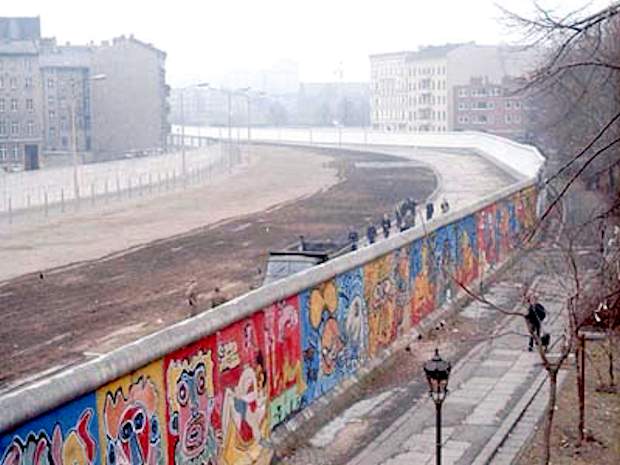
A weird story from Berlin: thousands of people have demonstrated because the longest preserved piece of the infamous wall might be pulled down at some point. Why would people want to preserve a wall that has divided East Berlin from West Berlin from 1961 to 1989? Wasn’t the opening in the wall forced by East Berliners a sign of their longing for freedom? To understand the reason driving these protesters, one should understand what’s the story behind that piece of wall. Unlike other places in Berlin, the wall here did not cut through neighbourhoods or intersections. It was actually built along a street bordering on an old harbour and a factory overlooking the Spree river, which flows through Berlin. The harbour and the factory were used by the then DDR Border Police as a vintage point over the river. In that point, in fact, the river flows entirely within the territory of the former Democratic Republic of Germany. Over the years, several children, who used to jump into the river from West Berlin, ended up drowning because nobody from the West side was allowed near the river. And because the boats of the DDR Border Police got there too late to save them or did not get there at all. Hence, the wall in that point had always been the symbol of infamy and terror.In November 1989 thousands of demonstrators forced the opening of the border between East and West Berlin, with people flowing over the bridge at the end of the street and leaving the wall on the left untouched. Even souvenir collectors neglected it, and no pieces were taken from it. Conversely, that portion of the grey wall was found out by professional and amateur painters, who covered it with colourful paintings that ironically looked at the past or celebrated the beginning of a new era. Therefore, art contributed to overcome the negative effects of the wall and turned it into the artistic expression of freedom and joie de vivre. Since that street is pretty busy with cars, the new many-coloured attraction became quite soon known in East Berlin with the ironic name of East Side Gallery. Unfortunately, it was badly ruined over the years by graffiti artists and daubers. For this reason, a few artists decided to restore the pictures at their own expenses. Thanks to this initiative, the East Side Gallery became an increasingly important tourist attraction. But already in the 1990s, the Municipal Government of Berlin declared the former harbour and factory areas to be suitable for building. For quite a long time, this decision had no effect whatsoever, since nobody was thinking of building there. Now, however, there are plans to build deluxe apartments and a five-star hotel in the area between the old wall and the Spree river. To be able to reach them from the street, passageways should cut through the East Side Gallery, thereby destroying the present effect of this unique piece of art.When the investors wanted to begin the works, bringing forward construction cranes, many Berliners flew into a rage. Thousands of demonstrators assembled to stop the works. People of different backgrounds and beliefs wanted to preserve this portion of the wall because it is a monument of history with a twofold meaning. It reminds us of the division of the town and of Europe at large. And its colours remind us of how people managed to win back their freedom. People in Berlin have often had a controversial relationship with the history of the city. Many testimonies of the past are the object of a lively debate, in the same way as the memories they elicit draw people together. Now a broad consensus might save the East Side Gallery. But policy-makers are still arguing about who should be responsible for this disaster and what political-administrative authority should take a final decision aimed at bringing the whole issue to a successful conclusion.(*) president emeritus of German Catholics’ Central Committee (ZDK)
