ITALY
Oratories: for fruitful evangelization

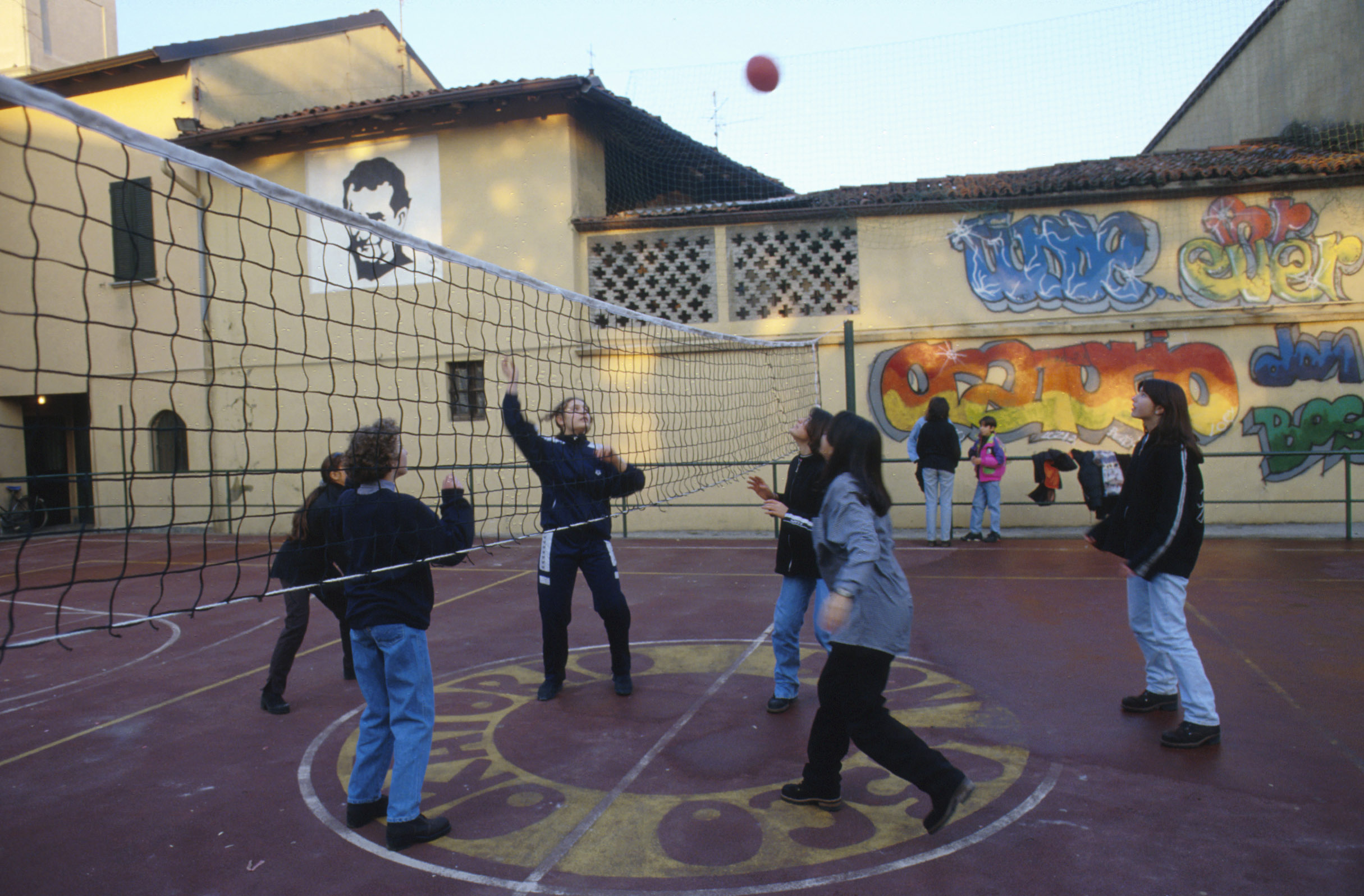
In Italy there are as many as 6 thousand, half of which are located in Lumbardy. In the summer, oratories are attended by some 1.5 million children and adolescents. The figures are provided by the Italian Bishops’ Conference (CEI) in a pastoral note released on February 2 2013, titled: "The workshop of talents". The document was drawn up by the Bishops’ Commission for the Family and Life in conjunction with the Commission for Culture and Social Communications. The purpose of the note is "to recognize and support the peculiar value of oratories in the accompaniment of human and spiritual growth of the young generations" and "to propose a set of guidelines for parish communities, notably educators and spiritual animators" (www.chiesacattolica.it).A place for encounter with the good life. Oratories are described as "places for fruitful evangelization". The evangelizing mission is thus carried out "in a specific way" in terms of "style and method, customized to the needs and the spiritual paths undertaken at individual and communal level". Oratories "are an accompaniment for human and spiritual growth, entering the daily life of individuals and community, proposing initiatives, spiritual counsel, experiences, relationships and contents which in an explicit and implicit way advance the encounter with our Lord Jesus and his gift of a good life". A workshop of life and faith. From a perspective whereby the oratory – with 450 years of educational experience – is a "varied and permanent workshop of interaction between faith a life", a set of "discernment criteria" have been presented, regarding aspects of its life and its organization. "Educators’ formation and responsibility, the relationship with the pastoral care of the youth, catechesis" along with "educational bonds, notably with the family, the commitment of ecclesial movements, the challenges of social and cultural integration, the spiritual animation of sport as a form of education, of free time and leisure". Promoting encounter and integration. In the Italian social environment with 10% migrant population, oratories face the challenge of interculture "by acting as the most advanced centres for the reception of migrants, with utmost dedication to the integration of the children of migrants". The youths, by sharing their time with their peers from different countries and with of different religions, "help ocommunities grow in the dimension of openness, peaceful coexistence and faith witness". "The language of welcome is already inscribed within the religious sensitivity of the oratory". Thus the latter has the means to "promote encounter and dialogue, overcoming widespread indifference regarding identity, including religious adherence". Precisely the respect for the sensitivity of youths of different religions entails that "participation to religious celebrations is not compulsory", although "everyone is welcome to learn more of the Catholic tradition, the content of its faith and spiritual expressions". A response to the new educational emergency. While young people of different cultures and religious traditions "constitute an opportunity to reflect on and reconsider the oratory proposal", for the bishops it is equally important to "tackle serious situations marked by social and cultural deterioration. In such situations, with the spirit of the good Samaritan the oratory becomes the ‘neighbor’, with proposals and initiatives designed to respond to the new educational emergencies". "In the hope that each interlocutor may recognize his/her own language", the oratory "willingly" speaks the languages of contemporary youths: notably, "it will decide to adopt the language of free and creative games, of spontaneous and organized sport, of music, narration, cinema and other communicative dynamics, recognized, appreciated and shared by youths". "Real" and "concrete" feeleing of belonging. In its relations with the "digital natives" the oratory tackles the innovation of the new media, "identifying impulses for new educational proposals", "implementing the opportunities offered by digital media with intelligence and cautious innovation", "naturally living these realms and ‘living the oratory’ also via the new technologies". At the same time, the oratory provides young people with an area "for debate with the virtual realm" in order to "fully grasp its potentials and its limits". So while reality "risks becoming ever more liquid and without a specific form", the oratory "provides real membership, a concrete presence marked by goals to be achieved together through direct experiences that enable to undertake self-reflection and perceive the beautiful and appealing proposal of the good life of the Gospel".
