EUROPEAN SCHOOLS
Towards a reform that might cut the number of confessional teachings

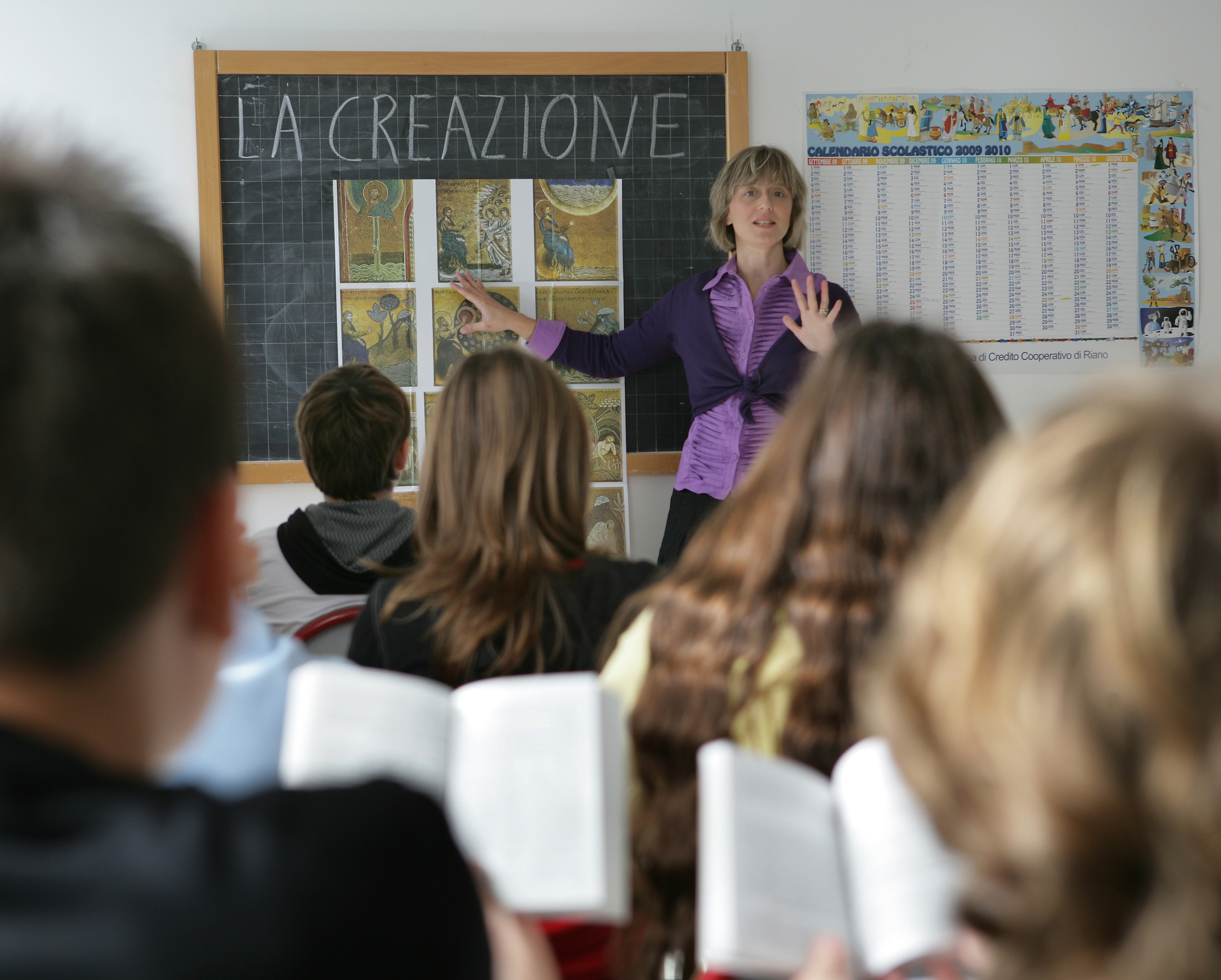
The fourteen schools of the Schola Europaea, that provide a multicultural education from nursery to secondary level pupils, in 7 countries and approximately 24,000 pupils on roll promoted by the EU and its Member States are reviewing their curriculum. These high formation schools, often attended by children of Eu officials, have recently expressed concerns for the announced cuts to religion and ethics lessons. Documents and decisions. "Religion courses like all other subjects are part of the overall education process of European school pupils, also proven by objectives of religion programs common to all confessions and approved by the Joint-Teaching Committee and the Board of Governors". A passage taken from a document, drafted by a group of religion teachers in European Schools. The document is addressed to a work group created by the Board of Governors, the organ that chairs the organization and teaching, in charge of a broad review of the formation offer in these schools. This document was given to SIR Europe by a group of parents concerned that during the meeting scheduled on April 16-18 the Board of Governors might reduce the current number of religion-ethics lessons, from two to one hour a week in class S1, S2, S3, the first three years of secondary level.Seventy years in education. European religious authorities and parents of children attending the European Schools are focused on class re-organization. The proposal includes a broader reflection on the pedagogical support provided by classes on ethics and religions. Noteworthy is how religion lessons in these schools are confessional and follow a multilingual process, therefore the organization of Religion classes has become more complicated. The European Schools (www.eursc.eu) were created by Member Sates and the European Community, today’s Eu, from the beginning of the integration process: the first European Schools began 60 years ago, in October 1953, in Luxembourg; "the mission of the European Schools is to provide multilingual and multicultural education for nursery, primary and secondary level pupils. They are mainly attended by children of EU officials". The schools are in Brussels (4), Alcante, Frankfurt am Main, Mol, Bergen, Karisruche , Munich,Varese, Culham, Luxembourg I and Luxembourg II. "A unified sense of life". On this issue Msgr. Gianni Ambrosio, vice president of Comece (Commission of the Bishop’s Conferences of the European Community) commented to SIR Europe : "I hope that in re-organizing the lessons the European Schools appropriate focus will given to religion and ethics and its pedagogical and cultural relevance" (in these schools pupils who do not attend religion courses follow ethics). "The religious and moral dimension, apart from individual knowledge, helps to find unified sense of life that is so necessary especially for youngsters ". The bishop added: "One must also keep into account the contributions provided by pupils’ families as well as the European Religious authorities". Following the debate, during a meeting of the Board of Governors of the European Schools, a group of Members of Parliament from Strasbourg made a joint statement : " We are firmly convinced" that religion and ethics lessons " like any other subject, are completely integrated in the overall education process, as stated by the goals of the religion program ". Therefore the European MPs agree that the decisions must be taken "keeping into account parent and the entire community of believers".Flexibility, efficiency. The Board of Governors meeting to provide a new secondary school curriculum calls for flexibility and efficiency in the courses, with a specific focus on the budget. This is one of the reasons why focus has been placed on religion and ethics lessons in the three secondary school classes where for linguistic reasons and respect for different student orientation (it is possible to choose for example, Catholic, Protestant, Anglican, Orthodox, Islamic or Jewish) there are fews students per class. Course assessment must however consider the European Parliament’s resolution on the school system approved on September 27, 2011.
