CHURCHES IN BRIEF " "

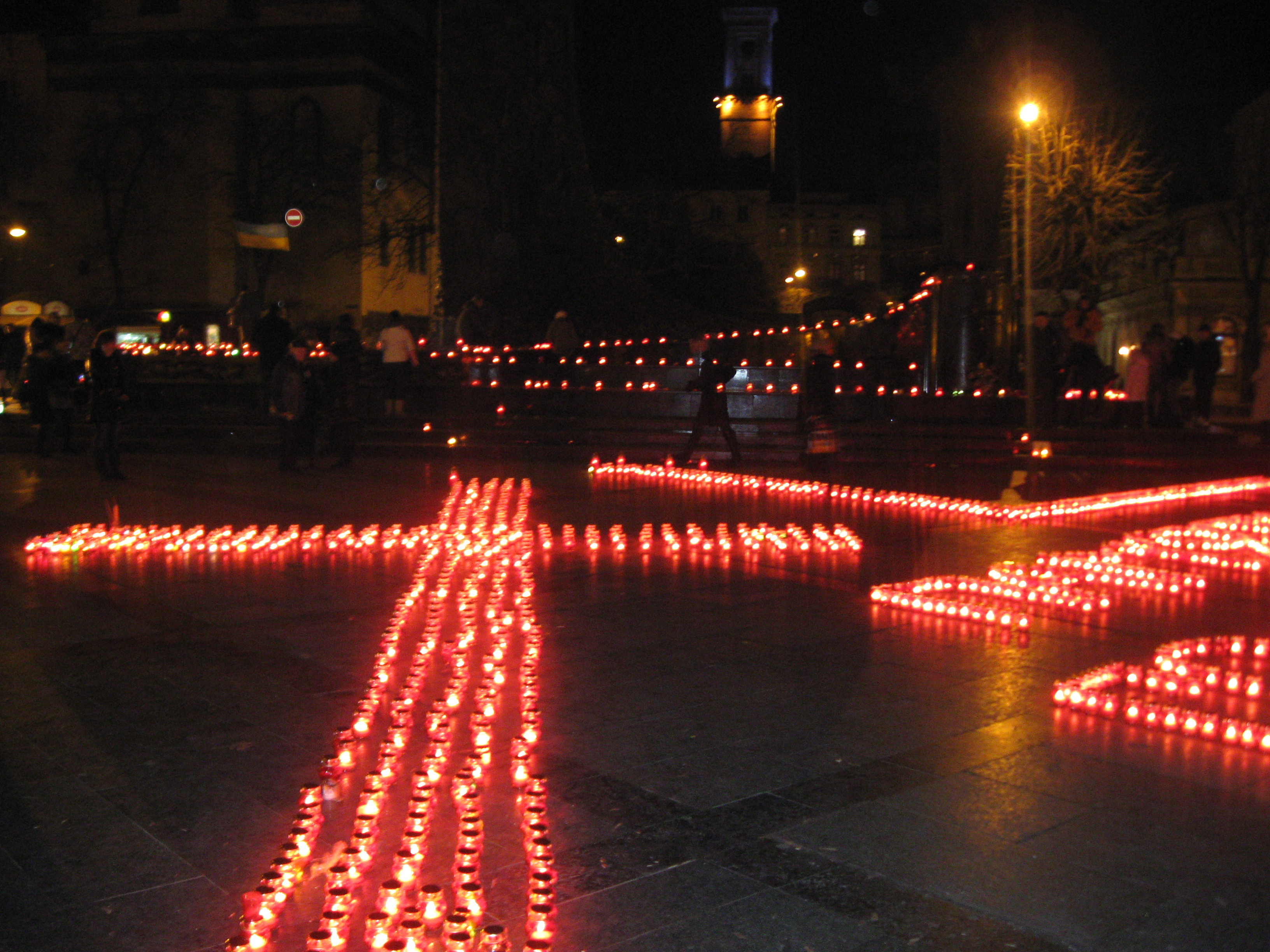
Ukraine: historical facts versus mythsMemory is at war in Ukraine as two opposing camps believe only in the veracity of their thoughts and ignore everything the opponent has to say. The dissemination of such “truth” is only true for a certain community. Its value lies not in its accordance with the facts but in its ability to maintain the existence of this community and mobilize it for certain actions. This leads to the creation of historical myths that replace historical facts, and each of the camps makes itself the victim of its opponent’s aggression. This view was expressed by associate professor of modern and contemporary history of Ukraine at Ukrainian Catholic University (UCU), Oleksandr Zaiets, during the national conference entitled “World War II or the Great Patriotic War? Versions of Historical Memory”. The event took place on 26-27 April in Lviv, with participation of historians from various regions of Ukraine. UCU professor Yaroslav Hrytsak spoke about the concept of the 30-year war of the twentieth century, which means interpretingo of World War II as an extension of World War I. According to his words, “this is rarely spoken about in Ukraine, but British and German historians include in the concept of the 30-year war the First and Second World Wars and all the wars that took place between them – the Spanish, Soviet-Ukrainian, Polish-Soviet, Ukrainian-Polish, and the separate Holodomor of 1932-1933 in Ukraine”. Professor of the Rivne State Humanitarian Institute, Maksym Hon, spoke about the historical memory of one of the worst pages of the history of World War II – the Holocaust: “While the countries of Eastern Europe, freed from the socialist and communist authorities, try to honor the Jewish communities that lived on their territories and were destroyed during World War II, in Ukraine this issue is marginalized. Only in few cities memorial plaques marking the locations of the Jewish ghettos have been installed”. At the end of the conference its participants agreed that today it is necessary to “desacralize, demythologize, and depoliticize historical memory in order for historians to be able to work with facts and not to deal with historical myths”.Slovakia: pilgrimage of relics of St. John BoscoAbout 100,000 faithful venerated the relics of St. John Bosco during its three-week pilgrimage in Slovakia that ended on 1 May. The relics visited 24 towns in all dioceses, including the biggest Roma housing estate in Kosice and penitentiary institution for young deliquents in Sucany”.I wish that these relics would bring a spiritual renewal to whole salesian family, that they would show the way to live to all young people”, said provincial of the Salesians in Slovakia, don Karol Maník, expressing his satisfaction over the great interest of the faithful in the message of this Italian priest, his work and his big dream to help and educate young people. The pilgrimage of the relics in Slovakia took place within the framework of a big world tour around South, Central and North America, Africa, Asia and several countries of Europe. On 1 May they were handed over to the salesians in Slovenia.Lithuania: new head of Vilnius archiocese Mons. Gintaras Grusas assumed the position of metropolitan archbishop of Vilnius on 23 April in Lithuania. An eucharistic celebration on the occasion was attended by many representatives of the Church and the society, including president of Lithuania Dalia Grybauskaitė and her predecessor Valdas Adamkus. Mons. Grusas takes over the office after cardinal Audrys Juozas Backis who resigned after reaching the age of 75, following the Church canons. New head of the archdiocese spoke about the new phase of the pilgrimage of the Catholic Church of Vilnius, which – according to his words – isn’t easy, as testifies the history of Lithuania and life of the patron of the archdiocese St. George – soldier and martyr”.True peacemakers are not pacifists who allow others to do whatever they want. They are soldiers who courageously face attacks to protect and preserve the Truth, even for the price of their own life”, said Mons. Grusas, adding that the history of the country has had many peacemakers of this kind. Talking about freedom of Lithuania he emphasized that independence doesn’t lie only in its declaration but also in personal understanding of freedom by every citizen. The archbishop invited the faithful to put emphasis on “spiritual freedom” given by Christ, which should be at the center of our lives especially during the Year of Faith. Mons. Grusas spoke about the need of new evangelization and inner renewal of every man that should be started by bishops, priests, clergy and faithful at the first place, so that “everyone can testify about Christ, walk on the road to perfection and help others”.
