EUROPEAN ECONOMY
The ”recommendations” of the EU Commission to Member States

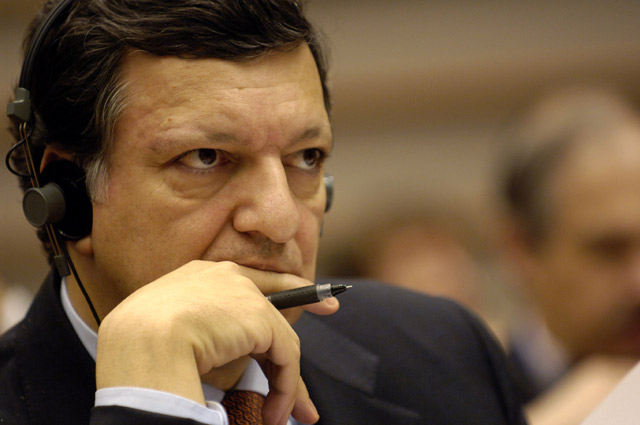
Covering a wide range of actions, the European Commission published country-specific “recommendations” to redress public budgets, to promote actions to boost employment and growth, competitiveness and social inclusion at national level and across Europe as a whole. Over fifty documents – due to become binding after final approval by the EU Council in July with a set of numbers and guidelines – include decisions as relates to procedures for excessive deficit, in which only some governments are given the green light. “Every country must do its share”, is the overall message to EU27 plus Croatia by the Commissioners’ College. It is necessary to “act together” to keep the pace of economic and financial transformations under way at global level.Competitiveness and jobs. “Now is the time to step up the fundamental economic reforms that will deliver growth and jobs, which our citizens, especially our young people, anxiously expect”. According to the president of the EU Commission José Manuel Barroso, the “recommendations” issued by the Commission are part of a comprehensive strategy to move Europe beyond the crisis. They are concrete, realistic, and adapted to the situation of each of our Member States”. Commenting on the documents released by the Executive, Barroso outlined the measures for employment (that include labour market reform and reforming education and training systems), to promote conditions to create jobs (along with credit), to step up innovation and research. Barroso recalled that proposals to modernize the market have been addressed to 19 states; the containment of fiscal pressure is demanded of 19 States; adapting salaries to productivity is recommended to 5 countries; the reform of education is the task of 21 states. Other “suggestions” regard, without order of priority, the development of broadband, the single market, the pension system… To ten states is suggested to strengthen their social security network, as “it can no longer be tolerated that 120 million citizens are on the threshold” of indigence. The Commission analysed an enormous amount of figures, budgets, national documents for reforms, which show that “wide-ranging reforms have been pursued or initiated in recent years – to correct past imbalances; most member States are carrying out budget recovery and adopting competitiveness-boosting reforms, with varying differences in terms at national level. That’s why certain countries must intensify reforms and pave the way for sustainable recovery”. From Germany to Slovenia… The recommendations address a wide range of areas. Germany, that Barroso confirmed as the economic engine of the European community, must raise wages, “aligning them to a productivity increase, in order to promote domestic demand”. France, however, should decrease the cost of labor by acting on taxes and social needs “to correct the delays of competitiveness” and to moderate public spending. Italy is the object of six different recommendations ranging from excessive indebtedness of delays in research, to the improvement of the educational system, eliminate excessive bureaucracy and tax evasion. Spain has taken the road of reform, but “imbalances remain troubling”. The Executive underlined the opening of credit for Slovenia (“it initiated reforms”) and the new government of Bulgaria, while Belgium does not seem to proceed in the right direction.Rigour and growth. Commenting on the decisions, the Barroso college highlighted some positive aspects for the European economy but at the same time insisted: “We urge Member States to continue and step up their efforts along the path of fiscal consolidation and adopt measures to encourage growth and employment. Indeed, there is no room for complacency”. There is, in their view, a conflict between rigor and growth. “It is a futile debate. We need to act in both directions. These are two sides of the same coin”. His words were echoed by Commissioners Olli Rehn (Economy and currency), Laszlo Andor (Employment and Social Affairs), Algirdas Semeta (Fiscal matters). In particular Olli Rehn said: “It is very clear that we must do everything possible to support growth and jobs creation” by acting at the same time in order to progressively restore national budgets, a “necessary prerequisite” for growth recovery.Deficit procedures. Italy, Latvia, Hungary, Lithuania and Romania are the five countries for which the EU Commission recommends to the Council to abrogate the excessive deficit procedure, “having acknowledged the structural reforms undertaken and the figures on public budgets” in these states. The decisions of the Commission include: the launch of the excessive deficit procedure against Malta (16 countries thus remain under observation) and the extension of the deadline for the correction of the excessive deficit in six states, namely Spain, France, Netherlands, Poland, Portugal and Slovenia.
