ALBANIA" "" "
Bishops’ appeal to vote on June 23: risk of gerrymandering and scepticism

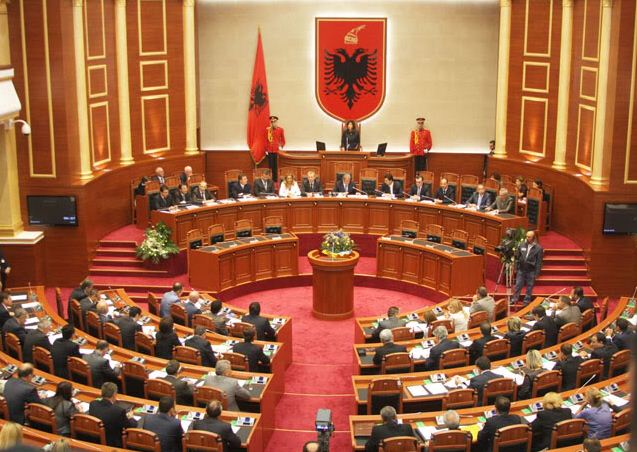
These elections are considered crucial. However, it appears that as regards the process leading to the elections of Sunday June 23rd in Albania no progress has been made. Moreover, the upcoming elections for the renewal of the Country’s political leadership represent a critical test of the process of rapprochement to the European Union, expected to take place in the near future. Citizens often view their state leadership – yet to overcome post-Communism traumas – with a certain degree of scepticism, while reforms strive to take off the ground. In order to address this situation a few weeks ago the Albanian episcopate released a document calling upon the constituency “to participate in the elections, understood as an opportunity for active participation in the public life of the Country”. What are the future prospects introduced in the document and what is the Country’s situation on the eve of national elections? Vincenzo Corrado addressed these questions to Albert P. Nikolla, spokesperson of the Bishops’ Conference. How was the bishops’ document received? “The document was released to the press and was read out loud in Catholic Churches of Albania on May 19. In my opinion, there has been a great impact. The media provided ample coverage of the letter. It should be underlined that it’s not the first time that the Albanian episcopate issues a statement on the elections or on other important events in the life of the Country. Also at parish level it received great resonance, as confirmed in our contacts with priests and at the level of Caritas volunteering networks. Given the confusion characterising the electoral campaign, the faithful greatly welcomed the Church’s words on the upcoming national elections. Such chaotic electoral campaign disorients the voters, and that’s also why the letter was indispensable”.In their document the bishops point out that “a set of negative phenomena could seriously damage the electoral process”, i.e. purchased votes or extorted by threat, falsifications, risks linked to illicit administration at all stages of the election processes…”Unfortunately, since the fall of Communism in Albania, only 1992 elections were not contested. All other elections were marked by complaints linked to gerrymandering, undue pressures, theft, and the like. The Country has yet to hold undisputed elections, the reason being that political power is understood as exercised ‘over’ and not ‘for’ (quoting from Hans Jonas). According to this understanding, all actions leading to the achievement of power are considered licit. In my opinion, both right and left wing parties are still victims of a Communist mindset, whereby falsehood was totalitarian, and they wouldn’t hesitate to hold rigged elections if they were given the possibility. International observers will supervise over the elections, but they won’t manage to ascertain substantial processes, namely, to verify that votes are cast in freedom and not as a result of undue pressure at home or at the workplace. Observers only notice the formal aspect of elections in the polling stations. And that’s not enough to ascertain the reliability of the voting process”.What is your opinion of the ongoing electoral campaign? The bishops had hoped it would be based on “programmatic proposals” rather than on the “denigration of political opponents”…”The bishops were right when they highlighted the question of programmatic proposals. Unfortunately, political parties have set their own standards also on this issue. Accordingly, serious proposals based on concrete programs must be replaced by jokes, and by personal attacks on candidates representing the opposing party as well as on candidates’ families. TV debates could be best described as miserable. The reason being that there are no serious political programs resulting from serious politics”.How important are these elections for the future of Albania, also from a European perspective? “They are extremely important, as EU adhesion talks still are at a negotiating phase. Albania has not yet obtained the status of EU candidate country. Europe is instrumental to the electoral ambitions of politicians while in fact the latter have no intention to guide Albania closer to the EU. They are aware that if Albania draws closer to Europe there will be less room for corruption and for politics aimed at personal goals”. What are your hopes for Sunday? “First and foremost I hope there are no public disorders! Then hopefully every citizen that wants the good of the Country will go to the polls and vote for the party considered less harmful for the future of Albania. It’s a question of choosing the lesser evil in this transition phase that seems everlasting”.