CHURCHES IN EUROPE
Orthodox theologian Yannaras reflects on the role of religious communities today

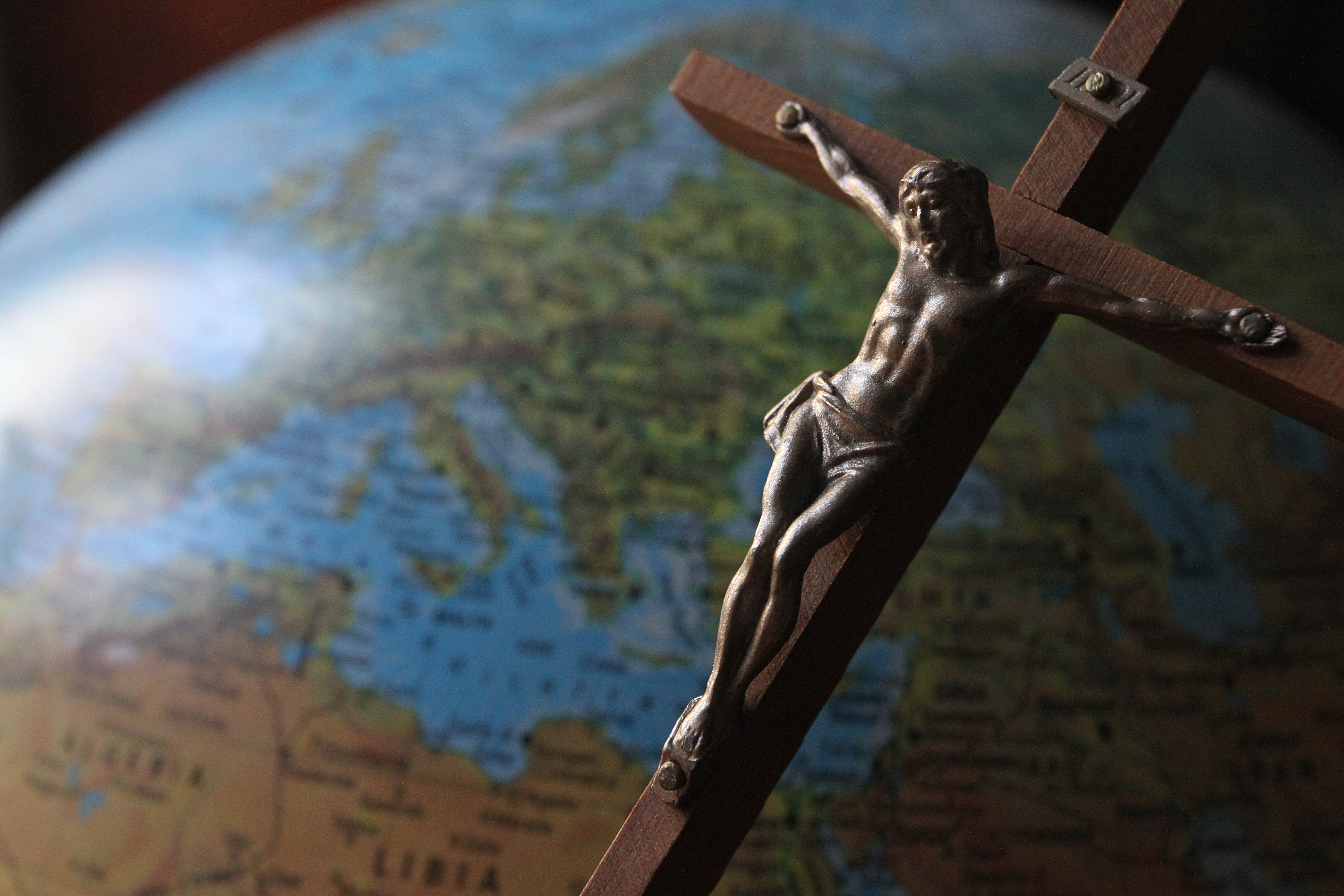
The latest book by Orthodox theologian Christos Yannaras titled "Against religion", sparked off widespread debate. The Greek scholar analyses the idolatric drifts of the Christian experience, along with the urgent need to leave room for the founding roots of the Gospel, with the awareness, he said, that Christianity is not "only" a religion, but also a new way of existence in communion. Sarah Numico interviewed the scholar during a recent public presentation of the volume.At the end of the presentation of your book you said: "I humbly believe that if it were possible to call a truly ‘ecumenical’ council of Christian Churches today, all the problems regarding disputes, differences, heresies, as well as the issues relating to Gospel clarification and witness, could be summed up in one single question: is salvation a personal accomplishment or an ecclesial event?" Can you explain this statement? "The idea of the ecumenical council is a dream and an inner need. It can act as a symbolic, revealing proposal capable of signalling an inner need without demanding its fulfilment. Moreover, the idea that Christian Churches convene to discuss the idea of salvation means that the major question regarding salvation has been understood, namely: do we have an individualistic or an ecclesial understanding of salvation? This dilemma guides our entire approach in the life of the church. For example, a person born in a pietist tradition strives to conceive salvation as the product of relations, participation and belonging. That person will have been used to see salvation as an individual, personal effort. I’m under the impression that we have lost the idea of salvation as all-embracing, as something that guides us towards the Kingdom". You unquestionably represent a "different" position in the landscape of Orthodox theology, both in terms of content and language. How do you live your adherence to the Orthodox tradition? "I owe a lot to Russian Orthodox theology, notably to a set of thinkers of the past century, although many of them have been forgotten in contemporary Russia and their books are hard to find. Figures such as Vladimir Lossky, Aleksandar Smeman, Pavel Florenskij, who were guiding lights for Catholics, Orthodox and Protestants throughout the 20th century, have been marginalized". Have Yannaras’ books been marginalized in contemporary Russia? "I think that four of my books have been published in Russian, but I have no information on the numbers of copies sold". And what about Greece?"It’s different there. My books circulate and sometimes they’re the object of public debates". What do you think should be the role of the Church in contemporary Greece? "I’m under the impression that both in Greece as in the rest of Europe, Christian Churches could play a decisive role, but not at the level of the games they are imposed upon. In the ongoing cultural paradigm the economy has become independent compared to society as a whole, while the economic realm should be at the service of society, so as to promote the development of financial relations. But today it stands on its own. I recently read that only 9% of the money circulating at global level has a true value. The rest is emptiness, void. Also politics is a game, a game of power which in turn is subjected to the needs of advertising. In such contexts the churches cannot protest, nor are they given the possibility of promoting demonstrations or improving difficult situations. However, they can reject them whilst revitalizing the communities and animating the parishes… In other words, the churches can create areas for the promotion of communication, areas where people meet and share, giving a meaning to collective life". How could it benefit society as a whole? "I believe these are the preliminary conditions leading to a change. I think that in this moment in time the primary need is that of recreating societies, and communities of life. If people continue living on their own a change will hardly occur, while human coexistence necessitates, albeit unconsciously, of a metaphysical pillar that acts as a point of reference for our own responsibilities, so as to be honestly responsible: a pillar illuminating the meaning of life".
