CHURCHES IN BRIEF

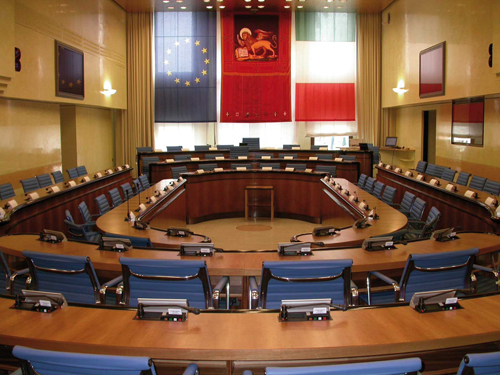
Spain: Days for teachers of religion The Commission for teaching and catechesis of the Spanish Bishops’ Conference, chaired by the bishop of Segorbe-Castellón, Msgr. Casimiro López Llorente, has organized the Days for Professors of Catholic religions and morals at the Pontifical University of Salamanca, from July 4 to 6. “The teaching of religion at the service of the transmission of faith” is the theme of the Days. “Present culture tends to exclude God or to consider faith as something with no social relevance – underline the promoters of the Days -. Although the set of values that are the foundation of societies are rooted in the Gospel, such as the dignity of the human person, solidarity, work and the family, there is a sort of amnesia of God, a rejection and denial of Christianity”. On the other hand, “relativism, which is widespread, does not create true freedom, but rather instability, confusion and conformism”. In this sense, the Days are the ideal framework to respond to present challenges: the lectures will delve into themes such as “the didactics of faith for the integration of culture”, “communication on God in an educational framework”, “education applied to the sacraments”. The document “the coordination of the family, the parish and school in the transmission of faith”, will also be presented. Croatia: revitalizing the Christian roots of the EU “If there’s a task that contemporary Croatia is called to address today, a task that we entrust to the Croatian people, that task is to revitalize European populations’ awareness of the Christian roots of Europe by bearing witness to the values that are enshrined within the Country,” said Monsignor Dominique Mamberti, Vatican secretary for Relations with the States, who presided over the Eucharistic celebration in Rome, in the Church of Saint Gerome of the Croatians on June 30, on the invitation of the Croatian embassy to the Holy See, marking of the entry of the Balkan Country in the European Union. Msgr. Mamberti recalled that the “baptismal seal” has been present since the origins of the Croatian nation. “In the difficult history of the Croatian people – remarked the Secretary of State – the enrooting of Catholic faith progresses at the same pace as the strengthening of the awareness of a role and a set of virtues that have enabled the nation to conquer, across the centuries, sometimes to the dire price of the sacrifice of her sons, the place that it occupies today in the European Union”. Msgr. Mamberti thus raised the question: “What is the destination of our journey? What is the destination of Europe, and in it, of Croatia?” “Full integration in the European Union – he remarked – is not a point of arrival, but a point of departure for a new mission”, for “an ever more intense commitment in the establishment of the common home that is our continent”. Poland: ecclesial commitment against selective abortion”90% of all abortions legally performed in Poland are justified by alleged malformations or serious diseases of the fetus”, said Mariusz Dzierzawski, a promoter of the initiative calling for the repeal of the present legislation in Poland that provides for eugenic (or selective) abortion. In less than three months over 100 thousand people pledged support to the association “For the right to life”, thus colleting a sufficient number of signatures to submit to Parliament a request to change the current law. The initiative began past March 21, on the occasion of the World Day for Down’s Syndrome children. Past October Parliament rejected a similar request calling for an amendment to the law on abortion presented by a group of MPs. Official figures show that since 1997 – i.e., since the enforcement of the regulation legalizing pregnancy interruption in cases where the life of the mother is at risk, or of the disease and malformation of the fetus until the 12th week of pregnancy in cases of abuse – the number of abortions in Poland have been less than a few hundred. However, pro-life organization estimate that abortions carried out nationwide may be as many as 15 thousand, while feminist organizations consider it close to 100 thousand. It is estimated that 15% of all abortions is carried out abroad. The Polish episcopate, firmly determined to defend life and human dignity, relentlessly continues to express its firm opposition to abortion.
