EDITORIAL/1
From Fatima to Minsk, the Prayer Vigil with the Pope tells us that hope continues to thrive

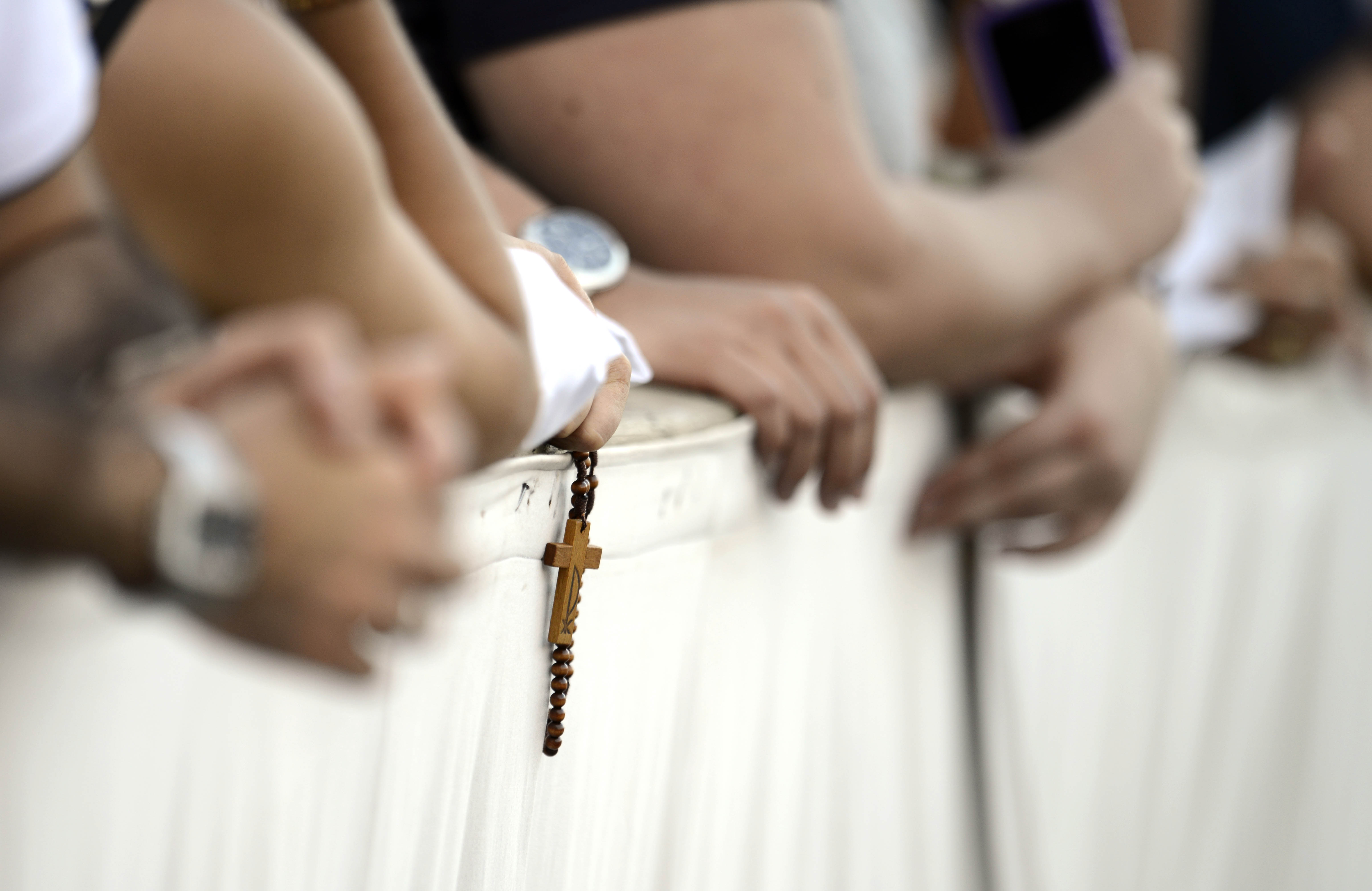
The dreadful month-long conflicts in Syria seem never-ending. Dozens of thousands of people have already been killed and millions had no other choice that to leave their homes; an entire Country: entire families, including children. In the light of such horror it is evident that the conflict is extremely complex and that a solution taken at local level is not possible. World leaders are called to engage in the quest for a concrete solution in order to alleviate the suffering of many. Moreover, the unfolding of events over the past months has shown us that those expected to be truly committed in seeking a peaceful solution are divided. It’s very sad that leaders of the most important Countries mention only weapons and money in a statement intended for peace, to the point of admitting that their main concern is the defense of national interests. Indeed, a State leader is tasked with the responsibility to defend the interests of all citizens. But it’s sad that many don’t even realize that the quest for peace comes first. Peace is fundamental not because it serves purely economic interests of a given country, but because it ensures the continuation of people’s lives! When money is considered the vital force the quest for solutions is not motivated by the needs of those who are suffering, but rather by an egoistic-driven economic understanding. It happens because having left God, the world has come to believe that justice and peace can be obtained on their own. With his proposal of a day of fasting and prayer Pope Francis was running against the tide, whilst fulfilling the wishes of millions of people. That gesture reminds us that in the deep of our hearts there is something that we’re all aware of: human conflicts will be solved only when human beings will stop trying to build the Tower of Babel and will accept the help of God. It’s incredible to see how many people have welcomed the Pope’s proposal. Individuals, parishes, dioceses, have all joined him. Probably no diocese in Europe – and perhaps in the whole world – has failed to make a public gesture in communion with the Pope. From Fatima a Minsk, from Cyprus to Malta to Germany and to England, wherever they are, bishops have invited the faithful and the communities to join the Pope, and most of them held prayer vigils in cathedrals and shrines. Not only Catholics, also other Christian confessions have joined the cry for peace. The initiative of a joint statement, signed by the presidents of the Council of the European Bishops’ Conferences (CCEE) along with the Conferences of the Churches in Europe (CEC), signals Christians’ profound communion at this tragic moment in time. The chain of prayer even extended to include the members of non-Christian faiths. All together for peace. And the fact that religions come together for peace is no suprise. Those who gather in prayer know that men and women are unable to obtain peace without God. They also know that people will not feel responsible nor will they feel a commitment for peace unless they see things through the lenses of faith. God’s mercy must be sought in order to learn to forgive. Economic agreements or the fear of weapons are not enough. However, although what has happened is devastating and has brought together millions of people, world media have dealt with the prayer as if it were the event of a small and insignificant group of people, failing to understanding the bearing of that gesture. I think that achieving peace also requires that the media – in addition to what they already do to raise awareness on the horrors of war – also recognize that prayer is a fact. Ours is the time of paradoxes. It seems as if we’re living in a world of madmen that don’t want to see nor hear the voice of God. But after having witnessed that the whole of Europe and the whole world have gathered in prayer for Peace, we cannot but acknowledge that hope continues to thrive. (*) CCEE General Secretary
