CHURCHES IN BRIEF

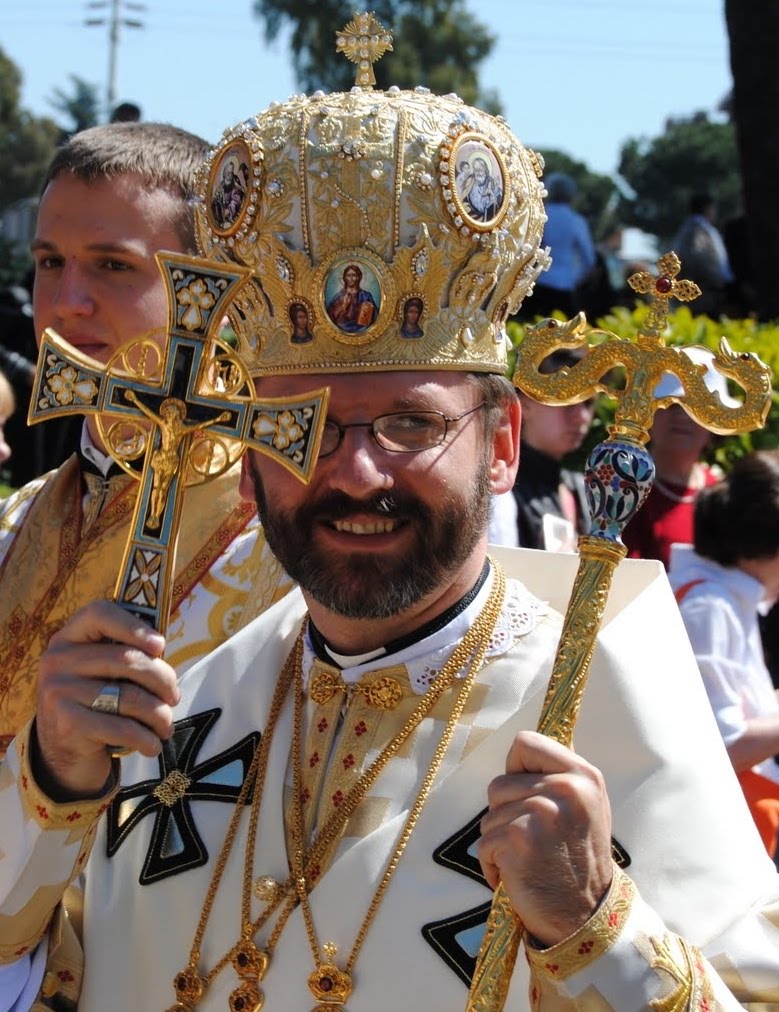
Ukraine: Period of Missionary Activity in UGCCThe Synod of Bishops of the Ukrainian Greek Catholic Church (UGCC) establishes a Ten-Day Period of Missionary Activity in UGCC. According to its head, His Beatitude Sviatoslav Shevchuk, the event will fall into the period between the Ascension and the Descent of the Holy Spirit. “At first we thought of establishing a Day of Missions in UGCC, however, our bishops decided that one day was too short since it is important to talk with people more about sharing their faith. This will be the time to focus on the issues of the necessity of missionary efforts”, explains major archbishop. During this period, a collection of donations for the missions will be held, so that each eparchy or exarchate can have their own “missionary fund” for catechizing and implementing of new programs for youth. His Beatitude Sviatoslav stressed that contemporary Ukrainian society needs a Church “active in social services”. As he added, “when we perform some act of mercy, we do not question whether the receiver is a believer or not, whether he or she is an Orthodox or some other confession. We serve everyone. And on the basis of such sincere service one can overcome certain prejudices and discover the real Christ”.Czech Republic: Day of Church SchoolsThe Czech Bishops’conference celebrated the Day of Church Schools and Educational Institutions on 16 September. “The date was chosen intentionally on the feast of St. Ludmila, grandmother of St. Wenceslaus, who raised her grandson to become a great figure of our history. That’s why she has been chosen as a patroness of all teachers and educators, to help them in their responsible task”, explains the Press Office of the Bishops’conference. In 2013/2014 academic year, 24 kindergartens, 23 basic schools, 30 secondary schools (out of them 18 grammar schools), 5 schools of higher education and 1 conservatory run by the Catholic Church offer their educational services to children and young people. The schools are open to all pupils and students, regardless of their faith. Church schools achieve very good results in education and are traditionally ranked among the best in the Czech school system.Slovakia: dispute over Law on Social ServicesThe Council of Caritas Slovakia has expressed its disapproval with amending act of the Law on Social Services (LSS). Diocesan and archdiocesan offices of Caritas have summarized their comments and issued an official statement. “Experience says that the emphasis in providing of social services must be put on so-called terrain nursing services directly at patient’s home while now it seems as more convenient to put them in nursing homes”, reads the statement, emphasizing that health-care institutions run by non-governmental organizations shouldn’t be treated as an “additional” provider of social services”. Other critical comments concern the fact that according to the amending act, the citizens don’t have right to choose the provider of social services; there’s no approved method of calculation of economically legitimate expenses that influences the amount of contributions for various kinds of social services; the state continuously rises obligations and duties of providers and recipients of social services through legistative measures, while the amount of financial contributions decrease year by year, which – according to the Council of Caritas Slovakia – may lead to destruction of municipal, comunity and deinstitutionalized providers.Belarus: new Theological CollegeBelarussian authorities have recently approved an official registration the project of a new Theological College of St. John the Baptist in Minsk, upon the request of archbishop metropolitan of Minsk-Mogilev, Mons. Tadeusz Kondrusiewicz. According to his words, the institution will react to the call of II Vatican Council to strengthen the role of laity in the Church. The college will be established on the base of educational center for catechists in the archdiocese, opened three years ago. Initiators of the project hope that the lay faithful will show interest in getting erudite information on theology, philosophy, biblical studies, liturgy, canon law, family counselling or communication. “We know that currently there is a great need not only for catechists but also for people involved in family consulting, charitable services, those who are capable of communication with massmedia”, explains Mons. Kondrusiewicz, expressing hope that establishment of the college will only be the first step on the way to create a Faculty of Theology or an institution of higher education for clergy and laity.
