EDITORIAL
A better Europe requires trustful religious-political relations

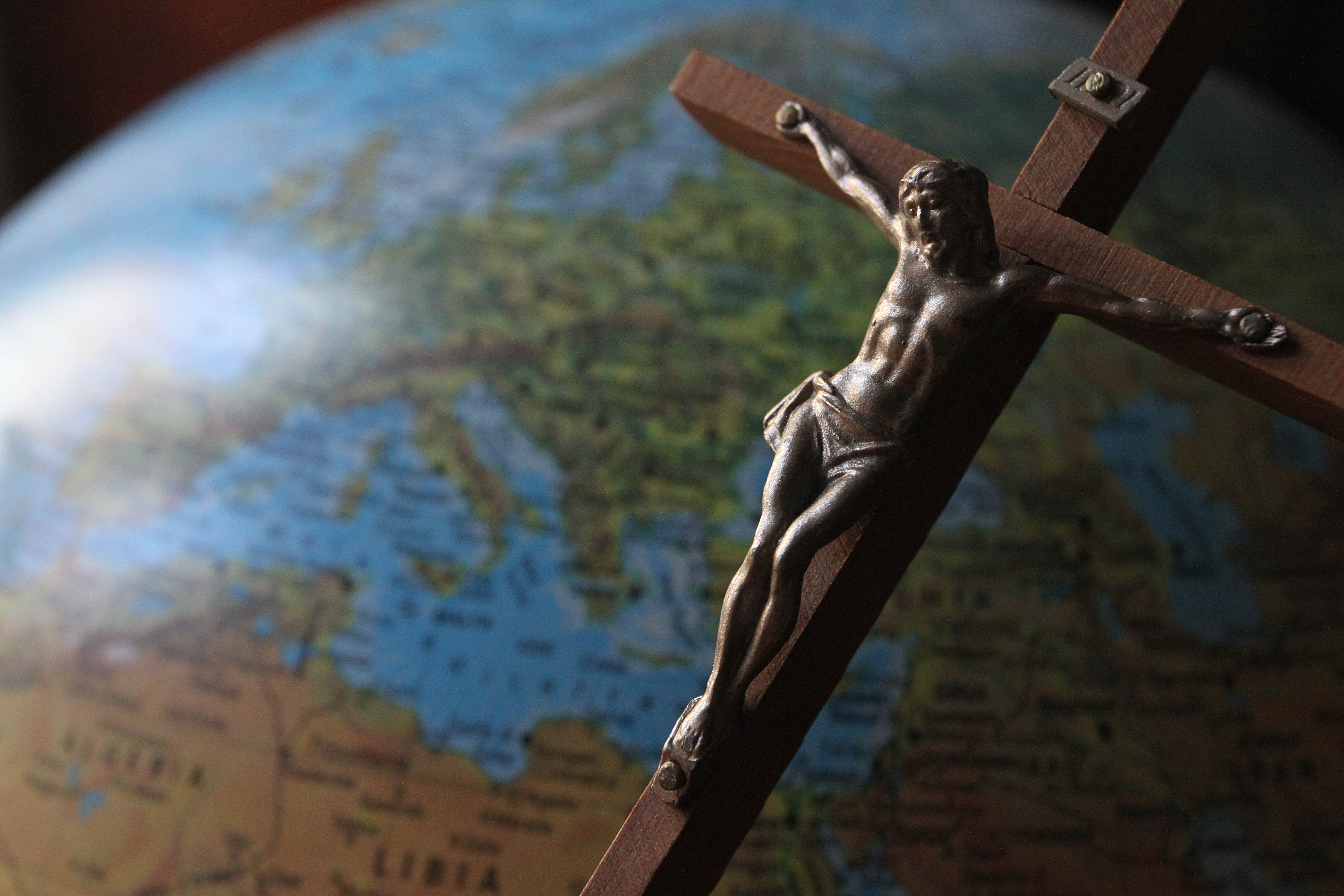
“God and the State: Europe between laicality and laicism”. It is the theme at the centre of the reflection and dialogue sessions of the plenary meeting of the Council of European Bishops’ Conferences, CCEE, held in Bratislava October 3 to 6. This theme is not new, but it ought to be reiterated in the framework of the ongoing transformations that have changed and continue changing the social, cultural and religious landscapes across Europe.Although it’s hard to admit, this theme is not alien to the cultural and political reflection on the origins of the multifaceted crisis experienced by our continent. Indeed, at the heart of this long path lies an aspect that is closely bound to the presence or the absence of God in history and in contemporary society. It’s that dialogue between faith and reason that nobody can turn down or ignore. “We are facing a paradoxical reality under certain aspects”, said card. Peter Erdö, CCEE President. On the one side in Europe we witness a thriving culture and a faith whose roots date back to the ancient Christian tradition passed on to the saints”. On the other we are witnessing “a growing refusal of the Christian heritage and of the principles stemming from it, with the inevitable consequence of having to seek other ‘forms of unity’ in the power of money and in the cultural homogenisation that is evident in the imposition of a single thought and of a same lifestyle for all”. The paradox, which is not to be overlooked, is that this is the time to focus on a new understanding between secular and religious sensitivity, i.e. that very “Court of Gentiles”, which Pope Francis often walks through, must be cultivated with care, since owing to its very uniqueness it can transmit the signs of intellectual transformations also to the European political and institutional realms. We cannot think of the future of Europe, and nor can the latter develop, if the distinction between the religious and political spheres lingers on in an atmosphere of diffidence and refusal, never entering the realm of friendship. In order to tear down that wall it should be acknowledged that only those close relationships marked by the absence of ideology and prejudice will lead to the establishment of the common good, which does not consist in providing all the answers to the material needs of European citizens. The message arriving from Bratislava states that in order to govern modern societies and the modern world – which includes the EU – with farsightedness and credibility, the States and the union of the States must welcome the religious dimension, taking into account the fact that the religious freedom of individuals and communities is indispensable to the erection of a society united in diversity. In over sixty years of Community history, the Pontifical Magisterium, the Magisterium of national episcopates, their European chapters, along with the contribution of Catholic laicality have reiterated that the separation between State an Church must not consist in the uprooting of the religious dimension of the State, but in the recognition of an indispensable reference to Alterity, for the building of the common good. It should also be said that a secularised society like the European one is not a lost society. The layer of indifference conceals the yearning to meet someone who will give consistent and truthful answers to the quest for truth, which is a quest for happiness. To this regard is expected a surplus of witness, intelligence and communication especially on the part of Catholic laicality, highlighted in the apostolic exhortation “Ecclesia in Europa”.”The Gospel pointed out the CCEE president is no longer received if we live according to the model of a bygone society, which is often the fruit of imagination, forgetting the difficulties of other epochs or dreaming a heavenly future in this world. The Church’s mission today is to evangelize modernity and post-modernity”. We cannot and must not abandon Europe to the winds of pessimism and scepticism. It must not be abandoned not even when, speaking in defence of a modernity without a future, the French “laïcité de combat” – or ignorant anti-religious hostilities – raise their voice. These two lay-like oppositions deny and counterfeit true laicality.
