CCEE
The bishops’ positive message to Europe. “The real risk is indifference”

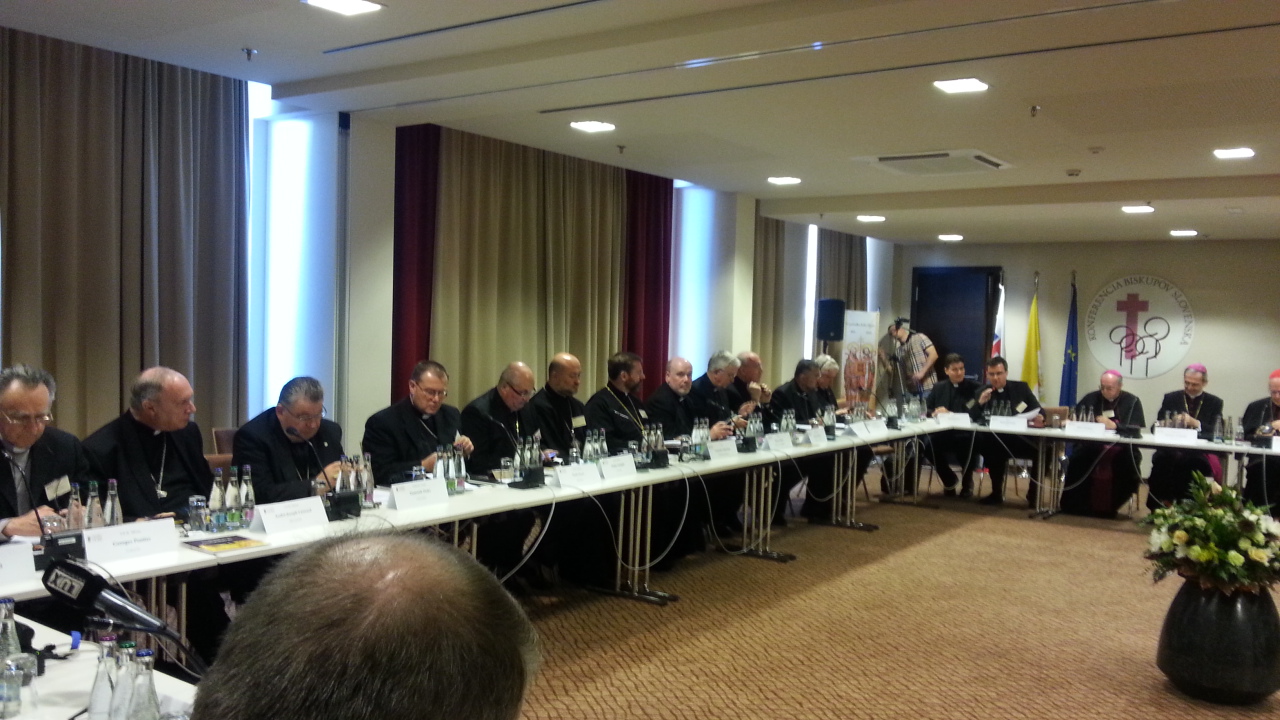
“We have a hope the world seeks”. At the end of the debates, reflections and analyses on the space of the Church in European societies, the bishops’ have decided to side with hope because it is what contemporary Europe needs, marked as it is by manifold challenges. Hope is the key word emerging from the plenary meeting that brought together 39 presidents of European Bishops’ Conferences, held in Bratislava, Slovakia, October 3-6. In the midst of secularity and secularism. The main theme of the debate in Bratislava was “God and the State. Europe in the midst of secularity and secularism”. A survey coordinated by Prof Emila Hrabovec highlights “the interference of a certain secularism and the attempt to build an exclusively negative image of the church and faith”. However – the bishops point out in their final message – “the Church’s response cannot be one of closure, turning into a fortress in Europe”. “Regardless of what happens, Christians have a clear identity, based on their faith, which is alive and awakens hope”. Repeatedly, the Bishops expressed the conviction that the hope that the Church brings is something that the world seeks. And this same hope must give Christians the courage to tackle difficult situations with a spirit of opening to people’s questions”. All problems were addressed one by one, ranging from the prejudice of interference that often weighs upon some Churches, to Catholics’ marginalization from public and social live, to the progressive erosion of the Christian identity of European populations. “It’s not about being superficial or lacking critical judgement on the world”, states CCEE’s final message. Far from self-pity, Bishops propose a positive and proactive approach towards reality and social dynamics”. A positive and humble style. “The positive approach – Cardinal Dominik Duka, archbishop of Prague told journalists – is always to be preferred to the negative one. This should be borne in mind especially in terms of our relations with society, so as to ensure that people understand us. The Church already acts this way through her various social, health and educational initiatives. However, it’s necessary to identify the right approach towards society from a global perspective as it appears that societies have lost their common language”. A few months ago the archbishop of Malines-Bruxelles, Msgr. André-Joseph Léonard, was the victim of an assault on the part of Femen activists. Also this happens in Europe, but speaking to journalists the archbishop minimized the episode and said: “Compared to Pakistani or Middle-Eastern bishops, our hardships in Europe are scarcely relevant”. What the bishop is most concerned of is not the difference in opinions but rather the indifference marking public opinion’s approach to society. “I prefer motivated opinions to soft stands – he said – provided they are motivated by all sides. Debate is welcome”. In Bratislava we saw the face of a humble Church. “We cannot fail to identify – said Italian Cardinal Angelo Bagnasco – our insufficiency, fragility, and limits, like Peter in the middle of the night while he walks on the waters and drowns when he drifts away his glance from Christ and looks into the darkness, the waves, the winds, and he is scared. We also experience the fear of obstacles, difficulties and challenges that seem to overpower us, but this finiteness is our strength”. Peace for the Middle East. Msgr. William Shomali, auxiliary bishop of the Latin Patriarchate of Jerusalem who presided over a prayer vigil for the Holy Land, and His Beatitude Ignace Youssif III Younan, Patriarch of Antioch of the Syrian Catholic Church, shared their personal tragic testimony on the dramatic situation in the Middle East and the Holy Land. Syria, in particular, was the object of the bishops’ appeal to “avoid any hypocrisy among those who say they want to solve the problem”. Joining the Holy Father, the Bishops asked “for the pathway of dialogue to be more decisive and for prayer to be accompanied by political decisions that should lead to an immediate cease-fire and an end to the access into the country of weapons that fuel the war”.by SIR’s correspondent in Bratislava, Maria Chiara Biagioni and Danka Jaceckova
