EDITORIAL" "
Datagate case and migration emergencies overturned the summit’s agenda

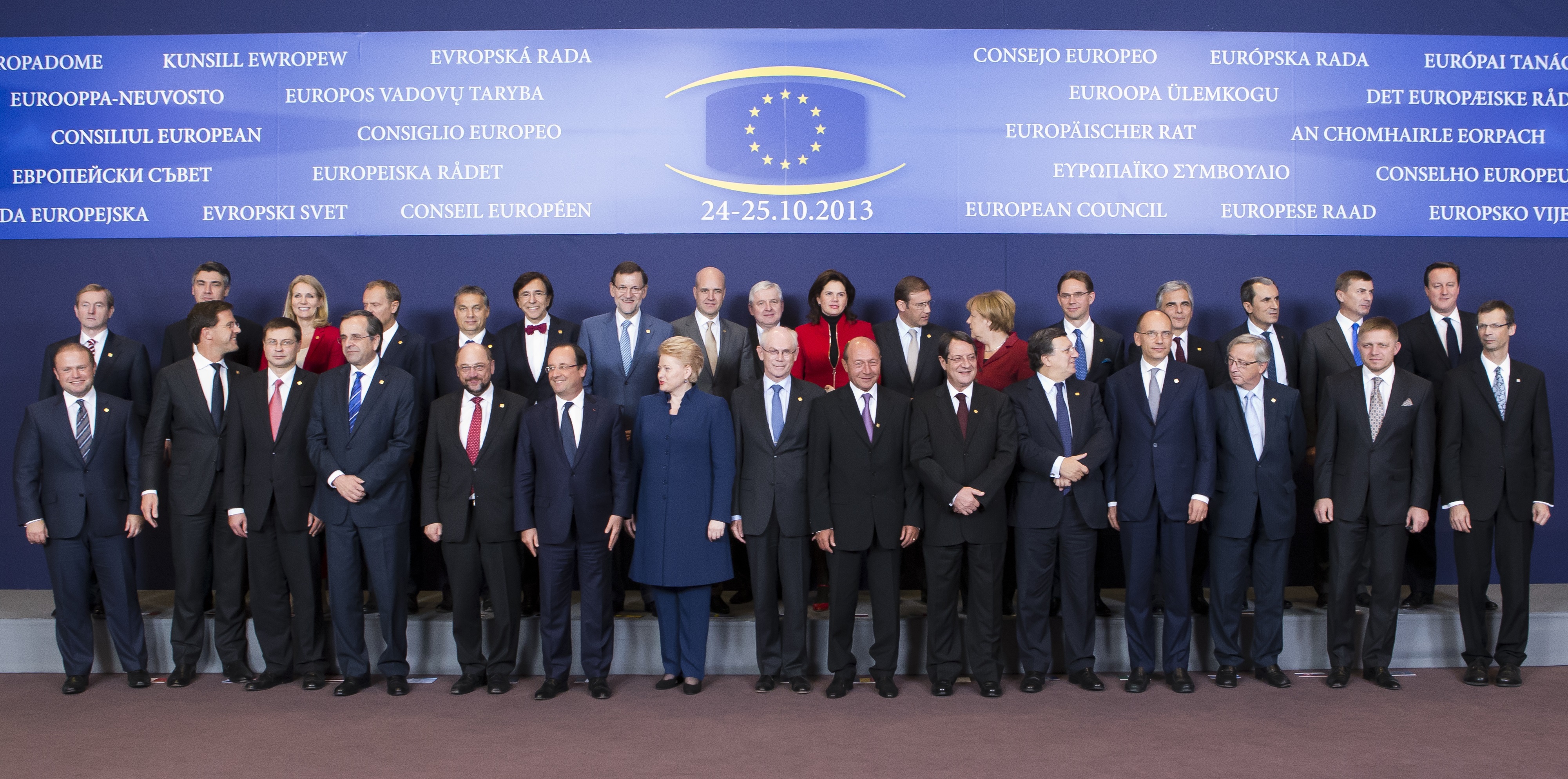
Datagate and Lampedusa have knocked strongly on the doors of the Justus Lipsius building, received by the EU heads of government and State gathered last week for their periodical summit, and to gain a front row seat.It happened Thursday, October 24. EU28 leaders had been summoned at the European Council headquarters to discuss economic issues. It has been the case since 2008, when the crisis that broke out in the United States swarmed over the Old Continent. After five years the recession still lingers on, 26 million people are without a job, the number of families on the threshold of poverty is increasing day by day, while we might get a glimpse of recovery, announced on many occasions, in 2014. Thus the umpteenth Community summit took place, on the agenda: economic governance, banking union, digital agenda, actions for innovation and competitiveness, single market… These terms have echoed over and over, and it’s hard to square the circle among member States, European Union, markets and enterprises. These are all areas requiring urgent decisions, operative projects, appropriate investments, legislative solutions supported by a decisive political convergence. While if American espionage and those drowned in the Mediterranean knock at our doors…Thus the October summit has taken a different turn than previously planned: economic themes were confined to a corner, while heads of government and state focused on critical events that hit front page news, followed with concern by the public opinion. Such events have always occurred in periodical cycles throughout the history of European integration: they are constantly taking pace, triggering new questions, while the Community seeks the ways to respond to historical developments. Indeed, the European Council of October 24-25 simply showed that History shapes Europe, and not the other way around.History – written with a capital “H”, studied on schoolbooks – for thousands of years has been Eurocentric: let it suffice to mention Greek civilization, Alexander the Great, ancient Rome, Charlemagne, the Middle Ages, the Renaissance, geographic discoveries, the birth of nation states in the modern era; the Age of Enlightenment, the French Revolution, the industrial revolution, colonialism… not to mention the First and Second World wars, which in fact, were above all European conflicts. But the so-called “Age of Extremes” was a warning that the world was about to change, and Europe with it. The vast, complex phenomenon of “globalization”, the fall of the Iron Curtain, forced Community Europe to reposition itself in the world and reshape itself. The Maastricht Treaty (1992), the emergence of the euro currency (2002), the major enlargement towards Eastern European countries (2004) were attempts – albeit more or less successful – to put on a par with time.Current challenges call upon the EU to hasten its pace. The crisis coupled by major economic competitors on the one side, the demographic crisis (grey-haired Europe) on the other, and – third element – surging migratory pressures from the Mediterranean and the Middle East confirm that the EU must follow the flow of history, coming to grips with ongoing developments. The measure of such transformations under way is a mere reiteration of what has been largely claimed, namely that disunited countries have no say on the world stage, while if united, despite the efforts pertaining to a joint pace, they could act as a bulwark capable of resisting the impact of such transformations.In this context it is clear that Europe is not “the problem” although it is crossed by problems throughout, but rather it is a part of the solution. This solution stems from an intensive dialogue between History and current events.
