UCRAINA-HOLODOMOR" "
The Country and the Christian Churches commemorate the tragic genocide of 1932-1933

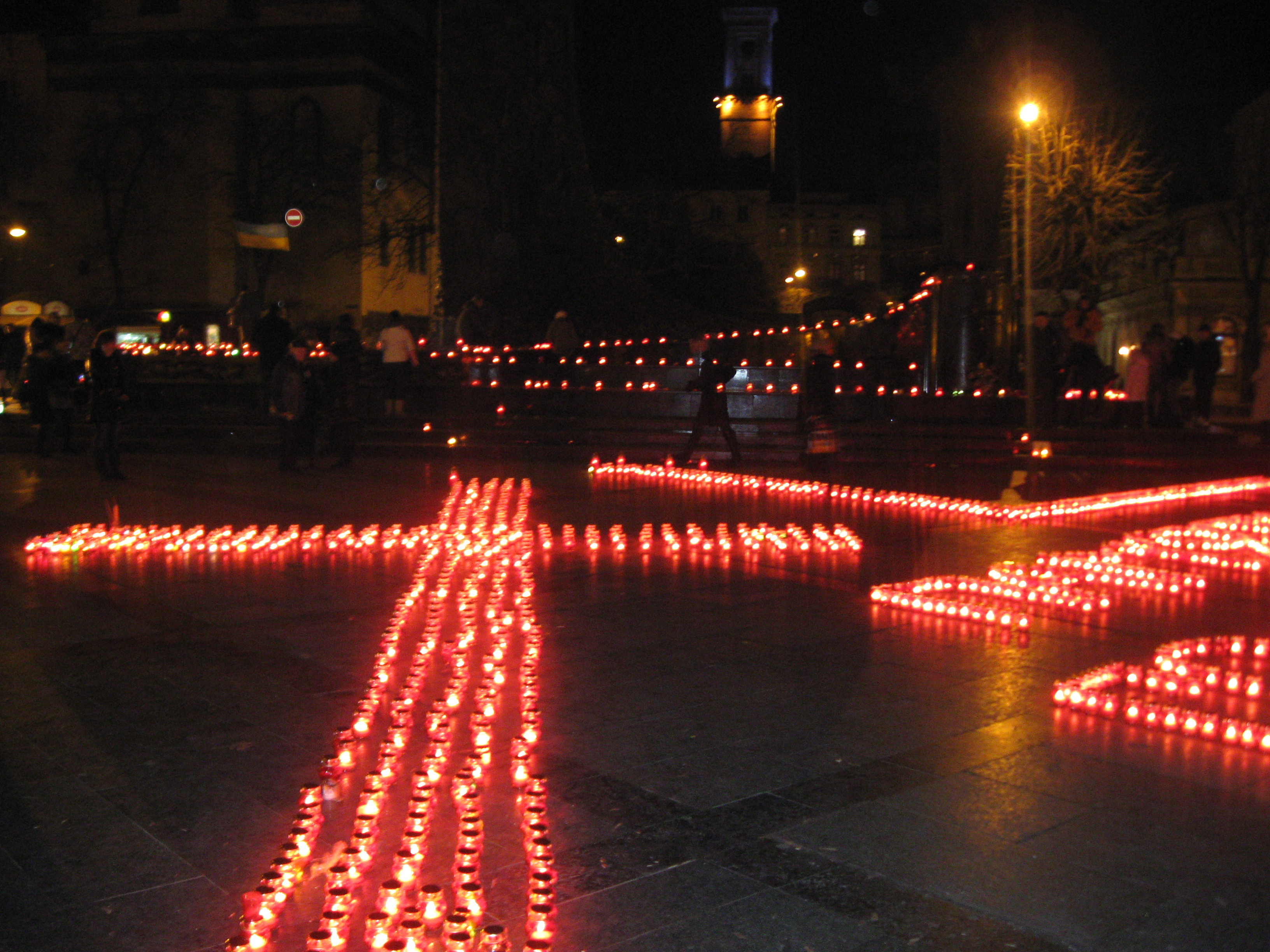
A year 2013 marks the 80th anniversary of the famine “Holodomor”, which – according to a survey conducted in October by the polling organization Rating in Ukraine – is considered by 66% of respondents to be a genocide of the Ukrainian nation. A National Day of Memory will be held on this occasion on 23 October not only in Ukraine but also abroad. Historical background. In 1932-1933, in a country historically known as the “breadbasket of Europe” with its fertile black earth and golden wheat, several millions of Ukrainians were starved to death by deliberate Soviet agricultural policy. In August of 1932, the Soviet regime set grain delivery requirements for the farms so far in excess of the region’s capacity to deliver, that – in doing so – the government of the Soviet Union indirectly sentenced the peasantry to death by starvation. As a result, by the beginning of winter 1932, all of the grain had been seized and the peasants were forced to live on nettles and leaves. By spring 1933, there was no food left, the Ukrainian peasantry was starving and the death toll had reached millions of victims. Disputes over intention. For decades, the Holodomor has been a matter of international dispute, as the Soviet Union claimed that the process of forcing peasants to live and work on collectivized farms accidentally resulted in a famine that killed millions of people accross the country. This remains the official position of the Russian government also today. In August 2012, the Voice of Russia published a story admitting the starvation was “a terrible tragedy” but disagreeing with the statement that it was an intentional genocide. However, scholars say there is little doubt that the Soviet dictator Josef Stalin was responsible for it. After the collapse of the Soviet Union, documents were discovered proving that Stalin knew about the famine and ordered government officials to steal food from Ukraine’s peasants, says Gennadi Poberezny, chief cartographer with the Harvard Ukrainian Research Institute’s Holodomor Atlas project. “There’s no question. Stalin knew”, adds Douglas Irvin-Erickson, researcher with the Center for the study of genocide, conlict resolution and human rights at Rutgers University, Newark. Neverthless, nobody can deny that the immense tragedy of the Holodomor wiped out an entire generation of Ukrainians and is considered to be one of the most horrific events of the 20th century. In memory of the victims. Heads of traditional Ukrainian Churches appeal to the faithful and all people of good will to join the All-Ukrainian Community Initiative “A National Day o Memory” on the 80th anniversary of the Holodomor, due to be held on 23 November. They have issued a special appeal on the occasion, stating that “this tragic page remains an unhealed wound in the history of our people. The memory of millions of lost lives, the pain of hundreds of thousands of families, unites most of the citizens of Ukraine, who always on the fourth Saturday of November light a candle of remembrance and go to the memorial places in Kyiv and their cities and villages”. According to the representatives of Christian Churches, “this memory actively contributes to social peace and understanding among people, united by a shared pain about the past and a hope for the future”. People have been urged to organize in their ecclesial communities voluntary work to put to order the mass graves of those who perished during the years of the Holodomor. Representatives of Churches invite the faithful to organize local remembrance services in their parishes and to delegate representatives from their community to pay respect to the memory of the victims by joining the national remembrance events on 23 November. “A unification of the society around spiritual ideas, community self-organization and mutual support – these attributes represent a good haven under conditions of political and economical crises”, reads the appeal. Testimony of a survivor. When the hunger began, he ate grain meant for horses. When the horses died, he ate horse meat. When the meat was gone, he clawed the farmers’ fields with his hands and ate the seeds. When the seeds were gone, he found the holes of field mice and ate their stores of grain. When the hunger ended in 1933, he looked like a skeleton. But he was alive. “Even if the grain was bad, we ate it”, said Peter Velechko, 89, a survivor of the Holodomor. “Everything we ate was illegal. If they found us, they would have shot us”, testifies Velechko to the Religious Information Service of Ukraine. “I want the whole world to know what the communists did”, concudes the survivor, adding that “we cannot let it happen again”.
