ALBANIA" "
The hypothesis of changes in the family Code: the bishops’ concern

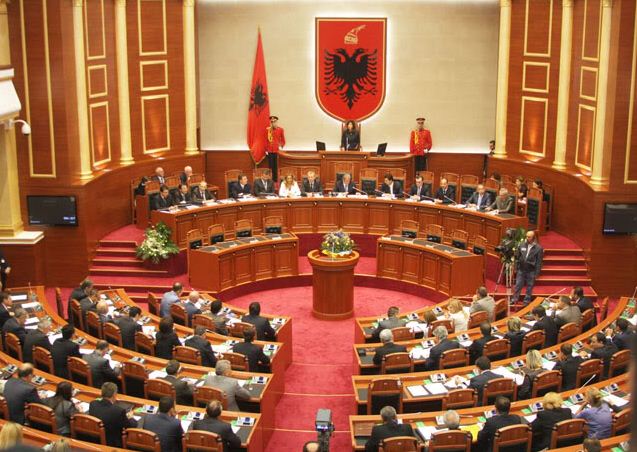
Will Albania be the first Country in the Balkans to authorize same gender unions? The question arises after having listened to the recent declaration of the people’s lawyer, Igli Totozani, who said: “Albania must become the first Country in the Balkans to allow gay marriage”. These words rekindled public debate in the Country of the hawks, already sparked off a few months ago by ex Premier Sali Berisha, who had envisaged openings to this regard. But Totozani went beyond mere statements. He made known that a draft law is ready for Parliament approval. Thus while the neighbouring Croatia is preparing for the first referendum of popular initiative to define the marriage between a man and a woman in the Constitution (December 1st), Albania could introduce changes in the Family code. “We can’t remain silent”. Totozani’s initiative did not leave the Albanian episcopate indifferent, also because it comes from a constitutional institution. The People’s Lawyer is in a body envisaged by the Constitution of the Albanian Republic of 1998 (chap. VI, articles 60-63) which stipulates the protection, inter alia, “of the rights, freedoms and legitimate interests of individuals from illegal actions or omissions by the public administration”. There derives the bishops’ “major preoccupation” , conveyed in a recent “statement for the protection of the family according to God’s plan”. As it happened already in 2009, the bishops write, “led not only by our Christian faith, but also by our commitment for a strong and sound society, we cannot remain silent before this debate”. It’s the “respect” towards the “dignity of marriage” that obliges us to explicitly speak against such a proposal”. For love of the truth. In their statement, the bishops analyze what “the Word of God teaches about creation” and underline “the natural law written in the human heart and expressed clearly in the Holy Scriptures”. This, they write, is the premise that led to define marriage, “in every age, culture and faith”, as “a complete union between man and woman”. And “no Parliament should have the competence to change this definition”. So, “for the love of the truth, we cannot call ‘marriage’ a union between two persons of the same sex and we cannot say that such a union is a right. A behaviour that does not belong, which is not part of the true nature of man, that is not for his good and the good of society, cannot be a right”. Appeal to MPs… The bishops addressed an “appeal to MPs regardless of their faith or political affiliation”, to “give priority, above all, to the good of society” bearing in mind that the “nucleus that it is composed of is not the individual but the family as a whole”. To this regard it should be borne in mind that “not every progress is innovation”. And “we should not be misled into believing that with the adoption of a law in favour of ‘marriage between people of the same sex the rest of the world will consider us an advanced country”. The bishops thus underlined the “commitment to defend ethical values for the promotion of the family”. Only then, “will we have a strong society”. …and to the people’s advocate. addressing the people’s advocate the bishops called for the need to “activate concerted action to solve the problems of Albanian society, instead of focusing on questions that have nothing to do with the protection of marginalized population brackets and whose goal is to divert public attention from crucial issues pertaining to democracy and to the future of the Country”. The bishops conclude: Albania won’t be the first Balkan country to authorize same-gender unions.
