EDITORIAL" "
Christians and Europe: from history the encouragement not to give way to pessimism

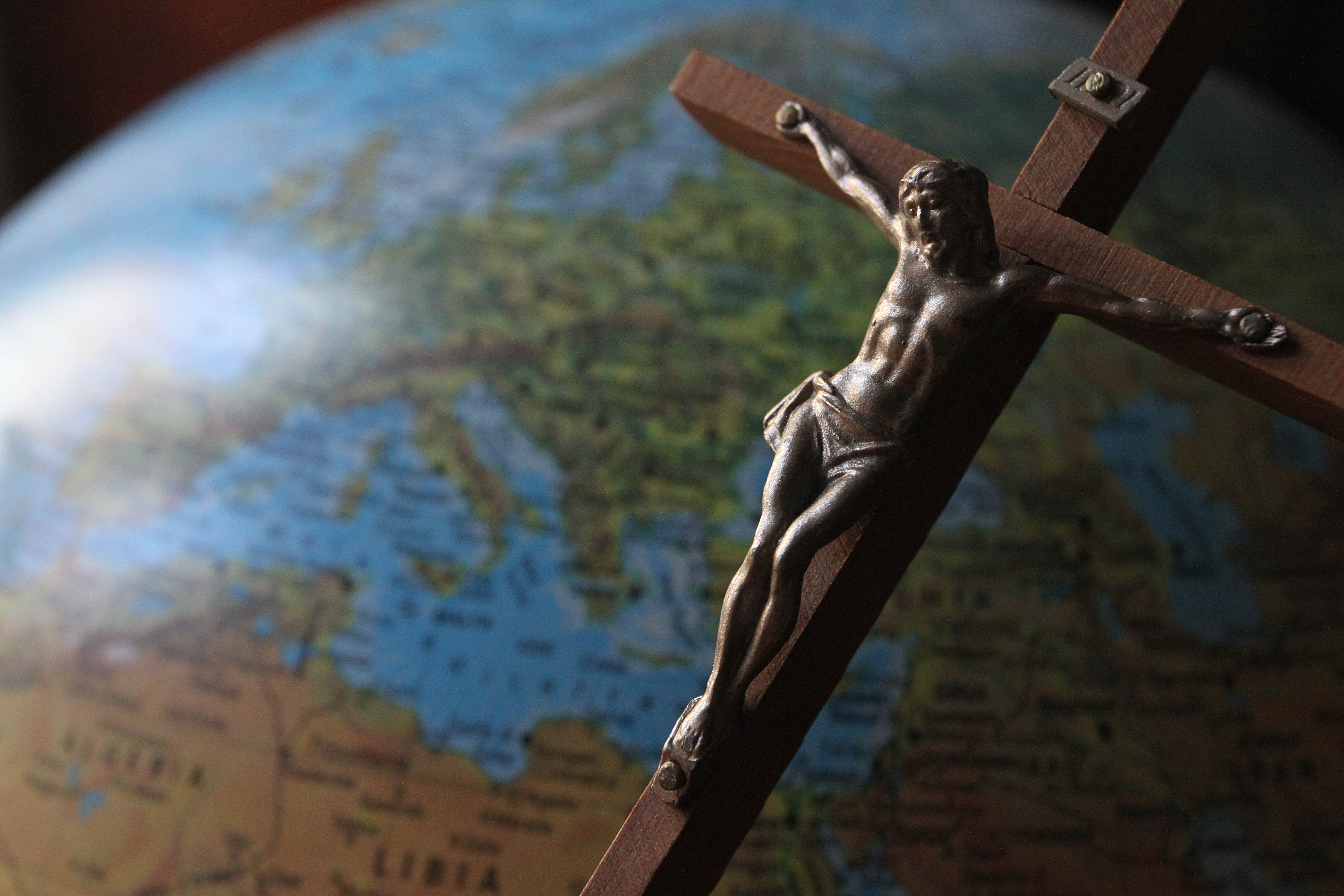
Ten years since the apostolic Constitution “Ecclesia in Europa”, in the present context of crisis, marked by the affirmation of euroscepticism, the vision of the Catholic Church on united Europe deserves special reflection.Undoubtedly, the construction of Europe as we know it from the Robert Schuman Declaration of 9 May 1950, reposes on the teaching of the Church, whose mission is to give guidance, to set a goal that was fixed long ago: peace, fraternity and the promotion of a civilization of love. The First World War was the occasion to emphasize the necessary commitment of Catholics in favour of peace. Sadly, Pope Benedict XV was not heard, not even by European Catholics caught up in the infernal logic of nationalism. But after 1919 the horror of war and the ensuing urgency to build another Europe prevailed. With the encouragement of Pope Pius XI, who denounced “exaggerated” nationalism and totalitarianism, Catholics have begun to understand the implications of the Gospel on the relations between States. A generation of politicians like Don Luigi Sturzo and intellectuals like Jacques Maritain, began to conceive international relations in a different way. It was the task of powerful Christian democratic parties that emerged in several countries of Western Europe after the war to make people understand that it was no longer possible to follow the footsteps of nationalism, of hatred among nations, on the model of the peace treaties of 1919. It is not a coincidence that the foundations of European unity were laid by three Catholic statesmen – Robert Schuman, Konrad Adenauer, Alcide De Gasperi – all three nourished by the Gospel and by the pontifical Magisterium. Since the end of the war the Europeanist theme became a central theme in the teaching of the pontiffs. In 1948, Pius XII stressed the urgency of political action in favour of the union: November 11, thirty years since the end of World War I, he said, in a message to the Congress of the European Federalists: “there is no time to waste”. The Vatican welcomed Europe’s success in the 1950s (1951- the establishment of ECSC, 1957- EEC), and regretted its failures such as that of the European Defence Community (1954). Papal diplomacy was very active in reducing rifts among former belligerents, and especially between the “two Europes” separated by the Iron Curtain. The Vatican’s Ostpolitik enabled, from John XXIII to John Paul II, to bring closer the two parts of Europe, and the Congress of Helsinki to recognize, in 1975, the principle of religious freedom, thus contributing indirectly to the fall of the Berlin Wall. At the same time, the bishops worked hard on the theme of reconciliation. In France, the new Franco-German friendship was sealed by General de Gaulle and Adenauer in Reims Cathedral, July 1962. In Poland Cardinal Wojtyla, archbishop of Krakow, was committed to fostering reconciliation with the Church of Germany. Moreover, Church teaching, including the Second Vatican Council and the major papal encyclicals, is in keeping with the affirmation of peace: “Pacem in Terris” (1963), “Gaudium et Spes” (1967 ), “Populorum Progressio” (1967), to the messages for the World Day of Peace.Yet today, with a European Union that finally breathes with its “two” Western and European “lungs” as John Paul II said, the crisis is present and it also is a Christian crisis of Europe, and while its construction was once popular among Catholics, today it is no longer so. In fact, many Catholic believers are perplexed before an increasingly technocratic building, distant from the peoples and from their founding values such as life and the family. The refusal to incorporate Europe’s Christian roots in the preamble of the European Constitution (2004), with several cases resembling that of the calendar of religious holidays which “forgot” the Christian holidays, contribute to increasing perplexities. It has become harder for Christians to keep their commitment for Europe but we have the duty, today more than ever, to reject all forms of pessimism. Christians must not abandon Europe. John Paul II observed in “Ecclesia in Europa”: “The Europe of today, while it reinforces and broadens its economic and political union, seems to suffer from a profound crisis in values. Even though it has increased resources, it gives the impression of lacking the energy to sustain a common project and give reasons for hope to its citizens”. He concluded, addressing Europe as if it were a person: “Have no fear!” “Have faith!” “Be certain!” Christians must not forget that many world populations see the EU as a model, a dream. It is not by chance that when awarding the Nobel Peace Prize to the EU in 2012 the members of the Nobel Committee stated: “The commitment of the European Union is a symbol of fraternity among nations”. (*) University of Lyon
