EDITORIAL" "
European parliament seeking a solution to costly seats” “

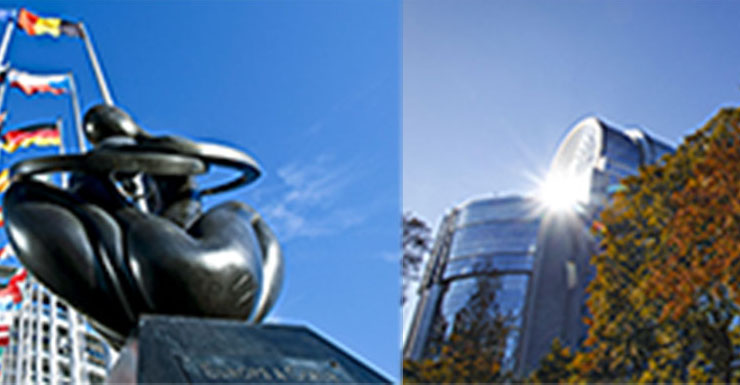
When it comes to its seat and the internal organization of its activity the European Parliament raises its voice. During the plenary meeting in Strasbourg at the end of November the Hemicycle adopted, with a majority of 483 votes in favour, 181 against and non-voters, a report on the location of seats of European Union institutions. In reality, the only issue addressed in the report by British MEP Ashley Fox and German Gerald Häfner was the seat of the European Parliament.In their report MEPs claim the right to define their working modalities, including the right to determine where and when they convene. Furthermore, for economic and ecologic reasons, they have approved the principle of a single location thus putting an end to the monthly migrations from Brussels to Strasbourg and vice-versa.The coexistence of the two sites represents an additional cost estimated between 156 and 204 million euro a year, which amounts to 10% of the annual budget of the European Parliament. It generates, also, relevant environmental damage: the travel of 5 thousand officers and staff members, along with 8 trucks with documents on the occasion of the monthly sessions held in the Alsatian city originate 11-15 tons of Co2 emissions.The city of Brussels could invoke in its favour the symbolic power of its geographical position in a European Union much wider than it was at the beginning. For was it not, as early as in the Middle Ages, along with other cities of the Flanders, the meeting point of the two most important roads in Europe: that which from time immemorial connected Northern Italy via Marseille, Lyon and Troyes, and the one leading eastwards to Novgorod in Russia, passing through Cologne, Berlin, Gniezno and Vilnius?The fact that the buildings of the European Parliament in Strasbourg are used only during the plenary sessions (12 times a year, for 4 days each) exacerbates the problem. What many consider to be a waste of EU taxpayers’ money is also confirmed by the fact that 754 MEPs, and over 160 officials who follow the plenary, have two offices, one in Strasbourg and the other in Brussels, and part of’ the administration of the European Parliament is located in Luxembourg. It turns out that 150 officials of the European Assembly also have three offices.However, defenders of the current situation are backed by the Treaty on the European Union. The regulation, formulated for the first time at the Edinburgh summit in 1992, integrated in 1997 to the Treaty of Amsterdam, states as follows: “The European Parliament has its seat in Strasbourg, where are held the twelve monthly plenary sessions, including the budget session”. Changing this regulation would require a reform of the Treaties, and thus the unanimous approval of Member States. The fact that MEPs, according to their respective powers, have taken a decision to initiate a process of revision of the Treaty brings no alteration, with respect to this situation. To be clear: as long as France insists on holding plenary sessions in Strasbourg, the situation is bound to remain the same. And even after its latest elections, the French government immediately announced its commitment to comply with the Treaty.Nonetheless, for many European citizens monthly “commuting” has become a symbol of Europe’s malfunctioning. The decision to convene in Strasbourg, a city martyrised by German-French conflicts in the past centuries, initially viewed as a powerfully symbolic option, risks waning away. That symbol will be used by non-French eurosceptics during the next electoral campaign. Thus, the symbol of reconciliation runs the risk of being devalued. Mario Monti and MEP Sylvie Goulard have suggested to make the city of Strasbourg a city of dialogue and civil society, and allow the European Parliament to use Brussels as its permanent seat. These are proposals that deserve attention.
