
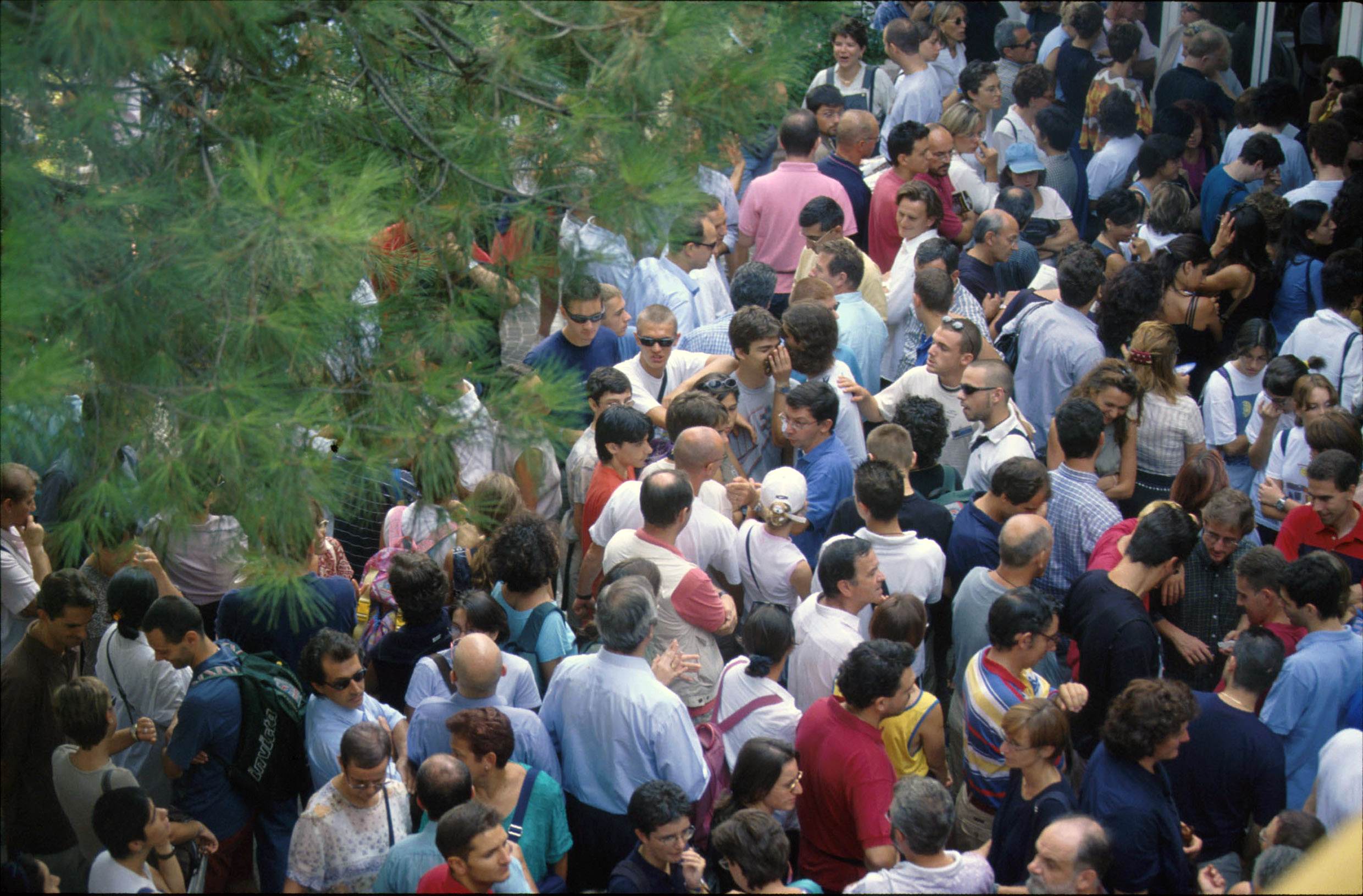
European Year of Citizens: balance and future prospects The European Year of Citizens draws to an end. During the Year hundreds of initiatives – conferences, activities for schools, competitions, meetings between policy-makers and citizens, fairs and public performances – have been carried out across 28 capital cities of EU Member States as well as in medium and small cities, and even in remote villages of distant regions. It’s hard to measure their impact, also in terms of the upcoming elections of the European Parliament in 2014. The closing event of the Year of Citizens, due to be held in Vilnius December 12-13, promoted by Italy’s EU rotating presidency, will provide an overview of the Year’s initiatives. Some 350 participants from 28 EU Member Countries, representatives of national authorities, European youth organizations and NGOs, will convene for six debates on current events, during which will be addressed a range of issues that include “the role and the future of organizations of civil society in the building of Europe’s future” and “A bottom-up project for Europe: promoting the rights of EU citizens”. A dedicated meeting will be centered on the European elections. Participants include representatives of UE Eastern partnership NGOs, namely from Ukraine, Georgia, Moldova, Armenia and Azerbaijian – made known the Lithuanian presidency – to prompt concrete debates on the real situation of EU citizens, taking part in discussions and base their evaluation of future adhesions on the grounds of that information”. The working sessions will be introduced by Lithuanian leaders, by Viviane Reding, Vice-president of the European Commission and Commissioner for Justice and Citizenship, by Emily O’Reilly, European mediator, and by Vytautas Landsbergis, first Lithuanian leader after the Country’s independence. Eurostat, one in four at poverty-risk A fourth of EU population, 24.5 million people, “were at risk of poverty or social exclusion” in 2012. The figures are contained in a survey by Eurostat, the statistics bureau of the EU, released a few days ago, providing data on EU 28 Member countries in 2012. On the basis of parameters on daily life, Eurostat made known that 24.8% -compared to 23.7% in 2011 and 23.7% in 2008, marking the beginning of the economic and financial crisis – of EU population are on the brink of poverty or have already fallen in a state of indigence. Eurostat experts pointed out that problems involve “severely materially deprived individuals or families or living in households with very low work intensity”. The highest shares were recorded in Bulgaria (49%), Romania, (42%) in Romania, Latvia (37%), and Greece (35%). Seemingly less gloomy situations were recorded in the Netherlands and in the Czech Republic (15% of the overall population at poverty-risk according to the survey), Finland, (17%), Sweden and Luxebourg (18%). Poverty risk involves 19.1% of the French population, 19.6% in Germany, 24.1% in the UK, 26.7% in Poland, and as much as 29.9% in Italy. Upcoming EU elections: a website for citizens A dedicated website for European citizens was set up by the European parliament with a view to the elections held in EU Member countries May 22-25 2014. The website (http://www.elections2014.eu/, available in 24 official EU languages, includes a section “constantly updated, dedicated to news regarding the European Parliament, useful information on Member States and European political parties, along with information for the press”, articles, press releases, audiovisual presentations and informative charts. “Citizens can consult interactively – made known the press office of the European Parliament – Member States’ data on the economy and technology, labour and education, the environment and energy, and enterprises”. Dedicated areas are assigned to the political parties and groups that sit in Strasbourg. The portal also provides a large part of the documentation on the work and the dossiers in progress and approved during this legislative term. Among other things, the facebook page of the European Parliament has just achieved the target of one million fans. “We rank third in terms of number of fans on facebook after Unicef and the White House”, said Jaume Duch, head of Communications of the EP.
