EDITORIAL/2
The German chancellor between national interests and support to EU integration

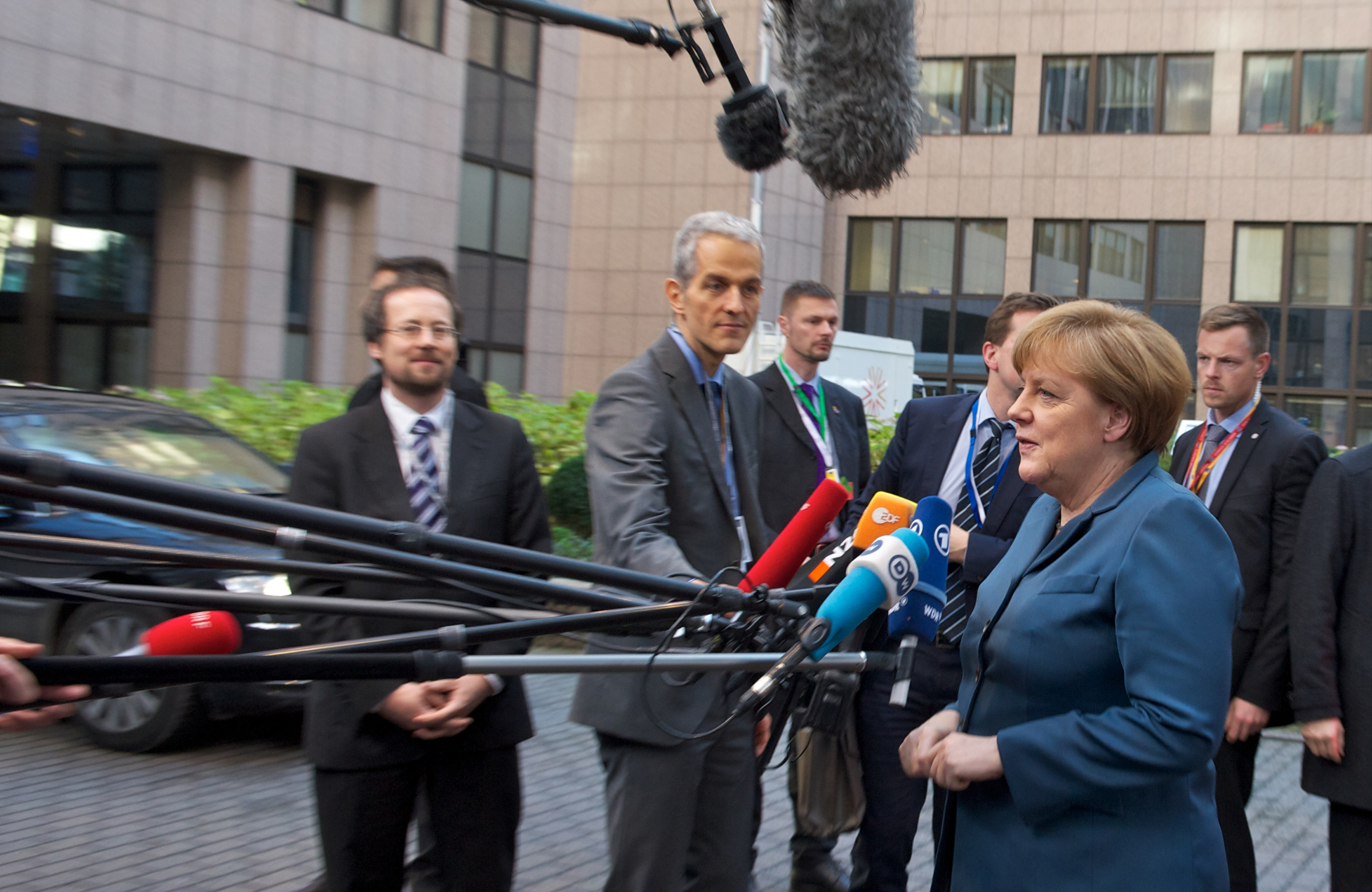
Is Angela Merkel “destined to be ranked among the greatest chancellors of all times?” The stimulating question was raised by the daily “La Vanguardia” on the eve of the European Council of December 19-20 and on the aftermath of the crowning of the “girl from the East” for the third consecutive mandate to the lead of the Berlin government. The Spanish paper attempted an answer: “It will all depend on what will happen in Europe and in the Union.” The heir of Adenauer and Kohl “took office in 2005, when the EU still responded to the narcissistic appeal that linked her name to wellbeing and peace.” But after years and years of crisis, the picture has objectively changed. When she was elected chancellor for the first time, Merkel was facing a very different Europe: its borders to the East had just been opened, the euro had only recently been adopted and the constituent process was still an item of debate. And most of all, the continents’ economies ran at full speed. Today, many of those perspectives are linked to unemployment, to the economic and financial crisis, to resurrected protectionism and nationalisms. The EU flags are being waved in Kiev, not in Paris, Athens, Rome or Warsaw; populists and Eurosceptics are preparing to vote in the European Parliament elections of May 2014.There also appears to be a want of leaders with a continental stature: Cameron, Hollande, Letta, Tusk, Rajoy, must look after their domestic problems. European integration seems to play a secondary role. In this situation Angela Merkel (also on the grounds of a strong electoral mandate with which the Germans have handed her the keys of the country) can only but stand high, to the extent of presenting herself at the European Council with the awareness of being in control of the situation: banking union, the stability of the single currency and of public budgets, the ECB role, the possible treaty reforms, the relations with Ukraine and with the Russians, even renewable energies measures. It should be all examined by Berlin, since a “nein, danke” would thwart the Community process. Most of all, thanks to Germany’s fairly good economic situation (high exports, increasing investments, low unemployment, although domestic consumption is hampered by low salaries) Merkel is a step ahead. Ironically, no later than a month ago the European Commission urged Germany to put a stop to current orders and exports to Third Countries, focusing on the revitalization of the internal market, highlighting the need to adapt salaries to productivity levels. This was music for the SPD allies of the chancellor: in fact, in the 185 page-long government program figures the establishment of a minimum wage of 8.50 euros per hour – an amount that wouldn’t even be dreamt of in other member countries. Indeed, Germany’s pace is too fast, and some people hope that the ‘locomotive’ will pull the brake. Now it’s Merkel’s turn to prove that she is a worthy heir of her predecessors, of the Democrats and Social Democrats alike. Germany will not benefit from ill-disguised prevarications on the European scenario, and nor will the EU as a whole. Conversely, a sound balance between the promotion of national interests and the creation of European ones – which objectively speaking still largely depend on Berlin – would forever place Angie on the pedestal of the “common home.”
