EDITORIAL
The message of Saint Francis of Sales to contemporary Europe ” “

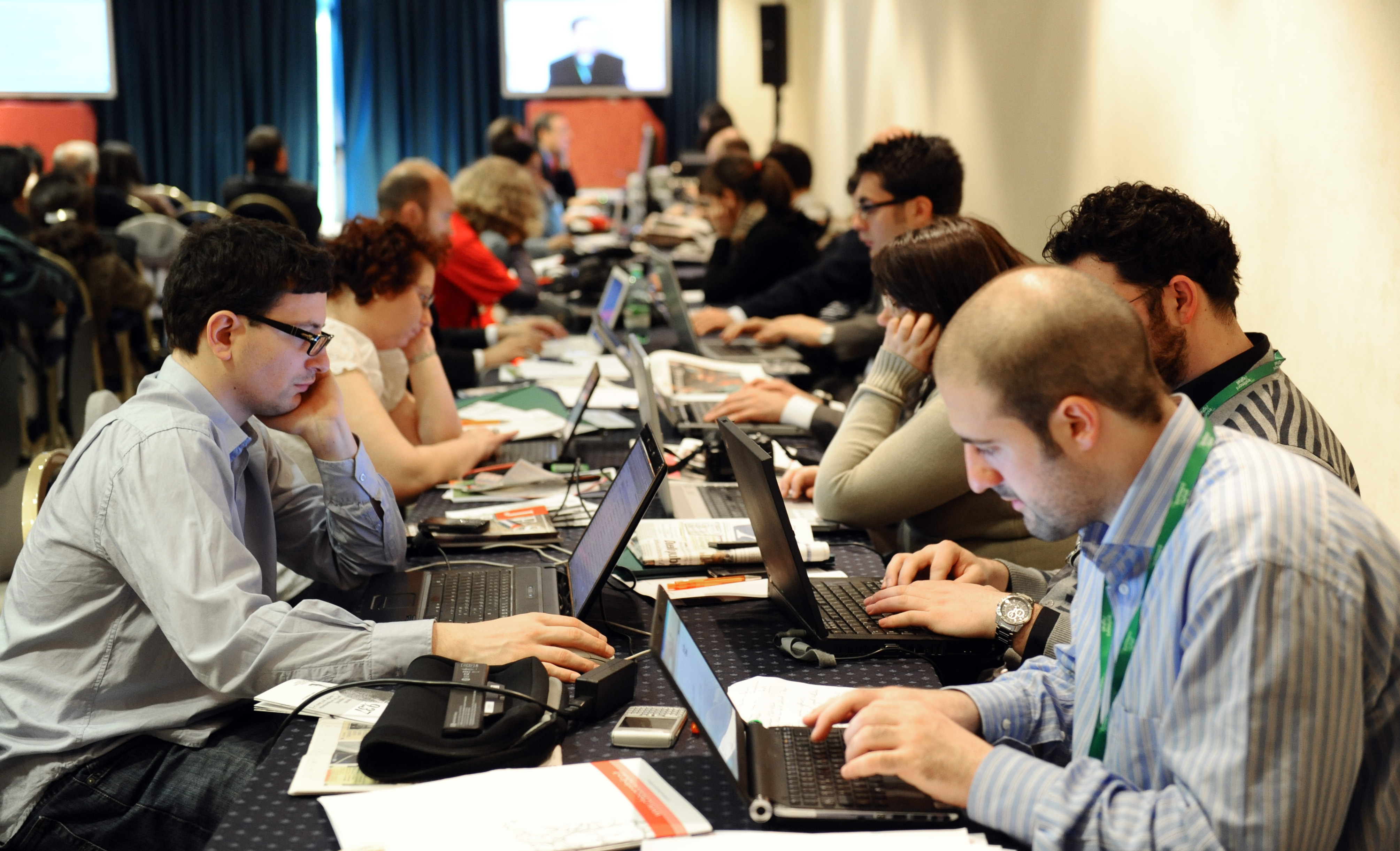
Throughout his entire life he was looking for new methods and tools to spread the message of faith that was so dear to him. After his death he became the Patron Saint of his “successors”, the journalists and preachers of the Gospel. St. Francis de Sales, who died in 1622, can be best described as a true hero of the communication of faith, precisely because of the great attention he devoted to people that listened to his words.It is surprising to note the many parallels between the world in which lived Francis de Sales and the life in contemporary Europe. The time of the Saint was marked by great challenges in terms of communication. Europe had fallen into a deep crisis as a result of the Protestant Reformation and owing to a set of historical events. Then with the Renaissance, man became aware of himself and of his capabilities, which also led him to conceive life in the absence of God. Is all this very different from the face of Europe today?It was in this environment that Francis de Sales spread the message of the Gospel, always looking for new words to explain the eternal truths to which he was faithful. The same happens with the voice of the Church today, especially in Europe: Francis de Sales was not listened by everyone either. Precisely because the faithful would not listen to his sermons from the pulpit, he sought other methods to get the Word of God into their hearts. In fact, he decided to write out his sermons on slips of paper which he posted on public walls or slipped under the doors. Here is a beautiful example of how to make a creative use of social media in the time in which we live!Even today, for any activity of journalistic communication, also in relation to the transmission of the faith, loyalty and creativity are equally needed: creativity in adapting to the public the method of communication chosen, trying to reach the heart and mind of the recipient, loyalty in complying with the truth of the message received, presenting facts objectively and trying to communicate the truth.The mass media play a very important role in contemporary Europe. Through the media we are made aware of a large amount of news and information, on the basis of which we form our opinions and make decisions. All this gives journalists and communicators in a broad sense a great responsibility to make a proper use of media “power”. St. Francis de Sales represents a reminder of those two essential elements – creativity and loyalty – to each one of them also today. The saint passed on to us a third element of crucial importance in the use of any means of communication. In fact, his heritage is a useful instruction for Christian life. Although it will not always be easy to apply his “motto” in the contemporary world, we all need to recognize that, just like he did”,If I’m wrong, I want to make a mistake for too much goodness rather than for too much rigor”.In celebrating this first memory of St. Francis de Sales during the pontificate of Pope Francis, we rejoice in recognizing the same approach to love and care in His Holiness. A few days after his election Pope Francis expressed the intention to meet journalists and media representatives. At that meeting he addressed them with the following words: “Your job requires study, sensitivity, experience, like many other professions, but it implies a special attention to the truth, goodness and beauty. That is why we are so close, because the Church exists to communicate precisely this: truth, goodness and beauty ‘in person’ “(March 16, 2013).As Christians we are called to reflect in our every action the person of Christ, which is made visible in us the more we adhere to the truth, the more we make transparent the true love and true goodness and show special attention to aesthetics and beauty. There ensues that all of our communication, whatever the subject matter, should itself reflect the truth, goodness and beauty, so as to be only in this way truly human, Christian communication.The Europe of today is in great need of communicators who faithfully adhere to the truth, who put goodness into practice and extend their glance to beauty; people who live fully in the world, with a deep knowledge of human, social and political issues of our times, people whose life in the world and in Christ enable them to read the signs of the times in a profound way.Today, like every human communication – regardless of the subject matter, the content and the means used – the life of St. Francis de Sales is bestowed upon with his sensitivity for creativity, loyalty and goodness in communication. This same teaching we are also offered in the triptych of Church tradition: truth, goodness and beauty. All those of us who are sincerely following this road discover that the person of Christ is the only basis for true communication. This is the type of communication that Europe needs now more than ever. (*) Deputy Secretary General – CCEE (Council of European Bishops’ Conferences)
