SPAIN
The Holy week in the city declared of “national interest”

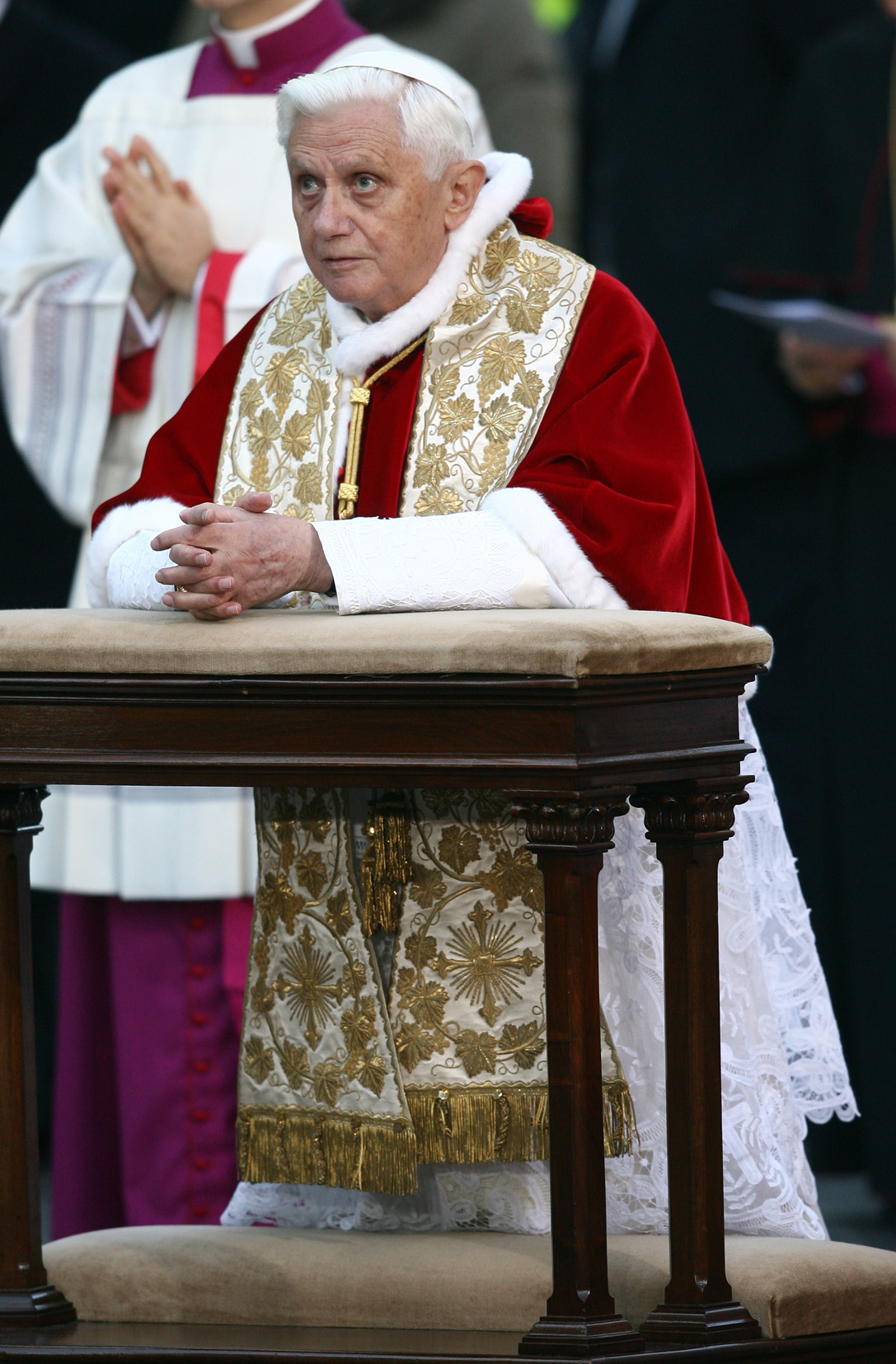
Ferrol’s Holy Week has been officially declared of international touristic interest. The recognition has been granted by the Secretary General of Tourism at the Ministry of Industry, Tourism and Commerce. Ferrol is united with other Spanish cities: Seville, Valladolid, Salamanca, León, Cartagena, Lorca, Hellín, Medina de Rioseco, Granada, Orihuela, Murcia, Cáceres, Medina del Campo, Palencia, and Vivero, whose Holy week is to be considered of international interest. In Ferrol’s religious celebrations (www.semanasantaferrol.org) century-long traditions and major popular participation are merged. During the Week the city’s streets are decorated with artistic and sacred images. Starting on Palm Sunday, Ferrol prompts the coexistence of religiosity and animation, tradition, culture, and topics of interest, past and present alike. “Committed” Christians. Widespread welcome to the recognition. “I’m very happy”, declared Monsignor Manuel Sánchez Monge, bishop of Mondoñedo-Ferrol. “The profound, strong religious dimension of the Holy Week enhances its cultural and touristic dimension”, the prelate said. “For that I am happy, but at the same time it is necessary to underline that our congregations cannot be content with this statement. They must keep up their commitment to become mature Christians, involved in the Church following the path of the Gospel and near the poor.” The bishop said he hopes that the Week may express people’s religious sentiment to such an extent so as to manifest itself “in the public and social realms.” In fact, the recognition will attract also so-called distant faithful. But “the fact of making Ferrol Holy Week a means to encourage people to participate in the Holy Week” entails a set of obligations. In fact, “high recognition at touristic level prompts us all to live the Week with greater participation”, said monsignor Sánchez Monge. “I consider it a stimulus for us, an encouragement to a deeper experience of the Week, and for those who will take part it will be an opportunity to learn more on the significance” of the days that precede Easter “in Christian life and in the Catholic Church.” Also solidarity. “Ferrol’s celebrations, so deeply-rooted within us, which forms part of our identity as a city, has received utmost recognition among the most important Holy Weeks in Spain”, pointed out the mayor of Ferrol, Rey Varela. The recognition is important “also because we are striving to turn the city of Ferrol into a primary touristic attraction. This statement is of great help, as it represents a significant economic engine.” María del Carmen Arcos, president of the coordination of congregations, added: “faith moves mountains and has brought us all the way over here.” Even though the recognition is viewed as a point of attraction for tourists, Ferrol congregations highlight the spiritual aspects and the importance of solidarity. In fact, over the past years, social work has intensified, for example through charity dinners whose proceeds are given to the diocesan Caritas, charity concerts, the collection of non-perishable food items for Caritas and the soup-kitchens, cooperation with NGOs actively committed to provide help to Third World countries that are the recipients of a percentage of the shares of the confreres at Caritas. Five congregations. Five congregations animate the Holy Week of Ferrol: the Congregation of Our Lady of Anguish, founded April 10 1978; Congregation of Merciful Jesus and Our Lady of Sorrows, that has distant origins (12th century), but which was re-founded several times until it took the present form (1992); The Congregation of the Mercedarian (Nolascan) order, founded by Mercedarian priest Ramón Serratosa in 1908. The Congregations of the Third order, which while having bonds with Franciscan tertiary fraternities of the 18th century, have developed in the period between the 1950s and the 1980s; the Santo Entierro Congregation, established October 10 1950, although the procession of the Santo Entierro (dead Christ) dates back to the 18th century.
