EU ENLARGEMENT
Celebrating the 10th anniversary of EU adhesion by ex-Communist countries. COMECE’s message

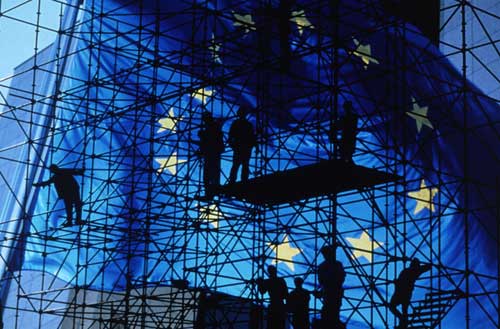
Extending Community borders is “a good thing”: it enlarges and strengthens the area of democracy and peace in Europe, it helps East European countries on the economic plane, it ensures greater protection, rights and freedoms for citizens. These are widespread beliefs that were echoed during the recent celebrations for the tenth anniversary of the “great enlargement” of the EU to ex Communist countries, joined by Cyprus and Malta on May 1st 2004. Since then, the Union grew even more, with the accession of Romania and Bulgaria in 2007 and of Croatia in 2013. Other five Countries are “candidates” to EU accession, and many others look forward to a “Community future”. However, problems linger on: Europe complains about delays on the part of new EU member Countries in the field of the economy and in the administration of legal systems, in the fight on corruption, in the defence of individual and minority rights, for example. On the other hand, these Countries often protest Europe’s excessive “imposition” and denounce the challenges of secularization, consumerism, and multiculturalism which ‘pose a risk’ to their historical identity. Interests and common values. “”The 1st of May, we celebrate the 10th anniversary of the reunification of Europe. This is a moment to remember how important the accession of these 10 member states has been, not only for them but for us in Europe, because we were able to share stability and security and also contributed to prosperity in our era”. José Manuel Barroso, President of the EU Commission, recalled the anniversary, celebrated as a result of the fall of the Berlin Wall (1989) and the dissolution of the Communist regime, with favourable words. “This enlargement reunited Europe after many years of artificial division. It was also a way to anchor democracy, freedom and the rule of law for many millions of people who were living before behind the Iron Curtain”. For Barroso, after all these years “Europe is stronger, richer and safer” under many angles: politically, economically and culturally. Enlargement has made the EU” the world’s biggest single market”, it increased trade between member states, investment, it “further strengthened Europe’s weight in the world”. These successes – according to an excessively optimistic Barroso – should be underlined with special attention “at a time when the EU is recovering from the economic crisis”. A larger and more united Europe “is the best way to strengthen our position, to defend common interests and promote our own values”. Under the banner of reconciliation. In the Spring Economic forecasts, on May 5 the Commission in Brussels, with a glance at the short period, highlighted the improvements in the performance of productive and trade systems of East European countries. Not only: “In 1994, their income per head amounted to less than half of the EU’s. In 2004 this ratio had increased to 58%. Now, in 2014, it should reach 72% of the EU”, remarked Vice-President Siim Kallas. Also the president of the European Parliament Martin Schulz underlined that “Enlargement of the European Union ten years ago was a historic event that moved Europe towards a final reunification and reconciliation after the end of the Cold War”. Enlargement “expanded the zone of stability, security, freedom and prosperity of our continent”. Countries like Ukraine and regions like the Balkans, still outside “the common home”, show that the lack of “an anchorage” with the EU fails to guarantee an area of peace, stability and wellbeing. The voice of the Church. Over the past days in several Countries ceremonies were held to mark the 10th anniversary. Recognitions also came from the Catholic Church. Among the speakers figure card. Reinhard Marx, president of the Commission of the Bishops’ Conference of the European Community (COMECE). “The incorporation of the Central and Eastern European states into the European Union was the consequence of the peaceful revolutions experienced by the former communist countries in 1989. On that day Cyprus, Czech Republic, Estonia, Hungary, Latvia, Lithuania, Malta, Poland, Slovakia and Slovenia became members of the common home”. It was a “reunified Europe”, unprecedented in terms of extension and inhabitants, which was “truly historic”, an event “important not only for Europe” but also for the rest of the world. “Deepening the unity between East and West within the European Union still remains a challenge”, His Eminence pointed out. However, “mentalities and perspectives continue to be marked by a diversity of experience”, while “reconciliation and the sense of common calling is one of the central driving forces behind European integration”, and this is why, for the Cardinal, “we still face the challenge of finding common purpose in Europe”. For the COMECE President the churches and the religious communities in Europe “have a particular duty to make their unique contribution to the family of nations”.
