GERMANY
Central Committee of German Catholics: to convene in Regensburg

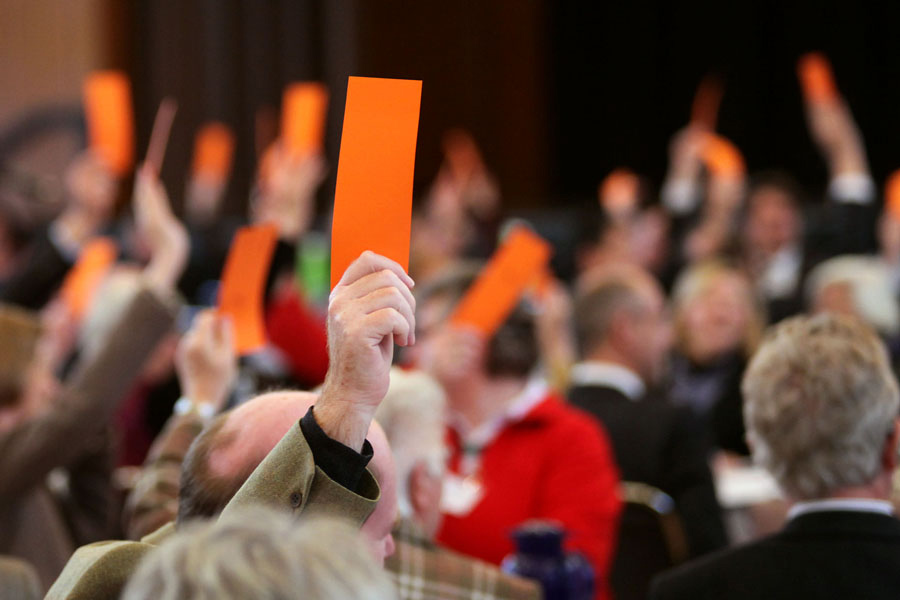
The diocese of Regensburg (Ratisbona), Bavaria, is ready: over 20 thousand faithful from all over Germany will take part in the 99th Katholikentag, the “Day of German Catholics”. More than one hundred thousand people are expected to take part in the various events held on the occasion of the initiative that opens Wednesday 28 May and will close with a solemn Eucharistic celebration Sunday June 1st. Journeys of faith and compassion. Regensburg, recognized by the UNESCO as “world heritage” site, has set up an organization that is closely bound to the local reality, to Bavarian hospitality, to the appeal of ancient roads that will welcome thousand of witnesses of an active and militant Church, such as the one in Germany, that ascribes special importance to the event that brings together experiences and proposals from all ecclesial bodies summoned by the Zdk, Zentralkomitee der deutschen Katholiken (Central Committee of German Catholics). The words of Alois Glück, ZDK president, convey the feeling of a recovered apostolic and evangelical thrust of the German Church: “We take seriously the different paths of faith and compassion and we put together the different experiences as if they had not the exclusive prerogative of interpretation of what should be truly Catholic he said presenting the Katholikentag on the portal of the German Church, www.katholisch.de -; and in society and politics we do what is best through our understanding of other cultures, including asylum seekers and immigrants”. Ecumenical openness. The reflection on the image of Christians and equal dignity of the all human persons will be developed during the Katholikentag inspired by the motto “Building bridges with Christ”. It is clear that the 99th edition is meanr to be a special celebration for everyone, with openness to ecumenical dialogue, confronting non believers, with a constant glance at the young generations experiencing a situation of difficulty in terms of employment and ethical values. In his address to the young and older generations, the bishop of Regensburg, Msgr. Rudolf Voderholzer, pointed out: “now it’s time for us Catholics to raise our flag. Who could have conveyed our answer better than you, representing Catholic associations and organizations?” The experience of the “Katholikentag” the bishop said, is that “these days of Catholic gathering are always a way to shape the future through the testimony of our faith”. Welcome and… beer. Traditionally, the great meeting of German Catholics is a means to make oneself known abroad, with various lay movements and lay and religious institutions open to debate, and to offer pilgrims and visitors a snapshot of all that the city has to offer in terms of culture. Thus the city launched a volunteer campaign to solve the problem of accomodation, most of which is ensured through hospitality in families and religious institutions. It also launched the production of a special beer for the occasion, (9thousand liters), made by an ancient local alehouse, personally tested by Monsignor Voderholzer during an official celebration. The evening of May 28 the streets of the ancient city will be filled with stalls as a sign of reception for thousands of guests. Catholic youth associations, coordinated by BDKJ, the federation of German Catholic Youth, planned almost one thousand events that include workshops, lectures, informative initiatives against sexual harassment, and musical events of various kinds. The youths of the Catholics schools in Regensburg will be involved in a set of cultural meetings addressed to East European countries, in cooperation with the Renovabis Foundation for the Churches of Eastern Europe. Generations in touch. Also in the light of the Synod for the Family of October next, major relevance will be given to themes on family morals, and the prospects of Christian families. For Ulrich Hoffmann, marriage and family counselor for the Diocese of Augsburg, head of the working group at the Katholikentag, the intention is to “prompt inter-generational relations through the sharing of experiences and debates, thereby helping to build bridges that will mutually enrich the many people who will take part in the initiatives”. The Bayerischer Rundfunk, the Bavarian local radio and television station, connected with national channel Ard, will follow and report on the main events held during the 5 days of activity. Regensburg will pass the baton to Leipzig, for the hundredth Katholikentag in 2016.
