EUROPEAN CHURCHES

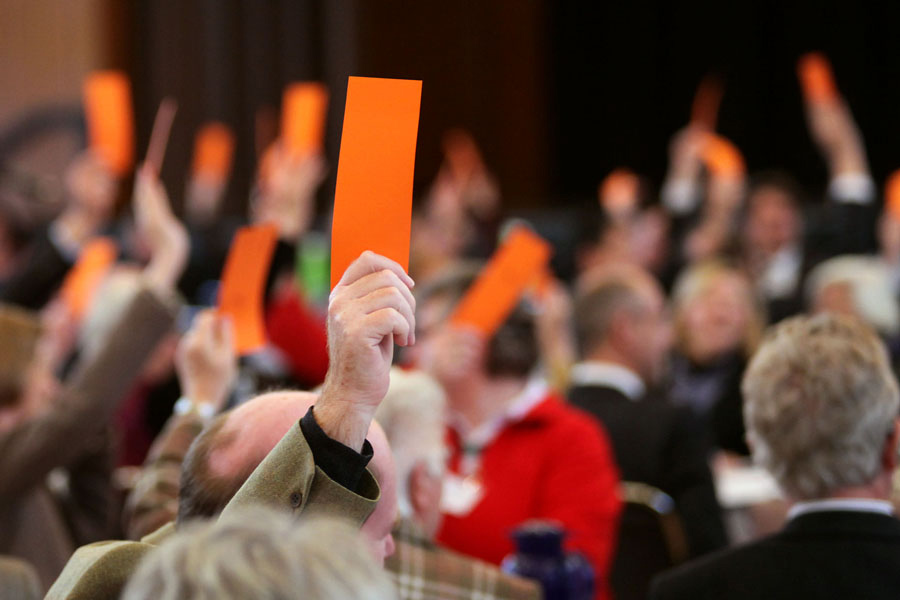
Germany, the 99th Katholikentag From May 28 to June 1st will take place the 99th Katholikentag in the Bavarian city of Regensburg. The Catholic Days organized by the Central Committee of German Catholics, marked by the motto “Building bridges with Christ”, plays a special role, which is also political, in the light of the results of European elections. The event enjoys the support of the government coalition of Chancellor Merkel, who is expected to take part in one of the 1200 meetings and workshops planned for the Days. In particular, over one hundred concerts, theatrical and music performances will animate churches, oratories and squares across the city. Faith-Church-Theology and Politics-Society are the two major themes that include nine items for reflection, which are: biblical spirituality; marriage, the family and cross-generational debate; the excellencies in men and women; global responsibility and European neighbourhood policies; dialogue with the Jews and with Muslims; the youth; local Church and the Church in Germany; ecumenism. March for the family and for life throughout Poland The website www.marsz.org features a map of Poland with over 150 centres that will organize the Marches for Life in the months of May and June. The promoters, who signed a “Declaration for life and the Family”, remarked in a document that “Poland needs to change to enable the present and the next generations to live and grow up in a welcoming environment”, “with a set of values and the possibility of enjoying the fruits of our job”. “We believe – continues the Declaration – that the foundations of a new order should be based on the respect for human life and on the recognition of the family as the central institution of social order”, to ensure that “the role of the family is adequately enhanced for a sound cultural, social and economic order”. Signatories of the document said they hope to “cooperate in the implementation of projects that ensure the protection of human life and the respect of the family in the framework of an appropriate social and juridical framework”. The popular initiative of the marches, along with “other initiatives for the family adopted over the past years”, has registered a substantial increase throughout Poland, and it has become an important event at national level”, said Michal Owczarski, representing the non-profit organization “Zycie” (Life). In the region of Lodz alone (central Poland) will be held over 20 marches for life. Owczarski added: “The march of June 1st will be dedicated to children with Down syndrome in particular”, accompanied by a fund-collection to support targeted workshops for families with children affected by the said genetic anomaly. Spain: consecrated life, response to migration On May 20-21 was held the 78th Ordinary Assembly of the Bishops of southern Spain, which includes the dioceses of Seville, Granada, Almería, Cádiz-Ceuta, Córdoba, Guadix, Huelva, Jaén, Jerez and Málaga. In this framework, on May 21 was held the tenth regional meeting of bishops and major superiors of the institutes of consecrated life with religious homes in Andalusia, during which was debated the document of the Spanish Bishops’ Conference, “Local Church and consecrated life”. Sister Cristina María González Carrasco, president of Confer (Spanish Conference of the Religious) from the diocese of Malaga, spoke of the theological foundations of the documents and of the ways of living the communion, while Monsignor José Rodríguez Carballo, archbishop secretary of the Congregation for Consecrated Life, underlined that the document counts on the mutual relations between bishops and consecrated life, starting with communion and shared responsibility. The bishops dedicated an in-depth reflection to the charitable and humanitarian action developed with migrants by the Church in the cities of Ceuta and Melilla. The bishops addressed the complex situation of religion. In a pastoral note they expressed their disappointment for the Spanish government’s treatment of religion conveyed in the new education bill, Lomce, notably as regards kindergartens and high-schools, where the teaching of religion is not envisaged. For the prelates, “religion does not occupy the place that it would legally and culturally deserve within Spain’s educational system”. However, the bishops welcomed a set of measures such as “providing for an authentic alternative subject along with appropriate evaluation within the educational system”. Moreover, they added, “we deem it worrying that religion continues being considered a subject that is the responsibility of independent communities, with the risk of adopting different – even contrasting – regulations”.
