GERMANY
Lively debate at the Regensburg Katholikentag. Faith as “leaven” for society and the country

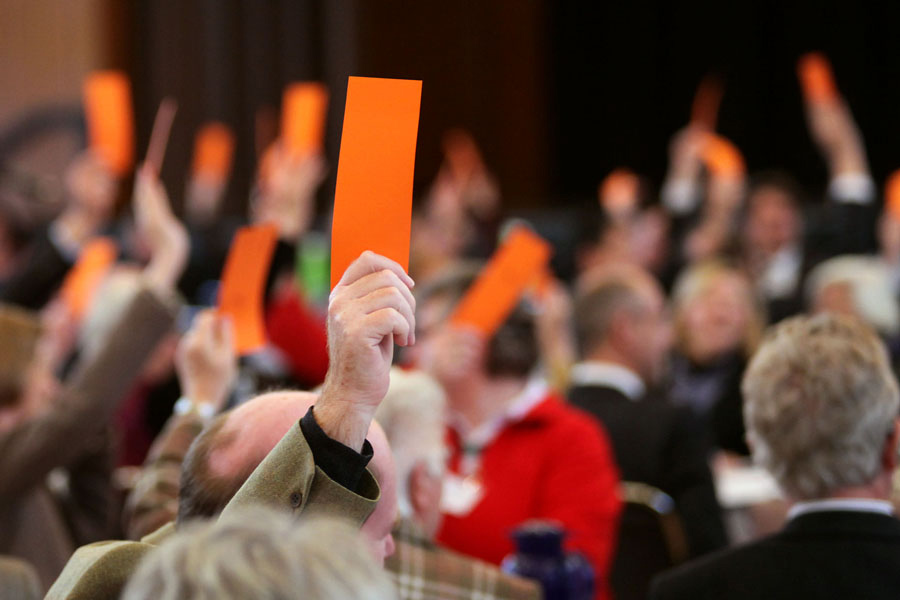
See you in Leipzig, in 2016, for the hundredth edition of the “Day of German Catholics”, was the closing greeting at the 1st at Katholikentag on Sunday, June 1st, in Regensburg. The initiative, which mobilized a total of one hundred thousand people, including those who attended all four-day meetings and those took part in one of the over one thousand events scheduled, tells the story of a success that went well beyond expectations. Themes, faces, numbers… Figures provide an idea of the scope of the initiative that in time has helped place Catholic laity organizations at the centre of the nation’s political and cultural debate with a strong cultural and spiritual bearing. For example, 32% of registered participants were young people under 30; 7 thousand meals a day were served during the event, all local products, organic and GMO-free; the choice to open up completely to ecumenical and inter-religious dialogue; debates with national and international bearing; the willingness to undergo self-questioning on thorny issues from prenatal diagnosis to the choice of poverty by the Church; analyses of the tragedy of human trafficking; reflections on leading a religious life regardless of sexual orientation; discussions on the role of Christians in politics and on Europe’s role in the world, also thanks to the presence of Federal Chancellor Angela Merkel and the participation of the Head of State Joachim Gauck, a former evangelical pastor … These are just some of the issues that the Catholic laity openly addressed under the auspices of ZDK, the Central Committee of German Catholics, with the constant support of the German Bishops’ Conference (DBK). Laity and clergy united in testimony. The German society constantly raises questions; it a secularized yet strongly Christian society, with a significant presence of Catholics and Reformed. It is a Catholic Church whose laity and clergy, up to the highest dignitaries, engage in relentless, lively, dialogue. It is not a coincidence that the appeal to Christians by President Gauck to reinvigorate their role in society and politics, was followed by lively sessions from 28 May to 1 June. The feeling is that long and painful experiences for the German Church – such as the process of internal dialogue or the commission for the fight against sexual abuse – have become occasions for severe self-examination and a stimulus to say with conviction: “We are here, we want to build bridges with Christ”. The slogan chosen for the Katholikentag – “Building bridges with Christ” – has taken on a prophetic significance; the presence in the German social fabric, was reiterated in Regensburg, must resonate for a new evangelization that starts from the workplace. Cardinal Reinhard Marx, archbishop of Munich-Freising, DBK president, expressed his encouragement to “bear public witness to Christ and the Church” in his homily for the concluding Mass. “We must be prepared for God’s calling, which is always a challenge. We must trust in God, that makes us witnesses of the coming of the Kingdom of God”, he said. His Eminence remembered the “the poor, the weak, the sick, the abused, the exploited”: “There can be no preaching of the Gospel – the cardinal explained – if we do not have these people in mind. And we need to revive our work in dioceses and parishes. It is a challenge that not yet been met in full”. The choice of everyday life. “Addressing everyday life” was a constant theme during the rainy days of the Katholikentag: no area that involves the commitment of lay Catholics was ignored. “The strength of the Catholic Church lies in its diversity inasmuch as different people believe, pray, celebrate, and support others in daily actions” said Wolfgang Lechner, president-elect of BDKJ, the federation of Catholic youth associations, with as many as 660 thousand its members: “We cannot be content with only four beautiful, busy days. We must build a Church” that builds “many bridges for young people, for the people living at the margins of society, bridges in society and in the Church itself”. The Katholikentag has shown world media that lay Catholics in Germany today put social issues, including protection of the environment and “sustainability of Creation” at the centre of their discourse, and that they feel called to address even through the Magisterium. Now the journey resumes with more certainties, as the desire to be more active in society; and requests, many in the church hierarchy, to be closer to those who in society, in the family, in educational or working environments, are continuously confronting the beauty, fatigue and awareness of being a Christian today.
