UKRAINE
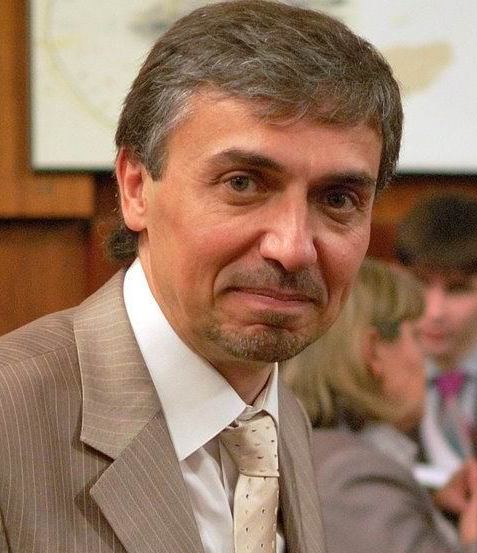
Konstantin Sigov, Orthodox Philosophy teacher in Kiev: “May the Churches help build our future”

A tiny glimmer of hope shines for Ukraine: on the eve of the NATO summit in Wales, Russian president Vladimir Putin and his Ukrainian counterpart Petro Poroshenko had a telephone conversation during which they reached an agreement for a truce in East Ukraine. Is it finally good news? “Absolutely yes”, Konstantin Sigov, Philosophy Professor at the State-run “Moghilian Academy” in Kiev, told Maria Chiara Biagioni (SIR Europe). He added: “a cease-fire is possible with good will, and most of all by putting into practice good intentions. Over the past months Europe has grown sceptical vis a vis Putin’s words and promises.” Is it possible to find a diplomatic and political solution to the Ukrainian crisis? “Ukraine intends to overcome the conflict through concerted agreement and political solutions. But before a military aggression it is evident that it’s the responsibility of the international community to find convincing arguments that will prevail. Sanctions have been already taken, now the aggression must be stopped.” Once the aggression is stopped, what is the next step? “Extensive humanitarian efforts are needed with the involvement of all forces in civil society. There are people who were compelled to leave their homes, cities that were torn to the ground and need to be rebuilt, wounded people in need of medical treatment.” You are Orthodox, member of the Orthodox Church in Ukraine, linked to Moscow’s Patriarchate. What has been the position of Moscow’s Patriarchate so far? “For many months there has been silence. Ukrainian faithful have looked forward to statements of solidarity with the Ukrainian population, but to no avail. With time, we understood that probably the Church was not free and that the Kremlin in some ways was preventing the Russian Church from taking a public stand. As regards Crimea, Moscow’s Patriarchate has decided not to risk placing Orthodox dioceses in the region under the jurisdiction of the Church of Moscow. It would have been a terrible scandal, as it would have meant following the same military mission of the Kremlin.” And the Donbass…?”Unfortunately there is a risk of not distinguishing between temporal and spiritual powers. Separatist forces often disguise themselves as Russian Orthodox forces, which seriously harms Christian faith as a whole, which not conceive itself as being ‘armed’. It should be said in clear terms that the conflict is not confessional, but rather that it is purely political in nature. Perhaps Moscow’s Patriarchate should have been more explicit. In fact, it did not prevent the military and opinion leaders from using the term ‘Orthodox’ in this context.” Is it true that some Orthodox parish priests have denied the burial of Ukrainian soldiers? “Each case is different. What we know is that there have been cases where the family members of a killed soldiers turned to the parish church and the priest did not receive them with the mercy they deserved, and in some cases they were refused Christian burial.” Why does this happen?”Because the clergy consists of human persons, and people are deeply influenced by propaganda – often violent – disseminated via television. We are all the victims of months-long lies. There are even journalists who post pictures of Syria and Iraq saying that they were taken in Ukraine.” In addition to a cease-fire, is there a challenge greater than hatred? Unfortunately feelings are not what divide us. In this region there has never been hatred, nor divisions on linguistic, confessional or ethnic grounds. This conflict has spread the seeds of division. But it’s a feeling that is imbued externally, according to the ancient method based on ‘divide and rule'”. What is the role of the Churches? “To underline the distinction between the political and spiritual dimension, to resist the manipulation of those who want to ascribe confessional labels to the crisis; to defend the autonomy of the spiritual realm and call for the solidarity of all Christians. There is a great work to be done, and it should be done together to heal the wounds, overcome the tragedy of war, promote concrete projects.” Are the Churches ready to talk to each other? “We hope so. The Churches should not be hostages of past divisions, but rather learn to grasp possible paths of reconciliation in the present times. Today only the man of peace has a future and the man of peace does not let himself be frightened by the past, he does not allow the present to condition our steps. He is the one who seeks new opportunities for the future.”
