SYNOD ON THE FAMILY" "
The Pope has highlighted the style of the Synod, based on evangelical “parresia”. Cardinal Erdõ underlined urgent cultural and pastoral questions

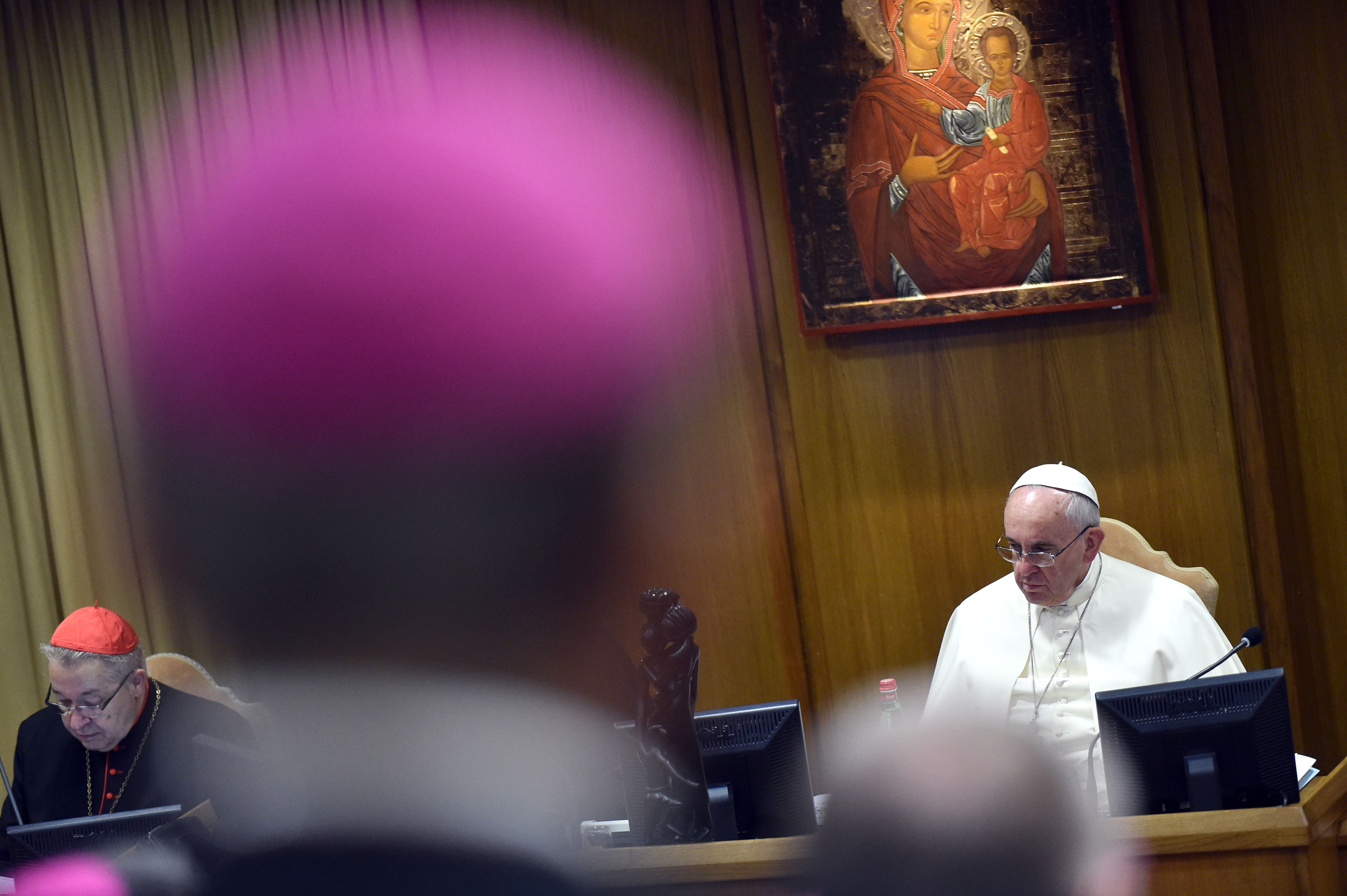
Speaking with sincerity – the evangelical “parresia” – and listening with humility. This twofold principle is encompassed in the third Extraordinary General Assembly of the Bishops’ Synod on the Family. It was highlighted as a recommendation by Pope Francis to participants as a feature of the Synod in his welcoming speech of the first General Congregation on October 6. A full-fledged overview on the “state of health” of the family was then offered by cardinal Péter Erdõ, relator general of the meeting. For the first time, the “Relatio ante disceptationem” already includes the written interventions of the Synod Fathers, submitted to the secretary general of the Synod prior to the meeting. It’s the first practical experience of collegiality, a theme that is very dear to the Pope, pointed out Monsignor Bruno Forte, special relator, during the press conference on the presentation on the meeting. The Synod is not a Parliament, pointed out Cardinal André Vingt-Trois, president-delegate in-office: it does not seek a majority consensus but rather a fraternal dialogue aimed at Church progress. “It isn’t an outdated model”. Living together without marriage is one of the most popular trends regarding the family today, denounced Cardinal Erdõ. Today “many people perceive their own lives not as a project but as a series of moments in which the supreme value is to feel better, feel good”, thus “every stable commitment is shunned, and the future is perceived as a threat”. Nonetheless the family “is not an outdated model”, even though it has to face “many difficulties”. “The doctrine on the indissolubility of marriage as such is not questioned, in fact it is undisputed and in most cases it is observed also in pastoral care towards those who failed in their marriage and seek a fresh start”. No to “catastrophic predictions” or to “abdication”. There is “an evident, widely-shared heritage of faith which the Synod Assembly can start from, of which the faithful should be made more universally aware through a more profound catechesis on marriage and the family”, to be extended “beyond the circle of practising Catholics”. The cardinal mentioned a veritable “structures of sin” along with a “process of radical transformations that question traditional family culture, to the point of destroying it on many occasions”. On the other hand, “the family can be described as the ultimate welcoming human reality” in a world dominated by finance and technology. “A new family culture could act as a cornerstone for a renewed human civilization”. Healing the wounds. “Mercy doesn’t deny the commitments linked to the bond of marriage”. Also in “difficult marriage situations”, these commitments “linger on also when human love has waned out or has ceased”. The “authentic pastoral urgency” is “enabling these people to heal their wounds, and to resume the path followed with the entire church community”. How can this be done? Through “renewed, adequate pastoral and family action” capable of “supporting spouses in their commitment of mutual faithfulness and dedication to their children, reflecting on the best ways to accompany people” in difficult situations, so that “they may not feel left out from the life of the Church”, and “by identifying the appropriate language to proclaim that everyone continue being the sons and daughters of the loving God the Father and Church the mother”. Clear words. “Civilly remarried divorcees represent one of many problems that form part of contemporary, urgent pastoral challenges”: said the relator general in clear terms. He added: “it would be misleading to focus only on the question of the reception of sacraments”. “It is necessary to be aware of the difference between those responsible for marriage break-up and those who were abandoned”. Civilly remarried divorcees “belong to the Church” and “they have the right to be accompanied by their pastors”. Hence the proposal to have in every diocese “a priest, appropriately formed, that may give advice to the involved parties on the validity of their marriage”. Marriage annulments. “It appears that the statement whereby a large number of marriages celebrated in Church may result as non-valid is not far from the truth”. Card. Erdõ highlighted the question of marriage annulments, addressed on various occasions in his report. The cardinal’s proposal is “to reconsider, first of all, the mandatory aspect of the twofold statement of compliancy for the declaration on annulment of the marriage bond, thereby envisaging a second stage only if one or both parties file an appeal”. Moreover, the marriage procedures of some Orthodox Churches, “that envisage the possibility of second or third marriages characterised by penitential aspects”, requires further examination. Concrete solidarity. “Family tragedies often spring from a desperate solitude, a cry of suffering that was unnoticed”. “In order to truly welcome new life in the family and devote to it ongoing care, from the moment of conception to its natural termination, it is necessary to recover the meaning of widespread solidarity, put into place with concrete action”, the Cardinal said, calling for the “establishment at institutional level, of the conditions that make this care possible, whereby the birth of a child and assistance to the elderly are considered for what they are: a social good deserving protection and care”.
