EDITORIAL" "
On October 12 over 3 million voters went to the polls to renew various institutional levels

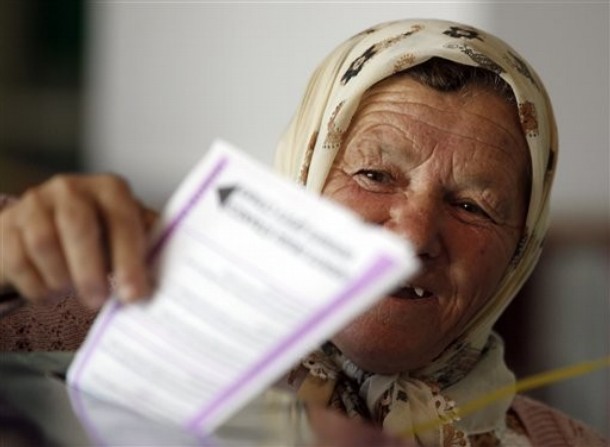
There are great expectations on the outcomes of the national elections in Bosnia-Herzegovina, due to take place Sunday October 12. The attention is at the highest levels not only inside the Balkan Country but also in the surrounding area of South-Western Europe. Political observers and common people alike extend their glance to Sarajevo with the hope of seeing on the national political scene new leaders ready to guide the Country for the four coming years in a completely different way compared to present and past leaders of the last twenty years. Some 3.3 citizens entitled to vote will go to the polls this time to elect three presidents of the three-party presidency (according to the ethnical feature of the three majority groups: a Muslim, a Serbian, a Croatian), to elect the members of the central parliament and of the parliaments of the two Entities following the division of Bosnia- Herzegovina after the 1995 war (the Croatian-Muslim Federation; the Serbian Republic of Bosnia). Voters will also have to indicate the president and the vice-presidents of the two Entities, while the Croatian-Muslim Federation is called to elect the councils of the 10 cantons that compose it. The elections to elect the new leadership of the Country, considered to be among the most inefficient since the end of the 1995 war, kicked off one of the most delicate electoral campaigns of the past twenty years. The present government led Bosnia Herzegovina to a sort of paralysis, to an almost total block in the adoption of important decisions in the lives of citizens, regarding refoms and integration of NATO in the EU. Also the stabilization agreement with the European Union failed to deliver significant results to date – owing to a lack of domestic political agreements (notably for the reticence of the Serbian majority). Bosnia Herzegovina, together with Kosovo (which however is in a particular situation), is the only Country created with the dissolution of ex-Yugoslavia which has not yet obtained a candidate status for EU adhesion and has not yet progressed from the initial stage of that long, tiresome process. This keeps the Country in a situation of uncertainty in terms of the process of rapprochement to the EU and NATO. The governments in force in the past years failed to stop the ongoing deterioration of the economic situation of unemployment, with the highest rate of people excluded from the job environment in the entire Balkan region (surveys show that 44% are unemployed). In the meantime many enterprises have been privatized, but high levels of corruption in businesses have thwarted a balanced, modern recovery of Bosnian economy. The political ruling class also failed to propose much needed reforms aimed at the resolution of numerous problems regarding citizens’ daily lives. Holding on to positions of power as much as possible has been the sole interest of the representatives of the various ethnic groups and party leaders. Ethnic rivalries, incessantly fomented in more or less sophisticated ways, thereby become an obstacle to urgent reforms for social and economic development. The leaders of the two Entities that represent Bosnia and Herzegovina today have shown on various occasions their inability to find an agreement on the most important issues on which depend citizens’ wellbeing, the Country’s very existence and its European future. The slow progress towards the reconstruction of civil society and post-war democracy is under everyone’s eyes. In contemporary Bosnia there appears to be greater interest in rehashing the past, as the Country still needs to solve hanging questions resulting from the 1992-1995 conflict that caused over 100 thousand deaths. Instead, it would be necessary to invest energies in the foundations of the nation’s common future. Thus the upcoming elections offer citizens and politicians an opportunity to extend a glance to a better future horizon. But a necessary prerequisite is authentic internal reconciliation, critical to progress on the European and international scene. Political leaders are asked to promote authentic dialogue, highlighting the expectations of the population awaiting concrete answers from a perspective of pacification among the various ethnic and religious groups and for the development of all Bosnia-Herzegovina.
