
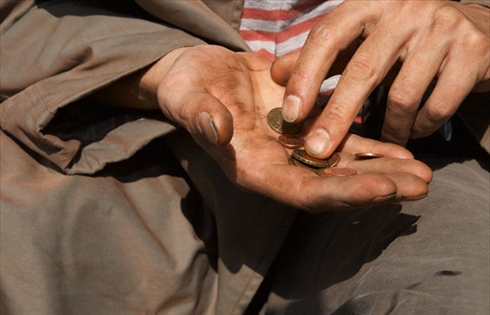
Europe-Asia economy and security summit The tenth ASEM Summit, the meeting of heads of Government and State of Asian and European countries will be held in Milan, October 16-17, at Mico Conferences Centre. The Euro-Asian summit, established in 1996 to strengthen political, economic and cultural cooperation between the two continents, takes place every two years, in Asia and Europe alternatively. The venue of this year’s summit is Italy, that holds the six-month presidency of the Council of EU ministers. The last editions took place in China (2008), Belgium (2010) and Laos (2012). “The summit – pointed out the rotating presidency – will bring together over fifty international leaders”. The agenda of the meeting will focus on “Responsible Partnership for Sustainable Growth and Security”. The summit will be chaired by Herman van Rompuy, president of the European Council, and by José Manuel Barroso, president of the European Commission. As the title of the meeting explains – participants will focus in particular on economy and employment, environmental sustainability, energy, security, regional instability (starting with the Middle East and Ukraine), demography and migrations, protection of human rights. Figures on poverty and inequalities in the EU “124 and a half million people are at poverty risk or social exclusion in the EU, 24.8% of the overall population” according to figures released by the European Commission on October 8 in a memorandum on “Poverty and Inequalities in the EU”. According to the Commission, 9.9% of the overall population lives in a situation of “serious material deprivation”. Figures reflect the period 2009-2012 in particular, when “poverty and social exclusion increased in those Countries most direly hit by the crisis” with 30% peaks, but an increase was also registered in “low-risk Countries and with solid welfare systems”, such as Luxembourg and Denmark. The disparity gap is attributed to a number of factors such as “skill-biased technological change, deregulation of the financial sector, globalisation of financial operations, offshoring of businesses, the way in which the digital economy may give a very small share of the people a disproportionately large share of income (so-called “superstar-effects”) and the rise of house prices”. To combat poverty the Commission has made available three funds in particular (including the European Social Fund), but it reiterated that “minimum wage schemes”, “coupled by measures to promote employment” are an important tool in the fight against poverty. Open Days, Week of regions and cities “Over the past few years sub-national public authorities in the EU were responsible for one third of public expenditure”. For this reason Open Days “will offer cohesion policy practitioners the opportunity to acquire and update their competences, while allowing them to provide feedback to decision makers. Our aim is to proactively prevent any delay in implementing measures that are of the greatest relevance for our communities while promoting the sharing of efficient solutions across Europe”. With these words, Michel Lebrun, president of the Committee of Regions, explained one of the objectives of the “Open Days – European Week of regions and cities”, the major annual event on themes concerning EU cohesion policies, with more than 350bn of EU funds to be invested through 2014-2020. The CoR and the EU Commissions promoted a set of events that took place in Brussels October 6 -9, with 6 thousand participants. Some 300 related events are planned to take place in the next three months in EU 28 Member Countries. The Week of Regions and Cities is “a precious platform for debate on the ways in which Member States’ strategies to invest EU regional funding will contribute to the achievement of the European targets” in the field of employment, innovation, energy, SMEs, involving EU territories therein.
